Program in Clinical and Experimental Therapeutics, Charlie Norwood VA Medical Center and University of Georgia College of Pharmacy, HM Bldg., 1120 15th St, Augusta, GA, 30912, USA.
Department of Anatomy and Neurobiology, College of Medicine, Neuroscience Institute, University of Tennessee Health Science Center, Memphis, TN, USA.
J Neuroinflammation. 2018 Aug 13;15(1):229. doi: 10.1186/s12974-018-1262-x.
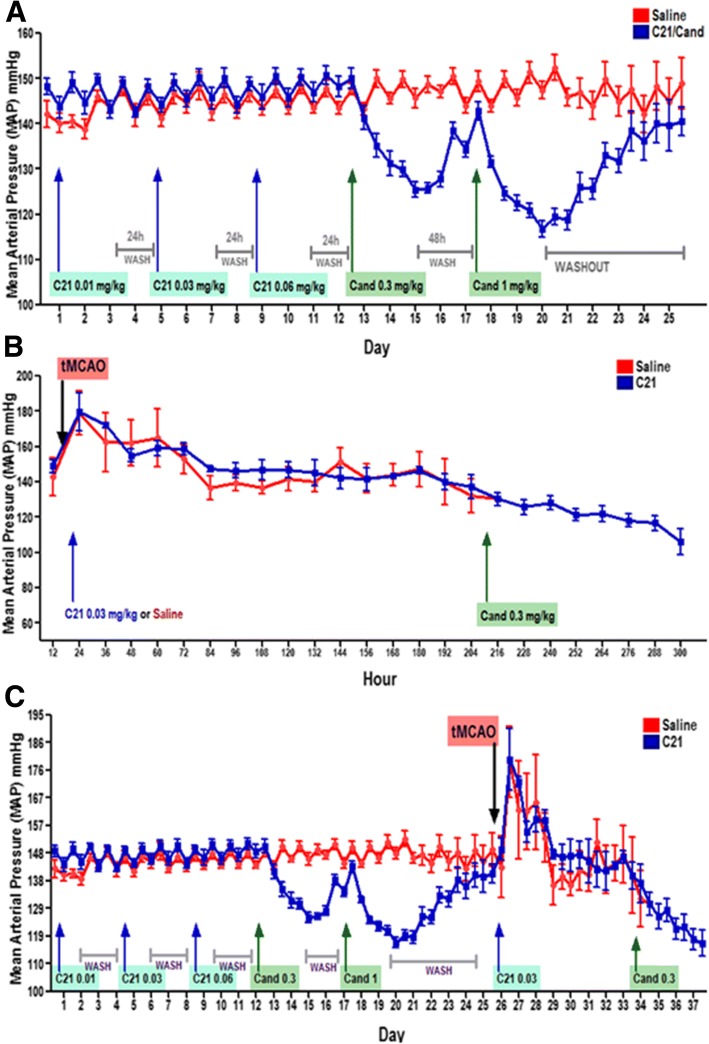
With the aging population, the prevalence and incidence of cerebrovascular disease will continue to rise, as well as the number of individuals with vascular cognitive impairment/dementia (VCID). No specific FDA-approved treatments for VCID exist. Although clinical evidence supports that angiotensin receptor blockers (ARBs) prevent cognitive decline in older adults, whether ARBs have a similar effect on VCID after stroke is unknown. Moreover, these agents reduce BP, which is undesirable in the acute stroke period, so we believe that giving C21 in this acute phase or delaying ARB administration would enable us to achieve the neurovascular benefits without the risk of unintended and potentially dangerous, acute BP lowering.
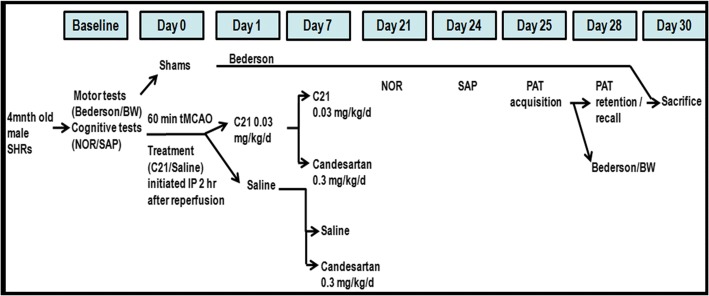
The aim of our study was to determine the impact of candesartan (ARB) or compound-21 (an angiotensin type 2 receptor--AT2R--agonist) on long-term cognitive function post-stroke, in spontaneously hypertensive rats (SHRs). We hypothesized that AT2R stimulation, either directly with C21, or indirectly by blocking the angiotensin type 1 receptor (AT1R) with candesartan, initiated after stroke, would reduce cognitive impairment. Animals were subjected to a 60-min transient middle cerebral artery occlusion and randomly assigned to either saline/C21 monotherapy, for the full study duration (30 days), or given sequential therapy starting with saline/C21 (7 days) followed by candesartan for the remainder of the study (21 days). Outcome measures included sensorimotor/cognitive-function, amyloid-β determination, and histopathologic analyses.
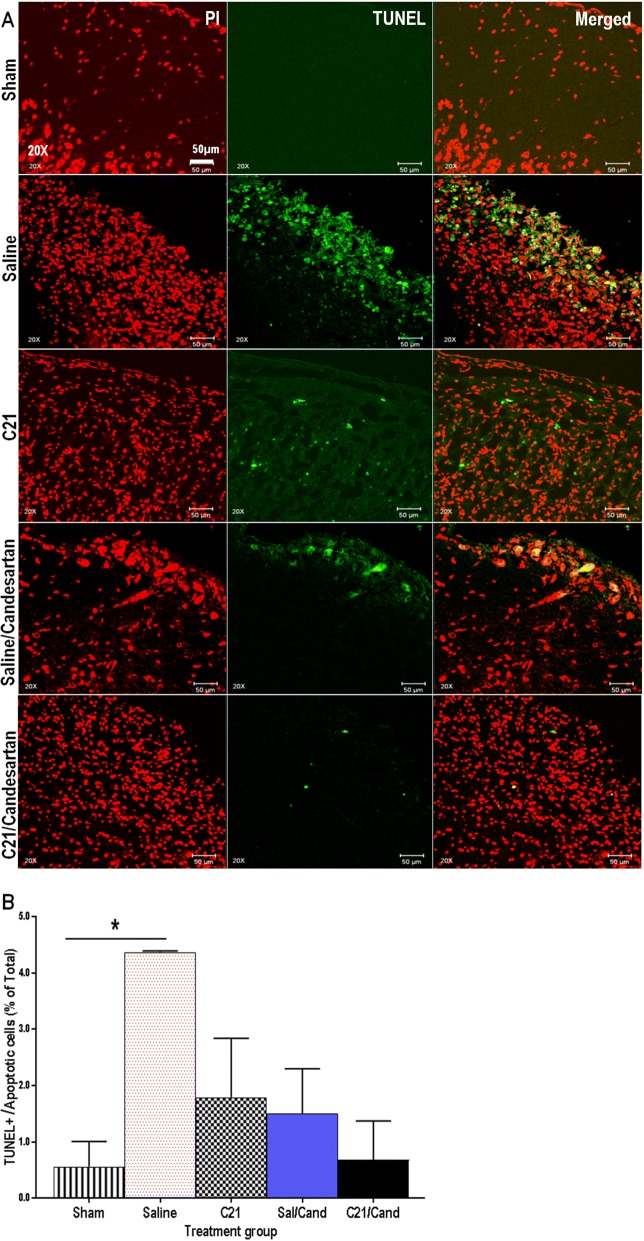
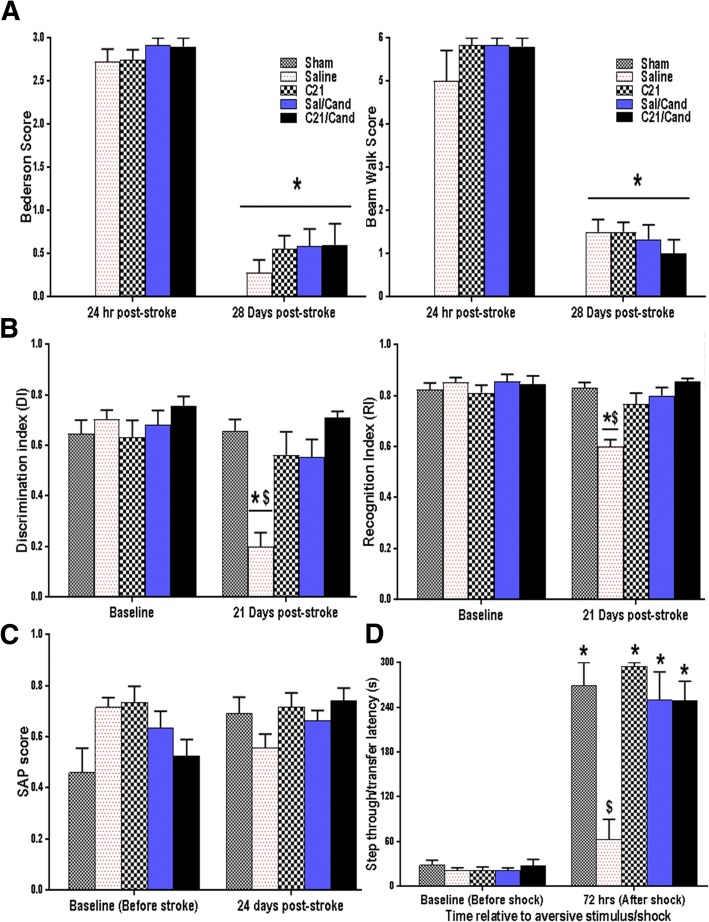
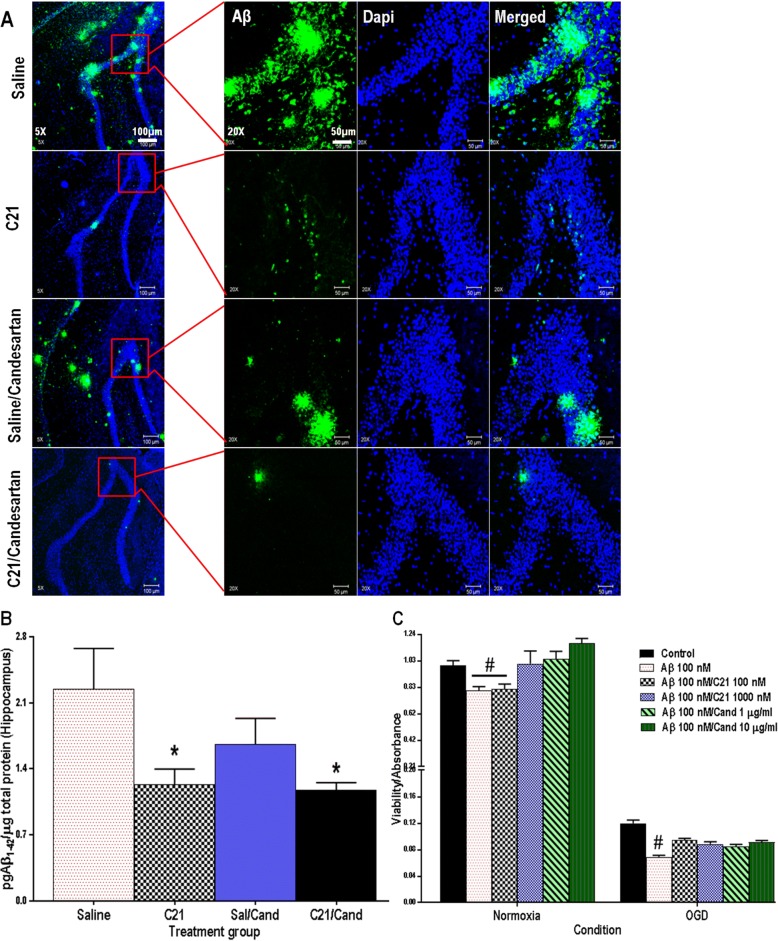
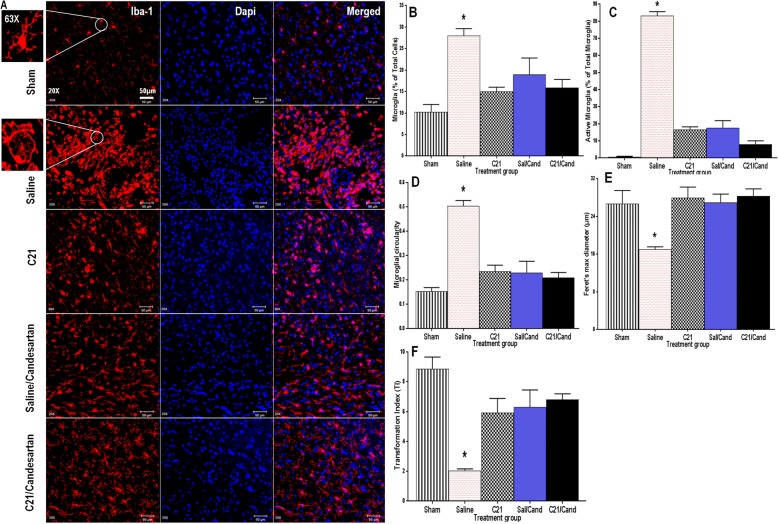
Treatment with RAS modulators effectively preserved cognitive function, reduced cytotoxicity, and prevented chronic-reactive microgliosis in SHRs, post-stroke. These protective effects were apparent even when treatment was delayed up to 7 days post-stroke and were independent of blood pressure and β-amyloid accumulation.
Collectively, our findings demonstrate that RAS modulators effectively prevent cognitive impairment after stroke, even when treatment is delayed.
随着人口老龄化,脑血管病的患病率和发病率将继续上升,血管性认知障碍/痴呆(VCID)的人数也将增加。目前还没有专门的 FDA 批准用于治疗 VCID 的药物。尽管临床证据表明血管紧张素受体阻滞剂(ARBs)可预防老年人认知能力下降,但 ARBs 对中风后 VCID 是否有类似的作用尚不清楚。此外,这些药物可降低血压,这在急性中风期间是不理想的,因此我们认为在急性期给予 C21 或延迟 ARB 给药,可以在不降低血压的情况下实现神经血管获益,而不会带来意外和潜在危险的急性降压风险。
我们的研究目的是确定坎地沙坦(ARB)或化合物 21(血管紧张素 II 型受体(AT2R)激动剂)对自发性高血压大鼠(SHR)中风后长期认知功能的影响。我们假设,中风后直接用 C21 或间接通过用坎地沙坦阻断血管紧张素 1 型受体(AT1R)刺激 AT2R,可减轻认知障碍。动物接受 60 分钟短暂性大脑中动脉闭塞,随机分为盐水/C21 单药治疗组(整个研究期间 30 天),或序贯治疗组(先给予盐水/C21 治疗 7 天,然后在研究的剩余时间内给予坎地沙坦)。观察指标包括感觉运动/认知功能、淀粉样蛋白-β测定和组织病理学分析。
RAS 调节剂治疗可有效保护中风后的 SHR 认知功能,减少细胞毒性,并预防慢性反应性小胶质细胞增生。这些保护作用甚至在中风后 7 天延迟治疗时仍然存在,并且与血压和β-淀粉样蛋白积累无关。
总之,我们的研究结果表明,RAS 调节剂可有效预防中风后认知障碍,即使在延迟治疗时也是如此。