Ayalew Mohammed Biset, Horsa Boressa Adugna, Zeleke Meseret Tilahun
Department of Clinical Pharmacy, School of Pharmacy, College of Medicine and Health Sciences, Gondar University, Gondar, Ethiopia.
Department of Pharmaceutics, School of Pharmacy, College of Medicine and Health Sciences, Gondar University, Gondar, Ethiopia.
Int J Vasc Med. 2018 Jul 11;2018:8176898. doi: 10.1155/2018/8176898. eCollection 2018.
Most of hospitalized patents are at risk of developing deep vein thrombosis (DVT). The use of pharmacological prophylaxis significantly reduces the incidence of thromboembolic events in high risk patients. The aim of this study was to assess appropriateness of DVT prophylaxis in hospitalized medical patients in an Ethiopian referral hospital.
Cross-sectional study design was employed. Patients with a diagnosis of DVT, taking anticoagulant therapy, and those who refused to participate were excluded from the study. Two hundred and six patients were included in the study using simple random sampling method. Modified Padua Risk Assessment Model was used to determine the risk of thromboembolism. SPSS (version 21) was used for analysis.
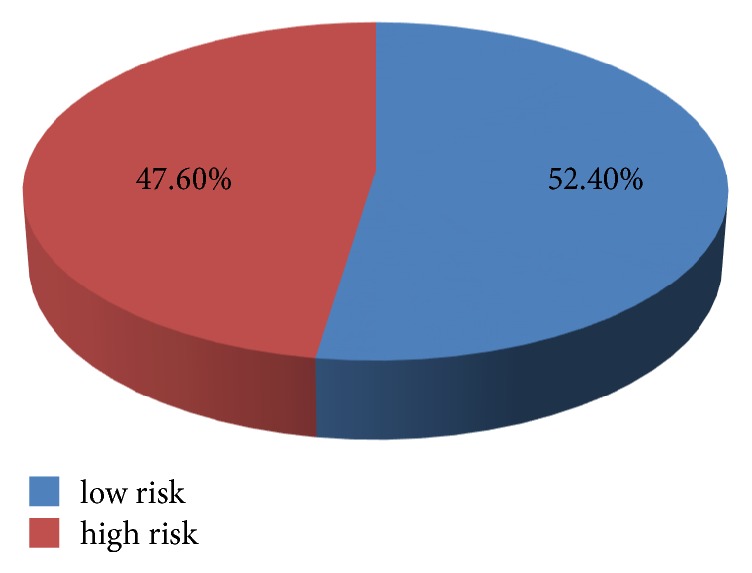
The total risk score for the study subjects ranged from 0 to 11 with a mean score of 3.41 ± 2.55. Nearly half (47.6%) of study participants had high risk to develop thromboembolism. Thrombocytopenia (platelets < 50 billion/L) or coagulopathy, active hemorrhage, and end stage liver disease (INR > 1.5) were the frequently observed absolute contraindications that potentially prevent patients from receiving thromboprophylaxis. Thromboprophylaxis use in nearly one-third (31.6%) of patients admitted in the medical ward of UoGRH was irrational. Patients who had high risk for thromboembolism are more likely to be inappropriately managed for their risk of thromboembolism and patients with thrombocytopenia or coagulopathy were more likely to be managed appropriately.
There is underutilization of pharmacologic thromboprophylaxis in medical ward patients. Physicians working there should be aware of risk factors for DVT and indications for pharmacologic thromboprophylaxis and should adhere to guideline recommendations.
大多数住院患者有发生深静脉血栓形成(DVT)的风险。使用药物预防可显著降低高危患者血栓栓塞事件的发生率。本研究的目的是评估埃塞俄比亚一家转诊医院住院内科患者DVT预防措施的合理性。
采用横断面研究设计。诊断为DVT、正在接受抗凝治疗以及拒绝参与的患者被排除在研究之外。采用简单随机抽样方法纳入206例患者。使用改良的帕多瓦风险评估模型来确定血栓栓塞风险。使用SPSS(版本21)进行分析。
研究对象的总风险评分范围为0至11,平均评分为3.41±2.55。近一半(47.6%)的研究参与者有发生血栓栓塞的高风险。血小板减少症(血小板<500亿/L)或凝血功能障碍、活动性出血以及终末期肝病(国际标准化比值>1.5)是经常观察到的可能阻止患者接受血栓预防的绝对禁忌证。在UoGRH内科病房收治的近三分之一(31.6%)患者中,血栓预防措施的使用不合理。有血栓栓塞高风险的患者在血栓栓塞风险管理方面更有可能管理不当,而血小板减少症或凝血功能障碍患者更有可能得到适当管理。
内科病房患者药物性血栓预防措施未得到充分利用。在那里工作的医生应了解DVT的危险因素和药物性血栓预防的适应证,并应遵循指南建议。