Translational Transplant Research Center, Icahn School of Medicine at Mount Sinai, New York, NY, USA.
Department of Medicine, Immunology Institute, Icahn School of Medicine at Mount Sinai, New York, NY, USA.
Am J Transplant. 2019 Mar;19(3):633-645. doi: 10.1111/ajt.15072. Epub 2018 Sep 17.
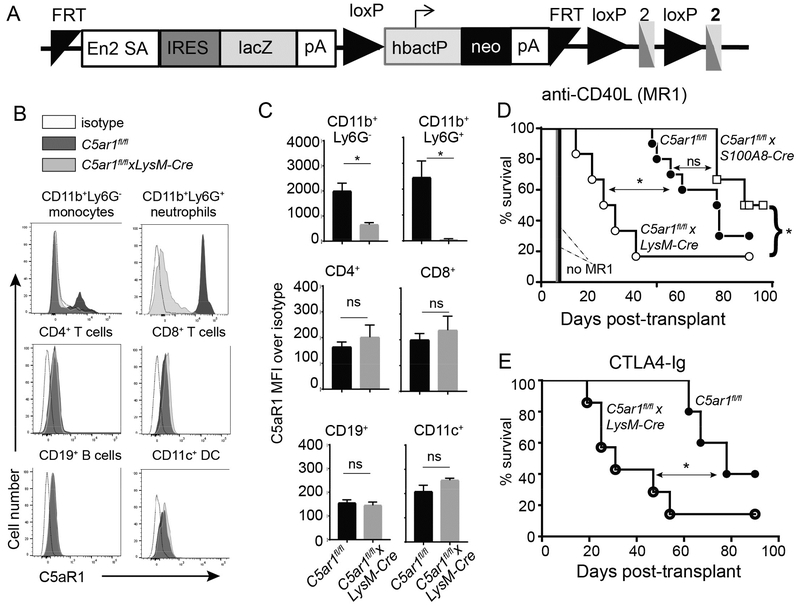
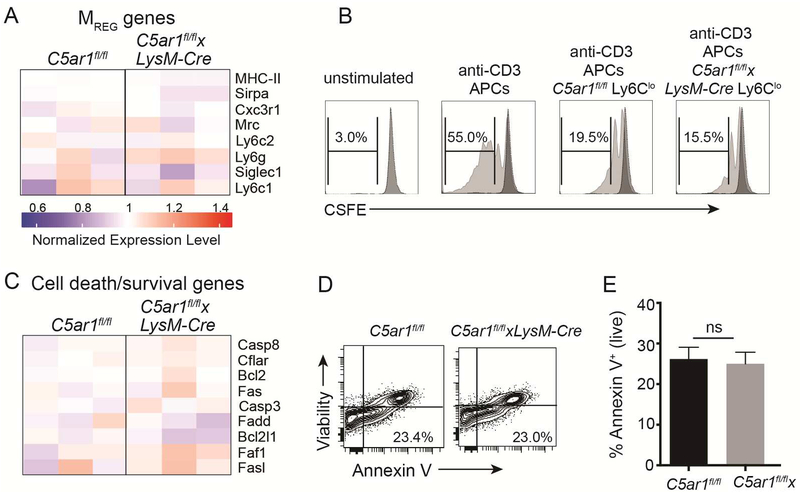
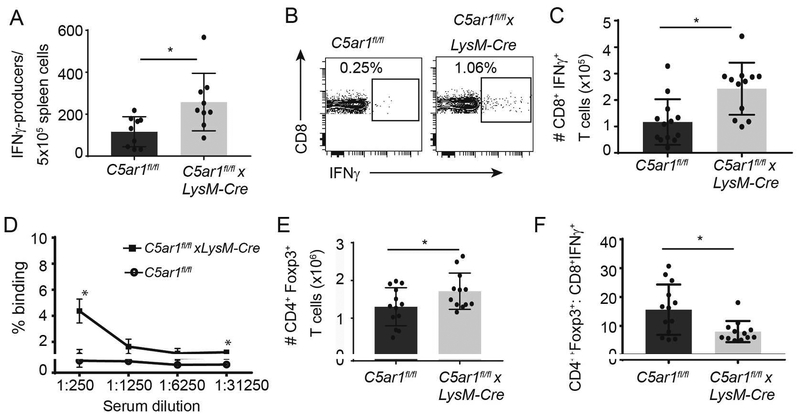
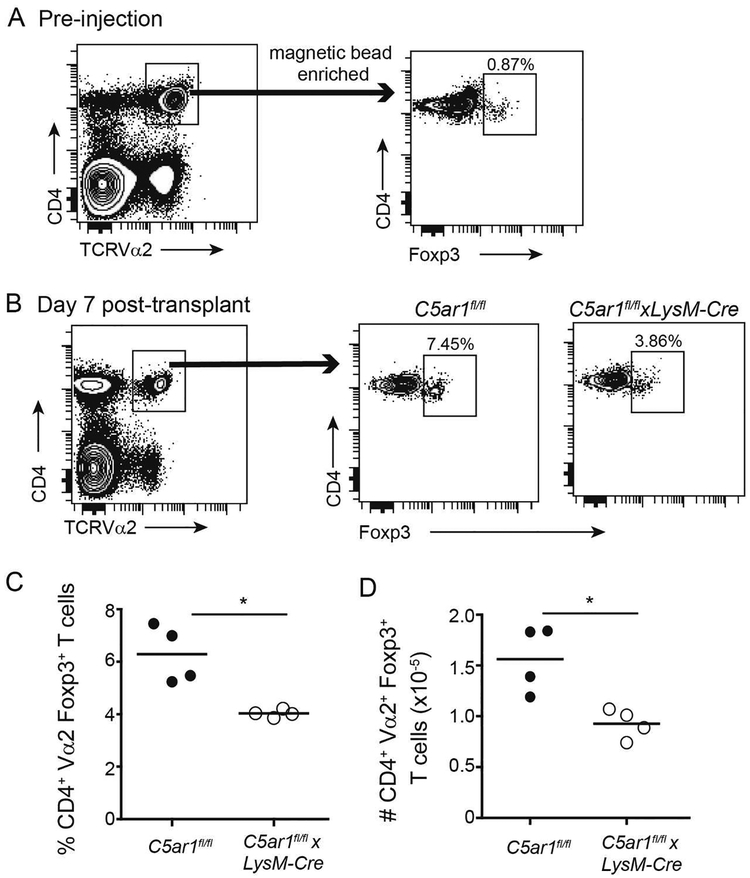
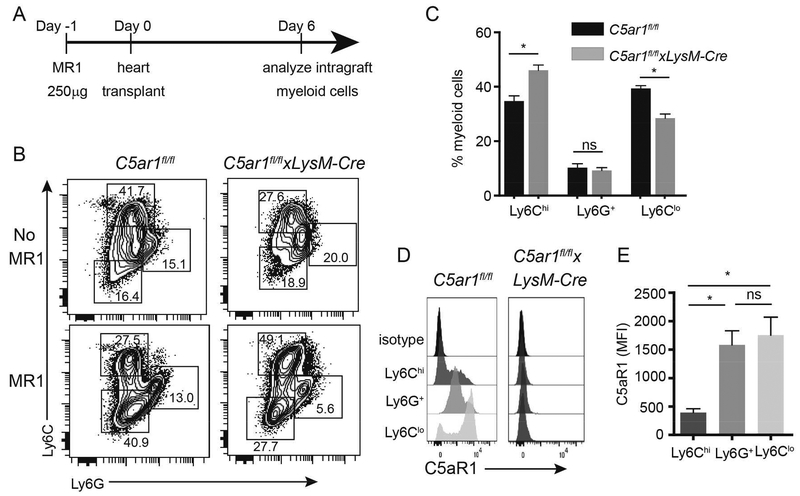
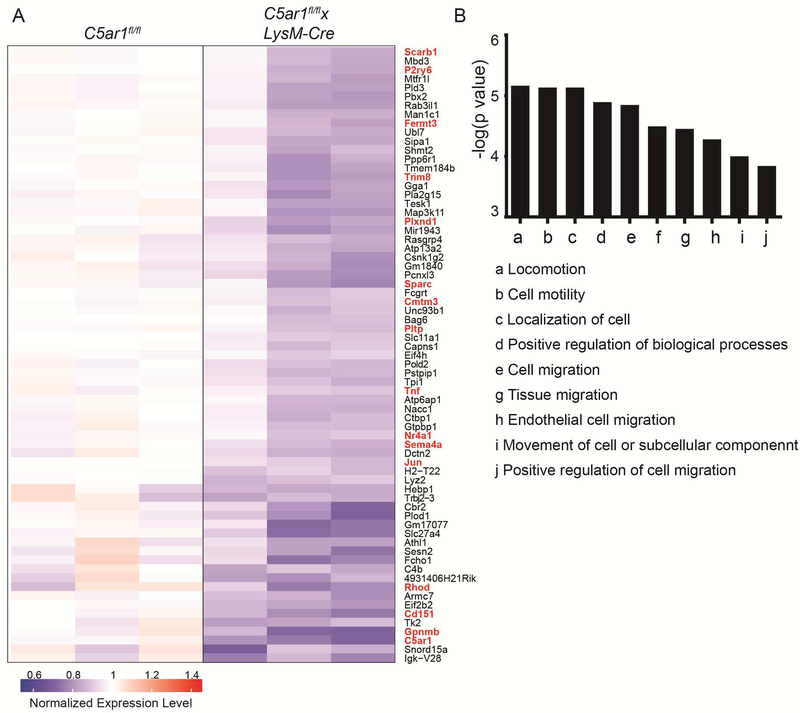
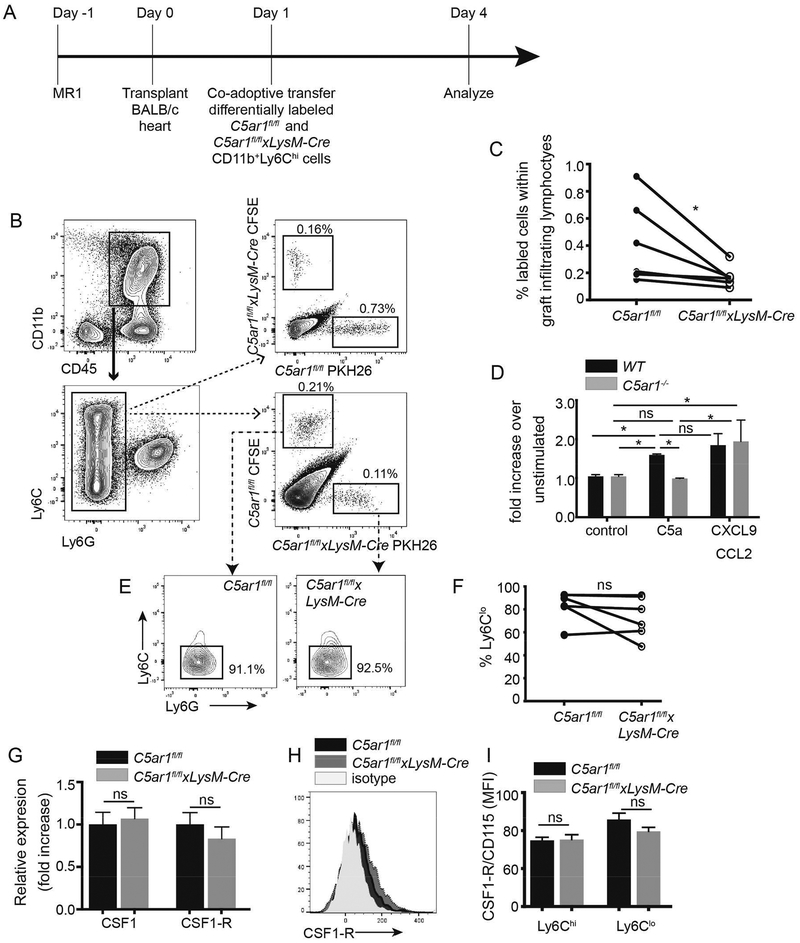
Costimulatory blockade-induced murine cardiac allograft survival requires intragraft accumulation of CD11b Ly6C Ly6G regulatory myeloid cells (Mregs) that expand regulatory T cells (Tregs) and suppress effector T cells (Teffs). We previously showed that C5a receptor (C5aR1) signaling on T cells activates Teffs and inhibits Tregs, but whether and/or how C5aR1 affects Mregs required for transplant survival is unknown. Although BALB/c hearts survived >60 days in anti-CD154 (MR1)-treated or cytotoxic T-lymphocyte associated protein 4 (CTLA4)-Ig-treated wild-type (WT) recipients, they were rejected at ~30 days in MR1-treated or CTLA4-Ig-treated recipients selectively deficient in C5aR1 restricted to myeloid cells (C5ar1 xLysM-Cre). This accelerated rejection was associated with ~2-fold more donor-reactive T cells and ~40% less expansion of donor-reactive Tregs. Analysis of graft-infiltrating mononuclear cells on posttransplant day 6 revealed fewer Ly6C monocytes in C5ar1 xLysM-Cre recipients. Expression profiling of intragraft Ly6C monocytes showed that C5aR1 deficiency downregulated genes related to migration/locomotion without changes in genes associated with suppressive function. Cotransfer of C5ar1 and C5ar1 xLysM-Cre myeloid cells into MR1-treated allograft recipients resulted in less accumulation of C5ar1 cells within the allografts, and in vitro assays confirmed that Ly6C myeloid cells migrate to C5a/C5aR1-initiated signals. Together, our results newly link myeloid cell-expressed C5aR1 to intragraft accumulation of myeloid cells required for prolongation of heart transplant survival induced by costimulatory blockade.
共刺激阻断诱导的小鼠心脏移植存活需要在移植物内积累 CD11b Ly6C Ly6G 调节性髓系细胞(Mregs),这些细胞可以扩增调节性 T 细胞(Tregs)并抑制效应 T 细胞(Teffs)。我们之前表明,T 细胞上的 C5a 受体(C5aR1)信号激活 Teffs 并抑制 Tregs,但 C5aR1 是否以及/或如何影响移植存活所需的 Mregs 尚不清楚。尽管在抗 CD154(MR1)治疗或细胞毒性 T 淋巴细胞相关蛋白 4(CTLA4)-Ig 治疗的野生型(WT)受者中,BALB/c 心脏存活时间超过 60 天,但在 MR1 治疗或 CTLA4-Ig 治疗的 C5aR1 仅限于髓系细胞(C5ar1 xLysM-Cre)缺陷受者中,心脏在约 30 天被排斥。这种加速排斥与供体反应性 T 细胞增加约 2 倍和供体反应性 Tregs 扩增减少约 40%有关。移植后第 6 天对移植物浸润的单核细胞分析显示,C5ar1 xLysM-Cre 受者中的 Ly6C 单核细胞较少。对移植物内 Ly6C 单核细胞的表达谱分析表明,C5aR1 缺乏下调与迁移/运动相关的基因,而与抑制功能相关的基因没有变化。在 MR1 治疗的同种异体移植物受者中同时转染 C5ar1 和 C5ar1 xLysM-Cre 髓系细胞导致 C5ar1 细胞在同种异体移植物内的积累减少,体外测定证实 Ly6C 髓系细胞向 C5a/C5aR1 起始信号迁移。总之,我们的结果新表明,髓系细胞表达的 C5aR1 与共刺激阻断诱导的心脏移植存活延长所需的髓系细胞在移植物内的积累有关。