Penn State College of Medicine, Division of Academic General Pediatrics, Department of Pediatrics, Hershey, PA.
Quadrant Biosciences, Inc., Syracuse, NY.
Autism Res. 2018 Sep;11(9):1286-1299. doi: 10.1002/aur.1972. Epub 2018 Aug 14.
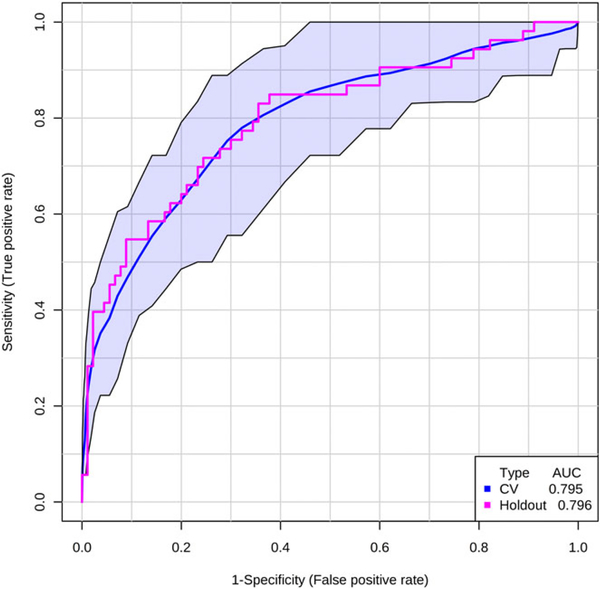
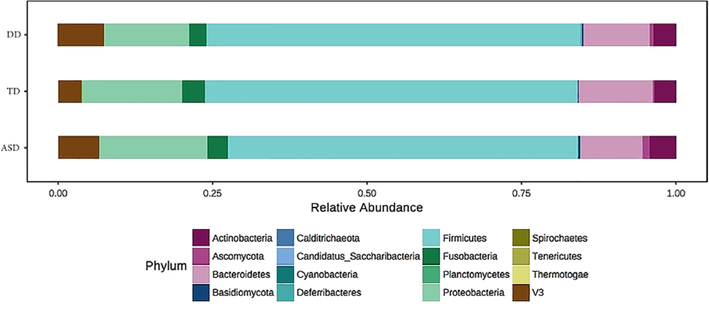
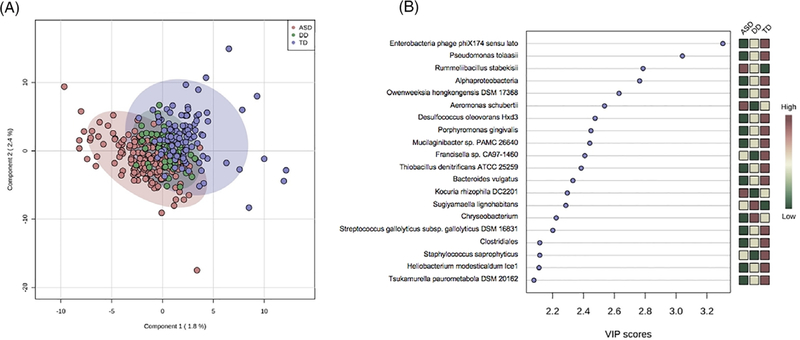
Autism spectrum disorder (ASD) is associated with several oropharyngeal abnormalities, including buccal sensory sensitivity, taste and texture aversions, speech apraxia, and salivary transcriptome alterations. Furthermore, the oropharynx represents the sole entry point to the gastrointestinal (GI) tract. GI disturbances and alterations in the GI microbiome are established features of ASD, and may impact behavior through the "microbial-gut-brain axis." Most studies of the ASD microbiome have used fecal samples. Here, we identified changes in the salivary microbiome of children aged 2-6 years across three developmental profiles: ASD (n = 180), nonautistic developmental delay (DD; n = 60), and typically developing (TD; n = 106) children. After RNA extraction and shotgun sequencing, actively transcribing taxa were quantified and tested for differences between groups and within ASD endophenotypes. A total of 12 taxa were altered between the developmental groups and 28 taxa were identified that distinguished ASD patients with and without GI disturbance, providing further evidence for the role of the gut-brain axis in ASD. Group classification accuracy was visualized with receiver operating characteristic curves and validated using a 50/50 hold-out procedure. Five microbial ratios distinguished ASD from TD participants (79.5% accuracy), three distinguished ASD from DD (76.5%), and three distinguished ASD children with/without GI disturbance (85.7%). Taxonomic pathways were assessed using the Kyoto Encyclopedia of Genes and Genomes microbial database and compared with one-way analysis of variance, revealing significant differences within energy metabolism and lysine degradation. Together, these results indicate that GI microbiome disruption in ASD extends to the oropharynx, and suggests oral microbiome profiling as a potential tool to evaluate ASD status. Autism Res 2018, 11: 1286-1299. © 2018 International Society for Autism Research, Wiley Periodicals, Inc. LAY SUMMARY: Previous research suggests that the bacteria living in the human gut may influence autistic behavior. This study examined genetic activity of microbes living in the mouth of over 300 children. The microbes with differences in children with autism were involved in energy processing and showed potential for identifying autism status.
自闭症谱系障碍(ASD)与多种口咽异常相关,包括颊部感觉敏感、味觉和质地厌恶、言语运动障碍和唾液转录组改变。此外,口咽是进入胃肠道(GI)的唯一入口。胃肠道紊乱和胃肠道微生物组改变是 ASD 的既定特征,并且可能通过“微生物-肠道-大脑轴”影响行为。大多数 ASD 微生物组的研究都使用粪便样本。在这里,我们鉴定了三个发育特征的 2-6 岁儿童的唾液微生物组的变化:自闭症(n = 180)、非自闭症发育迟缓(DD;n = 60)和典型发育(TD;n = 106)儿童。在提取 RNA 和进行 shotgun 测序后,定量分析活跃转录分类群,并测试组间差异和 ASD 内表型差异。共有 12 个分类群在发育组之间发生改变,28 个分类群可区分 ASD 患者和无胃肠道紊乱患者,进一步证明了肠道-大脑轴在 ASD 中的作用。通过接收者操作特征曲线可视化组分类准确性,并使用 50/50 保留程序进行验证。有五个微生物比值可以区分 ASD 与 TD 参与者(79.5%准确率),三个可以区分 ASD 与 DD(76.5%),三个可以区分 ASD 患者和/或无胃肠道紊乱患者(85.7%)。使用京都基因与基因组百科全书微生物数据库评估分类途径,并与单因素方差分析进行比较,结果显示能量代谢和赖氨酸降解内存在显著差异。总的来说,这些结果表明 ASD 中的胃肠道微生物组破坏延伸到口咽,并且表明口腔微生物组分析可能是评估 ASD 状态的潜在工具。自闭症研究 2018, 11: 1286-1299. © 2018 国际自闭症研究协会,威利期刊,公司