Department of Neuroscience, Section Medical Physiology, University of Groningen, University Medical Center Groningen, Groningen, Netherlands.
Front Immunol. 2018 Jul 31;9:1753. doi: 10.3389/fimmu.2018.01753. eCollection 2018.
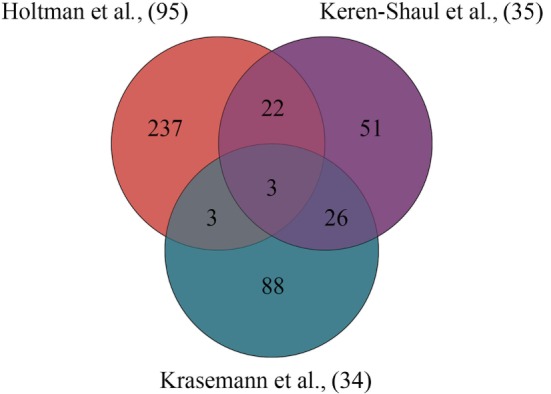
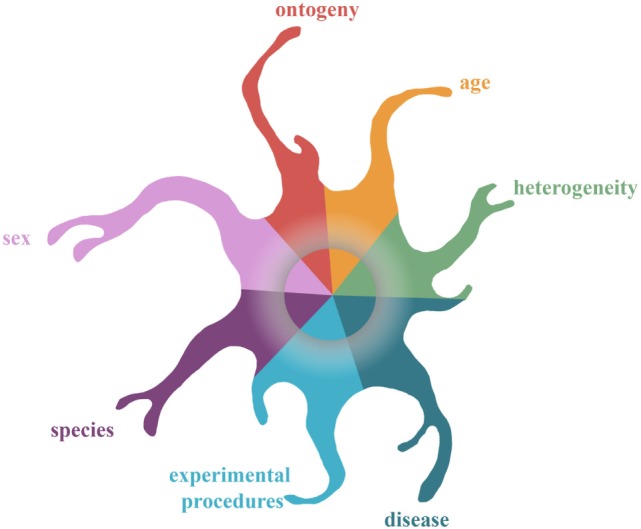
Gene expression analyses of microglia, the tissue-resident macrophages of the central nervous system (CNS), led to the identification of homeostatic as well as neurological disease-specific gene signatures of microglial phenotypes. Upon alterations in the neural microenvironment, either caused by local insults from within the CNS (during neurodegenerative diseases) or by macroenvironmental incidents, such as social stress, microglia can switch phenotypes-generally referred to as "microglial activation." The interplay between the microenvironment and its influence on microglial phenotypes, regulated by (epi)genetic mechanisms, can be imagined as the different colorful crystal formations (microglial phenotypes) that change upon rotation (microenvironmental changes) of a kaleidoscope. In this review, we will discuss microglial phenotypes in relation to neurodevelopment, homeostasis, conditions, aging, and neurodegenerative diseases based on transcriptome studies. By overlaying these disease-specific microglial signatures, recent publications have identified a specific set of genes that is differentially expressed in all investigated diseases, called a microglial core gene signature with multiple diseases. We will conclude this review with a discussion about the complexity of this microglial core gene signature associated with multiple diseases.
对中枢神经系统(CNS)驻留巨噬细胞——小胶质细胞的基因表达分析,导致了小胶质细胞表型的稳态和神经疾病特异性基因特征的鉴定。在神经微环境发生改变时,无论是由 CNS 内的局部损伤引起(在神经退行性疾病期间)还是由宏观环境事件引起,例如社会压力,小胶质细胞都可以改变表型——通常称为“小胶质细胞激活”。微环境及其对小胶质细胞表型的影响之间的相互作用,受(表观)遗传机制的调节,可以想象为不同颜色的晶体形成(小胶质细胞表型),在万花筒旋转(微环境变化)时发生变化。在这篇综述中,我们将根据转录组研究讨论小胶质细胞表型与神经发育、稳态、疾病、衰老和神经退行性疾病的关系。通过叠加这些疾病特异性的小胶质细胞特征,最近的出版物已经确定了一组在所有研究疾病中差异表达的特定基因,称为具有多种疾病的小胶质细胞核心基因特征。我们将在讨论与多种疾病相关的小胶质细胞核心基因特征的复杂性后结束这篇综述。