Wendland Eliana Marcia, Horvath Jaqueline Driemeyer Correia, Kops Natália Luiza, Bessel Marina, Caierão Juliana, Hohenberger Glaucia Fragoso, Domingues Carla Magda, Maranhão Ana Goretti Kalume, de Souza Flavia Moreno Alves, Benzaken Adele Schwartz
Hospital Moinhos de Vento Federal University of Health Science of Porto Alegre, Porto Alegre, Brazil National Immunization Program Department of Surveillance, Prevention and Control of Sexually Transmitted Infections, HIV/AIDS and Viral Hepatitis, Brazilian Ministry of Health, Brazil.
Medicine (Baltimore). 2018 Aug;97(33):e11758. doi: 10.1097/MD.0000000000011758.
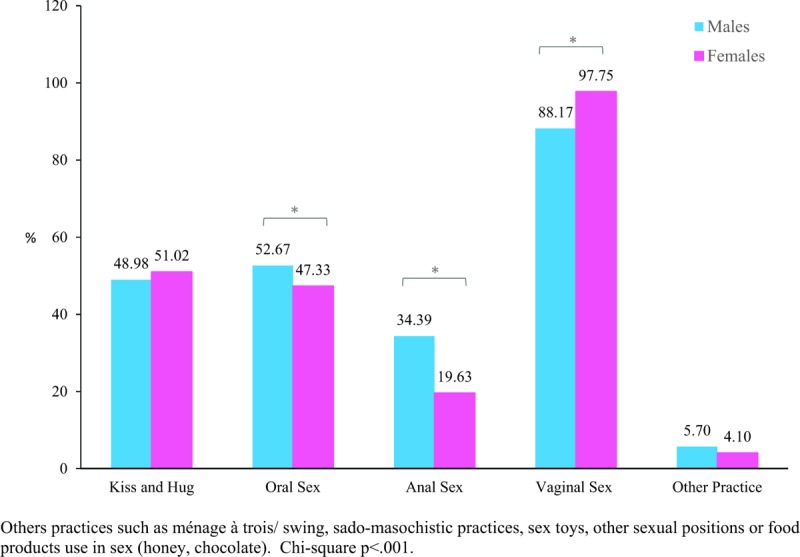
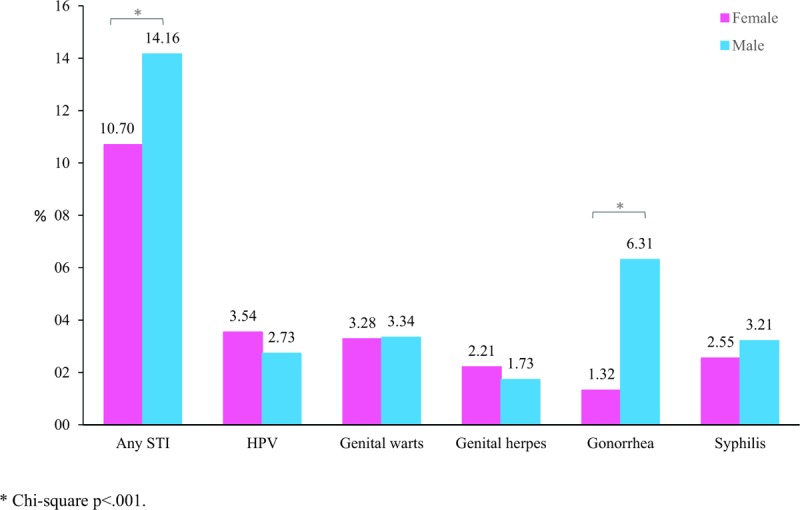
The sexual behaviors of 15- to 24-year-olds increase the risk of this population to acquire sexually transmitted infections (STIs). The present study aimed to describe the sexual behavior in the transition to adulthood Brazilian population and its association with STI history.We analyzed cross-sectional data collected from 8562 sexually active women and men who participated in the National Survey of Human Papillomavirus Prevalence (POP-Brazil). This large-scale survey enrolled participants from 26 Brazilian capitals and the Federal District. Professionals from primary care facilities were trained to collect data utilizing a standardized questionnaire with questions on sociodemographic, sexual behavior, and drug use. We constructed a Poisson model with robust variance for both crude and adjusted analysis to investigate the associations between the variables. To adjust the distribution of the sample to the study population, we weighted the measures by the population size in each city and by gender.There were differences in several aspects from sexual behavior between genders. The majority of men reported an early sexual initiation, more sexual partners, and a different practice in sexual positions when compared with women. Women reported use of contraception more frequently than men (P < .001). The use of alcohol and drugs and the use of drugs before sexual intercourse impact in STIs equally between the genders. Exclusive for women, the presence of any STI was associated with the practice of vaginal sex and other types of intercourse (adjusted prevalence ratio [APR] 1.43, 95% CI 1.08-1.88). For men, the number of sexual partners in the last year (APR 1.02, 95% CI 1.01-1.04), not having vaginal sex (APR 3.25, 95% CI 1.78-5.92) and sexual experience with someone of the same sex (APR 4.05, 95% CI, 2.88-5.70) were associated with a higher presence of STIs.This is the first report regarding sexual behavior in a nationally representative population sample in Brazil. This study provides more valid estimates of sexual behavior and associated STIs, identifying important differences in sexual behavior and identifying predictors for referred STIs among females and males.
15至24岁人群的性行为增加了该人群感染性传播感染(STIs)的风险。本研究旨在描述巴西成年过渡人群的性行为及其与性传播感染病史的关联。我们分析了从8562名性活跃的男性和女性收集的横断面数据,这些人参与了全国人乳头瘤病毒患病率调查(巴西流行率调查)。这项大规模调查招募了来自巴西26个首府和联邦区的参与者。初级保健机构的专业人员经过培训,使用标准化问卷收集数据,问卷内容包括社会人口学、性行为和药物使用等问题。我们构建了一个具有稳健方差的泊松模型用于粗分析和校正分析,以研究变量之间的关联。为了使样本分布与研究人群相匹配,我们根据每个城市的人口规模和性别对测量值进行加权。男女在性行为的几个方面存在差异。与女性相比,大多数男性报告性起始较早、性伴侣更多且性行为姿势不同。女性报告使用避孕措施的频率高于男性(P<0.001)。饮酒和吸毒以及性交前吸毒对男女感染性传播感染的影响相同。仅对女性而言,任何性传播感染的存在与阴道性交和其他性交方式有关(校正患病率比[APR]为1.43,95%可信区间为1.08 - 1.88)。对男性而言,过去一年的性伴侣数量(APR为1.02,95%可信区间为1.01 - 1.04)、未进行阴道性交(APR为3.25,95%可信区间为1.78 - 5.92)以及与同性的性经历(APR为4.05,95%可信区间为2.88 - 5.70)与性传播感染的较高发生率有关。这是关于巴西全国代表性人群样本性行为的首份报告。本研究提供了更有效的性行为及相关性传播感染的估计值,确定了性行为的重要差异,并确定了女性和男性中上述性传播感染的预测因素。