Zou Lei, Song Xiaochun, Hong Liang, Shen Xiao, Sun Jiakui, Zhang Cui, Mu Xinwei
Department of Intensive Care Unit, Nanjing First Hospital, Nanjing Medical University, Nanjing, Jiangsu Province, China.
Medicine (Baltimore). 2018 Aug;97(33):e11782. doi: 10.1097/MD.0000000000011782.
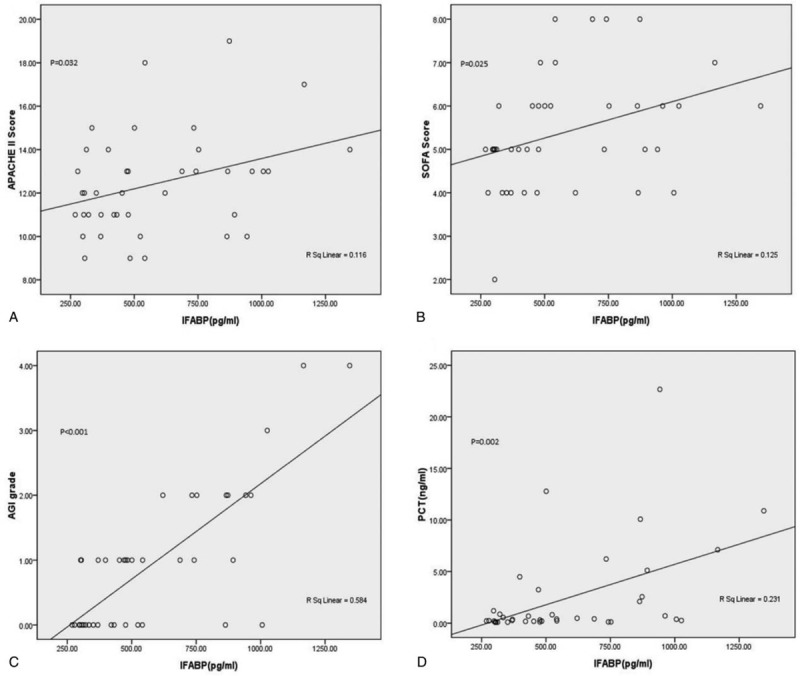
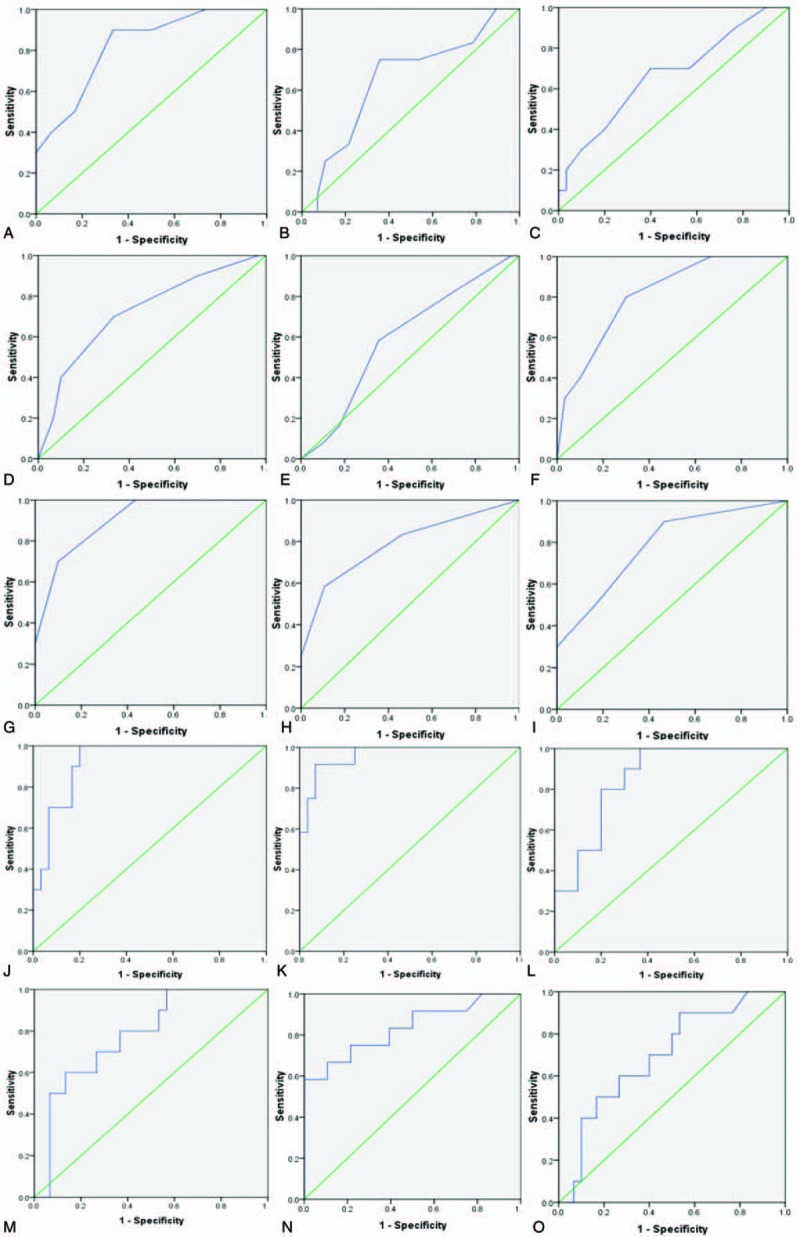
During the perioperative period of cardiac disease, as many risk factors exist, such as primary cardiac diseases, the use of vasopressors, ischemia-reperfusion injury during cardiopulmonary bypass (CPB), and surgical stress, the gut suffered from ischemia, anoxia and oxidative stress, which would lead to the enterocyte injury. The aim of this study was to explore whether serum intestinal fatty acid-binding protein (IFABP), which is excreted specifically from damaged intestinal enterocytes, as a predictor of prognosis in postoperative cardiac surgery patients.From January 2017 to December 2017, 40 postoperative cardiac surgery patients were enrolled in this observational study. Serum IFABP levels and prognostic biomarkers were recorded at intensive care unit (ICU) admission.The serum IFABP levels were significantly higher in postoperative cardiac surgery patients who complicated with multiple organ dysfunction syndrome (MODS) (median, 883.20 pg/mL vs 426.10 pg/mL; P < .001), infective complications (median, 917.70 pg/mL vs 409.40 pg/mL; P < .001), or who stayed in ICU beyond 4 days (median, 807.65 pg/mL vs 426.10 pg/mL; P < .001). Moreover, in patients who suffered from right ventricular dysfunction, the serum IFABP levels were significantly higher (median, 737.85 pg/mL vs 445.55 pg/mL; P = .016). The serum IFABP levels also showed great precision for the prediction of MODS (the area under curve, AUC 0.923), infective complications (AUC 0.961) and ICU stay beyond 4 days (AUC 0.853). And it correlated significantly with the acute physiology and chronic health evaluation (APACHE) II score (P < .05), sequential organ failure assessment (SOFA) score (P < .05), and acute gastrointestinal injury (AGI) grade (P < .001).The serum IFABP level at ICU admission is a valuable, convenient, and objective early predictor of prognosis in postoperative cardiac surgery patients.
在心脏疾病围手术期,由于存在多种危险因素,如原发性心脏疾病、血管升压药的使用、体外循环(CPB)期间的缺血再灌注损伤以及手术应激等,肠道会遭受缺血、缺氧和氧化应激,进而导致肠上皮细胞损伤。本研究的目的是探讨血清肠脂肪酸结合蛋白(IFABP),即受损肠上皮细胞特异性分泌的蛋白,能否作为心脏手术后患者预后的预测指标。
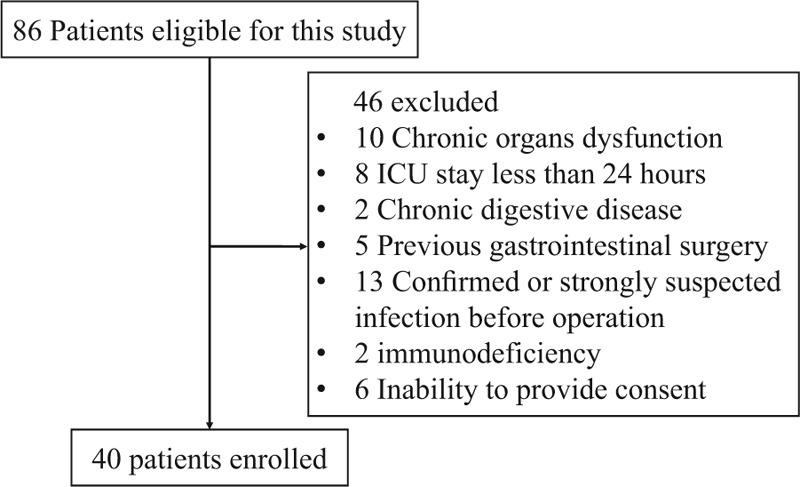
2017年1月至2017年12月,40例心脏手术后患者纳入本观察性研究。在重症监护病房(ICU)入院时记录血清IFABP水平和预后生物标志物。
心脏手术后并发多器官功能障碍综合征(MODS)的患者血清IFABP水平显著更高(中位数,883.20 pg/mL对426.10 pg/mL;P <.001),发生感染性并发症的患者血清IFABP水平显著更高(中位数,917.70 pg/mL对409.40 pg/mL;P <.001),或者在ICU停留超过4天的患者血清IFABP水平显著更高(中位数,807.65 pg/mL对426.10 pg/mL;P <.001)。此外,右心室功能障碍患者的血清IFABP水平显著更高(中位数,737.85 pg/mL对445.55 pg/mL;P = 0.016)。血清IFABP水平对MODS(曲线下面积,AUC 0.923)、感染性并发症(AUC 0.961)和在ICU停留超过4天(AUC 0.853)的预测也具有很高的准确性。并且它与急性生理与慢性健康状况评分系统(APACHE)Ⅱ评分(P <.05)、序贯器官衰竭评估(SOFA)评分(P <.05)以及急性胃肠损伤(AGI)分级(P <.001)显著相关。
ICU入院时的血清IFABP水平是心脏手术后患者预后有价值、便捷且客观的早期预测指标。