Yao Can, Liu Hai-Ning, Wu Hao, Chen Yan-Jie, Li Yu, Fang Ying, Shen Xi-Zhong, Liu Tao-Tao
Department of Gastroenterology, Zhongshan Hospital of Fudan University, 180 Fenglin Road, Shanghai 200032, China.
Shanghai Institute of Liver Diseases, Zhongshan Hospital of Fudan University, 180 Fenglin Road, Shanghai 200032, China.
J Cancer. 2018 Jul 30;9(16):2876-2884. doi: 10.7150/jca.25351. eCollection 2018.
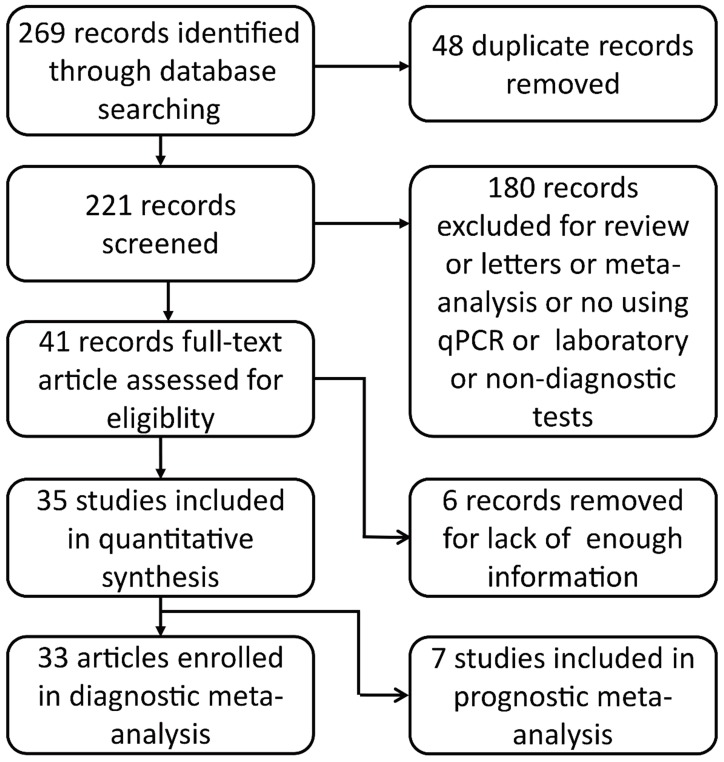
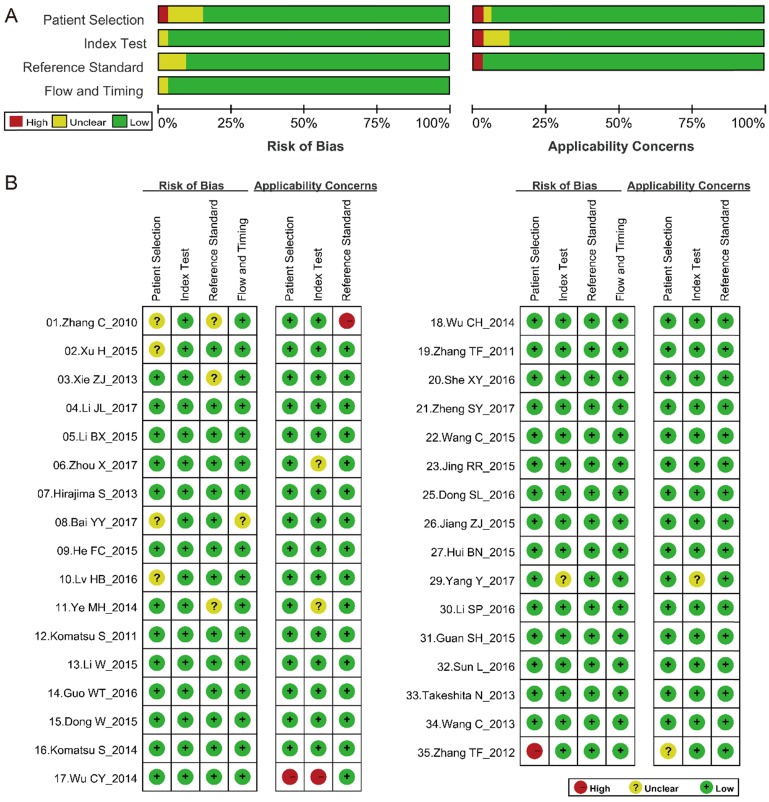
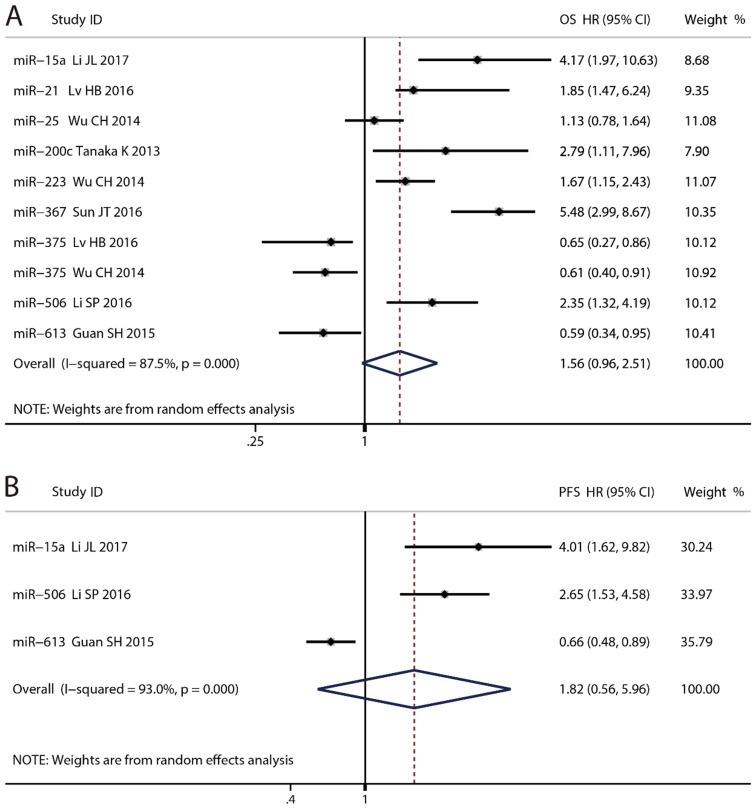
MicroRNAs, dysregulated in the circulation of esophageal squamous cell carcinoma (ESCC) patient, have been assumed to be with great potential in the diagnosis and prognosis of esophageal cancer. We aimed to review previous articles on ESCC. A search of electronic databases was performed before Nov 12, 2017. We summarized the identification of microRNA imbalance in the blood of ESCC compared with the healthy controls, with the objective to evaluate the efficiency of microRNAs in diagnosing and forecasting ESCC. A total of 35 studies investigating plasma or serum microRNAs were included in the meta-analysis. Based on the consequences of the quality assessment of each study, the articles involved were appropriate for quantitative synthesis. For diagnostic meta-analysis. The overall pooled sensitivity, specificity, and area under the curve of circulating microRNA is 0.794 (95% CI: 0.765 - 0.820), 0.779 (95%CI: 0.746 - 0.808), 0.86 (95%CI: 0.82 - 0.88). The diagnostic value of each microRNA was calculated respectively. For prognostic meta-analysis, the overall pooled hazard ratios of higher microRNA expression in circulation was 1.34 (95% CI: 1.14-1.58), which could significantly predict poorer survival in ESCC. Circulating microRNAs distinguish patients with ESCC from healthy controls with high sensitivity and specificity, compared to other invasive currently used screening methods. Simultaneously, there was prognostic value for the prognosis of ESCC.
微小RNA在食管鳞状细胞癌(ESCC)患者的血液循环中表达失调,被认为在食管癌的诊断和预后方面具有巨大潜力。我们旨在回顾以往关于ESCC的文章。于2017年11月12日前对电子数据库进行了检索。我们总结了与健康对照相比,ESCC患者血液中微小RNA失衡的情况,目的是评估微小RNA在诊断和预测ESCC方面的效能。共有35项研究血浆或血清微小RNA的研究纳入了荟萃分析。根据对每项研究质量评估的结果,所涉及的文章适合进行定量合成。对于诊断性荟萃分析。循环微小RNA的总体合并敏感性、特异性和曲线下面积分别为0.794(95%CI:0.765 - 0.820)、0.779(95%CI:0.746 - 0.808)、0.86(95%CI:0.82 - 0.88)。分别计算了每种微小RNA的诊断价值。对于预后性荟萃分析,循环中较高微小RNA表达的总体合并风险比为1.34(95%CI:1.14 - 1.58),这可以显著预测ESCC患者较差的生存率。与目前使用的其他侵入性筛查方法相比,循环微小RNA能以高敏感性和特异性区分ESCC患者与健康对照。同时,其对ESCC的预后具有预后价值。