Corigliano Domenica M, Syed Riyaz, Messineo Sebastiano, Lupia Antonio, Patel Rahul, Reddy Chittireddy Venkata Ramana, Dubey Pramod K, Colica Carmela, Amato Rosario, De Sarro Giovambattista, Alcaro Stefano, Indrasena Adisherla, Brunetti Antonio
Department of Health Sciences, University "Magna Græcia" of Catanzaro, Catanzaro, Italy.
Department of Chemistry, Jawaharlal Nehru Technological University, Kukatpally, Hyderabad, India.
PeerJ. 2018 Aug 8;6:e5386. doi: 10.7717/peerj.5386. eCollection 2018.
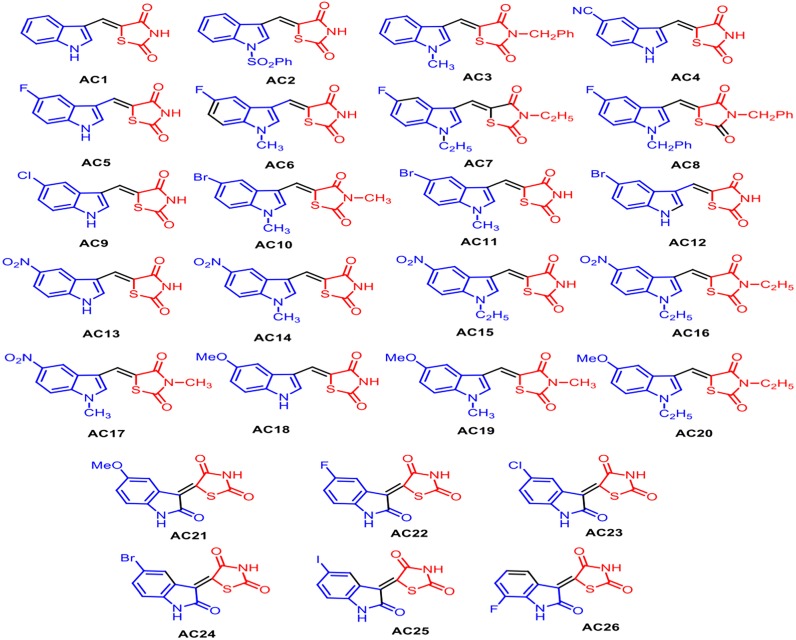
Thiazolidinediones (TZDs), also called glitazones, are five-membered carbon ring molecules commonly used for the management of insulin resistance and type 2 diabetes. Recently, many prospective studies have also documented the impact of these compounds as anti-proliferative agents, though several negative side effects such as hepatotoxicity, water retention and cardiac issues have been reported. In this work, we synthesized twenty-six new TZD analogues where the thiazolidinone moiety is directly connected to an N-heterocyclic ring in order to lower their toxic effects.
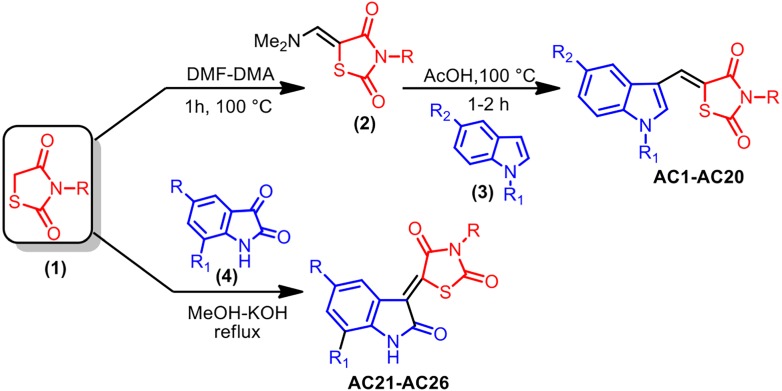
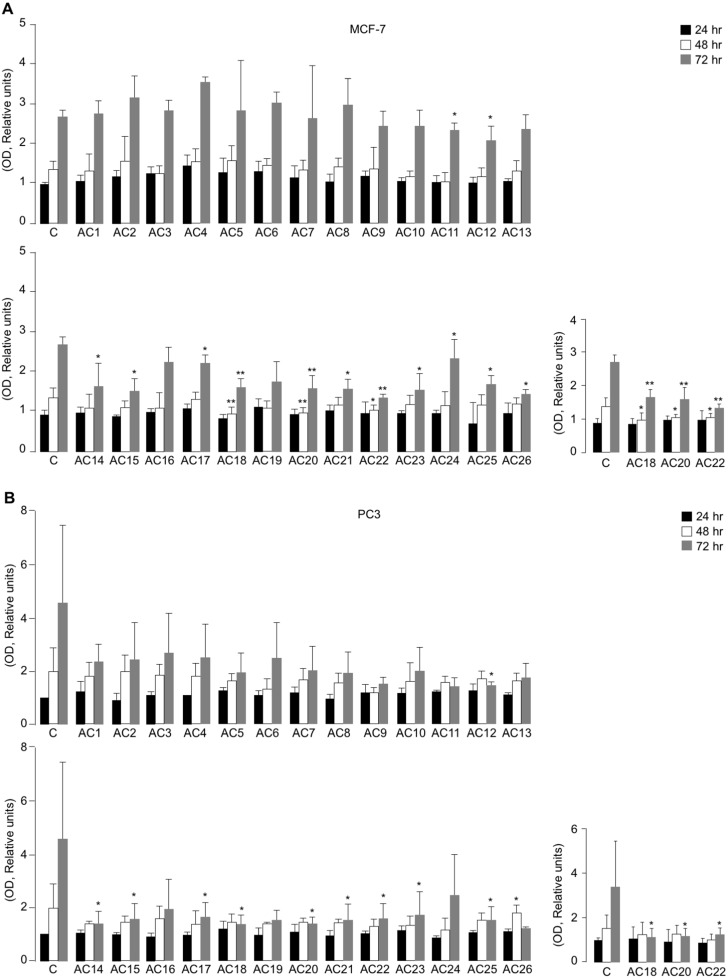
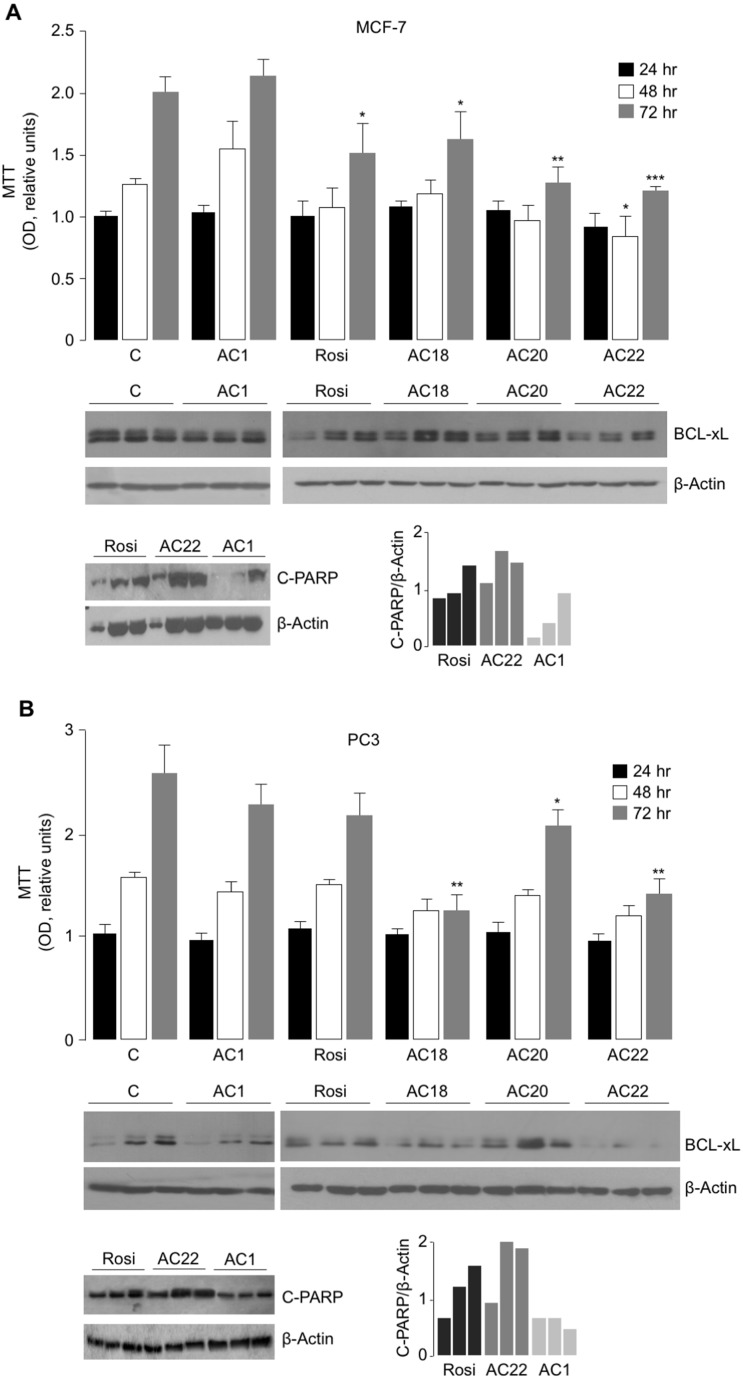
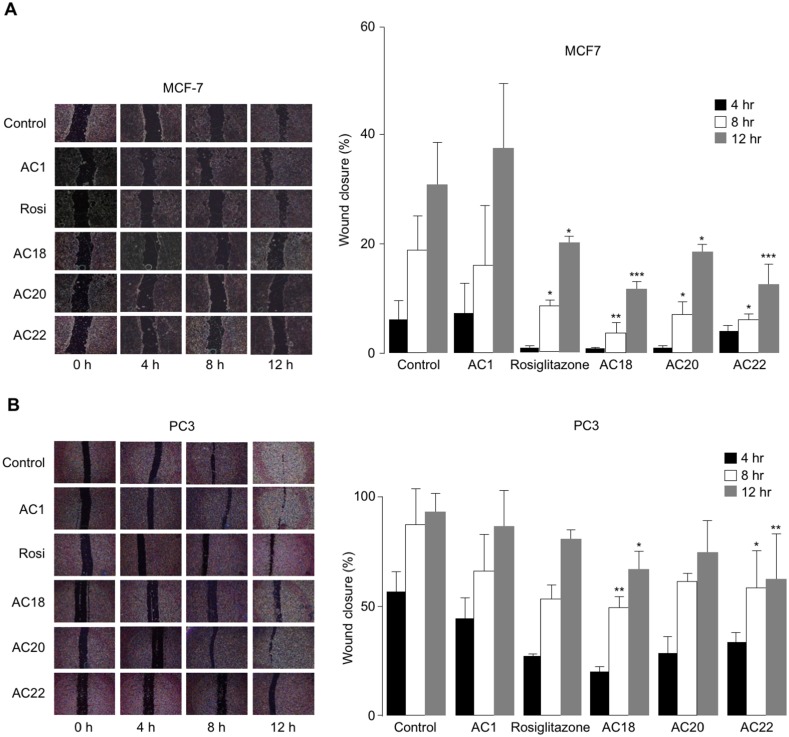
By adopting a widely applicable synthetic method, twenty-six TZD derivatives were synthesized and tested for their antiproliferative activity in MTT and Wound healing assays with PC3 (prostate cancer) and MCF-7 (breast cancer) cells.
Three compounds, out of twenty-six, significantly decreased cellular viability and migration, and these effects were even more pronounced when compared with rosiglitazone, a well-known member of the TZD class of antidiabetic agents. As revealed by Western blot analysis, part of this antiproliferative effect was supported by apoptosis studies evaluating BCL-xL and C-PARP protein expression.
Our data highlight the promising potential of these TZD derivatives as anti-proliferative agents for the treatment of prostate and breast cancer.
噻唑烷二酮类药物(TZDs),也称为格列酮类,是五元碳环分子,常用于治疗胰岛素抵抗和2型糖尿病。最近,许多前瞻性研究也记录了这些化合物作为抗增殖剂的作用,尽管已经报道了一些负面副作用,如肝毒性、水潴留和心脏问题。在这项工作中,我们合成了26种新的TZDs类似物,其中噻唑烷二酮部分直接与N-杂环相连,以降低其毒性作用。
采用一种广泛适用的合成方法,合成了26种TZD衍生物,并在MTT和伤口愈合试验中用PC3(前列腺癌)和MCF-7(乳腺癌)细胞测试了它们的抗增殖活性。
26种化合物中有3种显著降低了细胞活力和迁移,与噻唑烷二酮类抗糖尿病药物中的知名成员罗格列酮相比,这些作用更为明显。蛋白质印迹分析显示,评估BCL-xL和C-PARP蛋白表达的凋亡研究支持了部分这种抗增殖作用。
我们的数据突出了这些TZD衍生物作为治疗前列腺癌和乳腺癌的抗增殖剂的潜在前景。