School of Biochemistry and Immunology, Trinity Biomedical Sciences Institute, Trinity College Dublin, Dublin 2, Ireland.
Department of Molecular and Cellular Therapeutics, Tissue Engineering Regenerative Group, Royal College of Surgeons in Ireland, Dublin 2, Ireland.
Proc Natl Acad Sci U S A. 2018 Sep 4;115(36):E8460-E8468. doi: 10.1073/pnas.1800431115. Epub 2018 Aug 20.
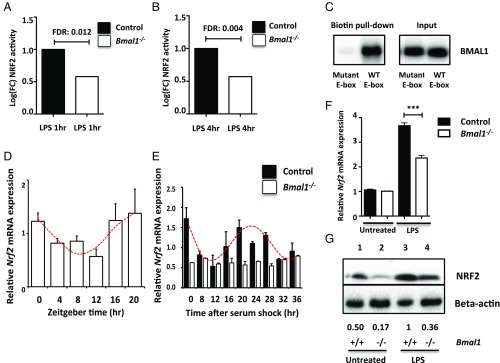
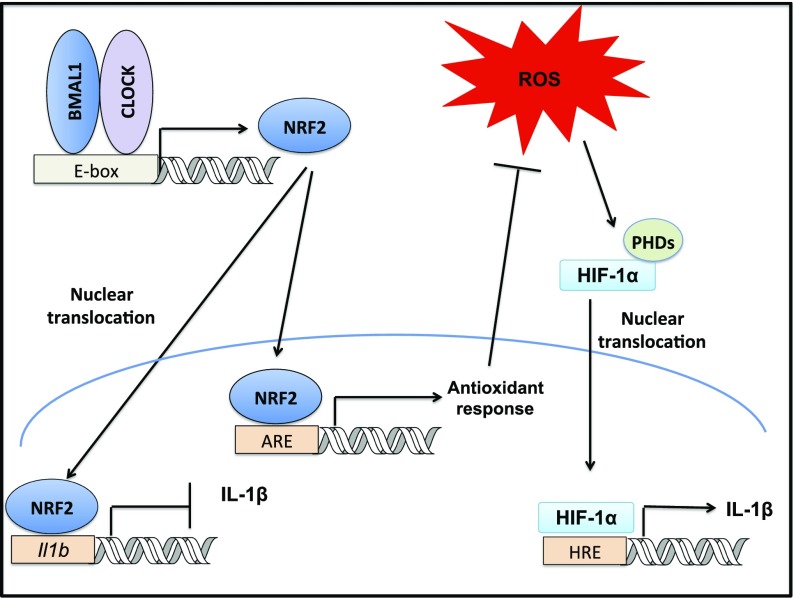
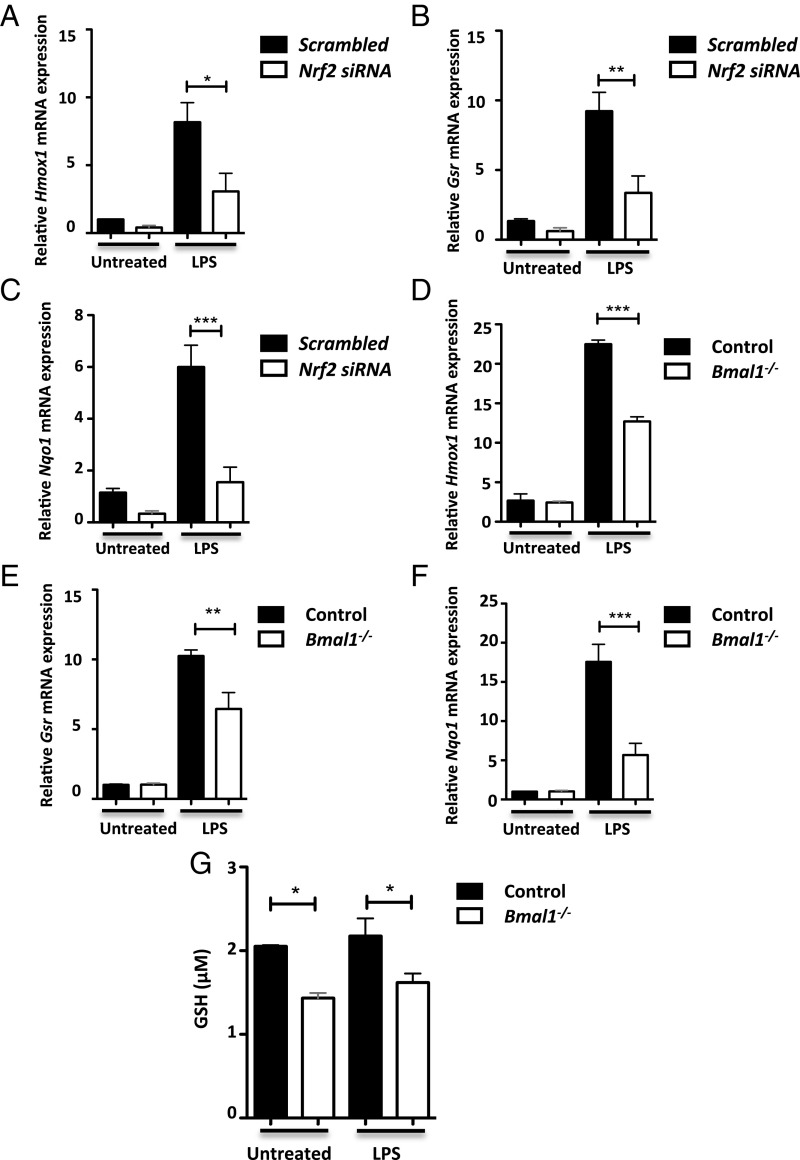
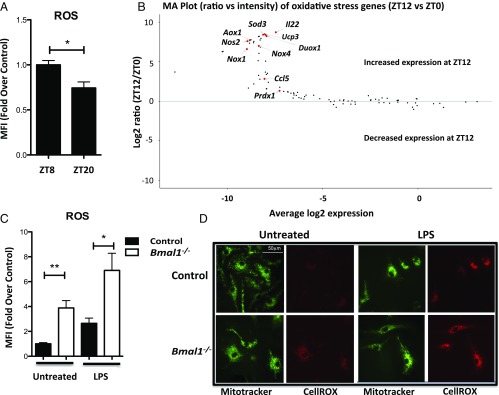
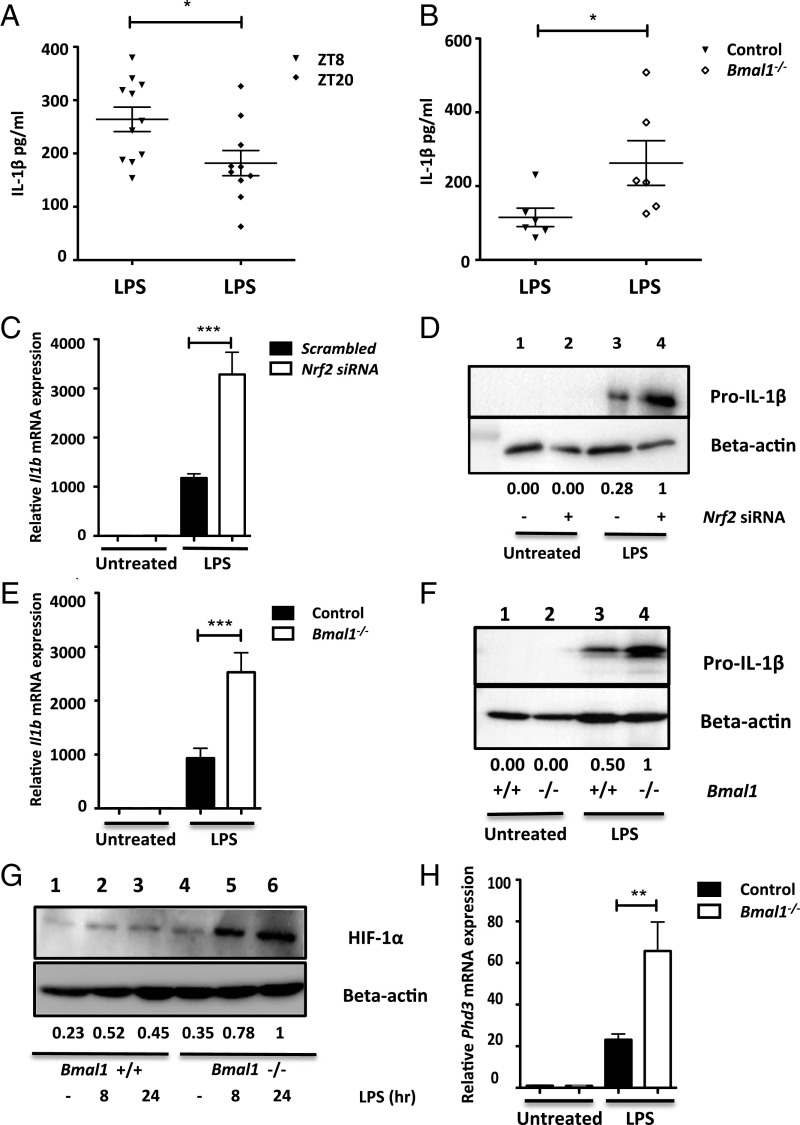
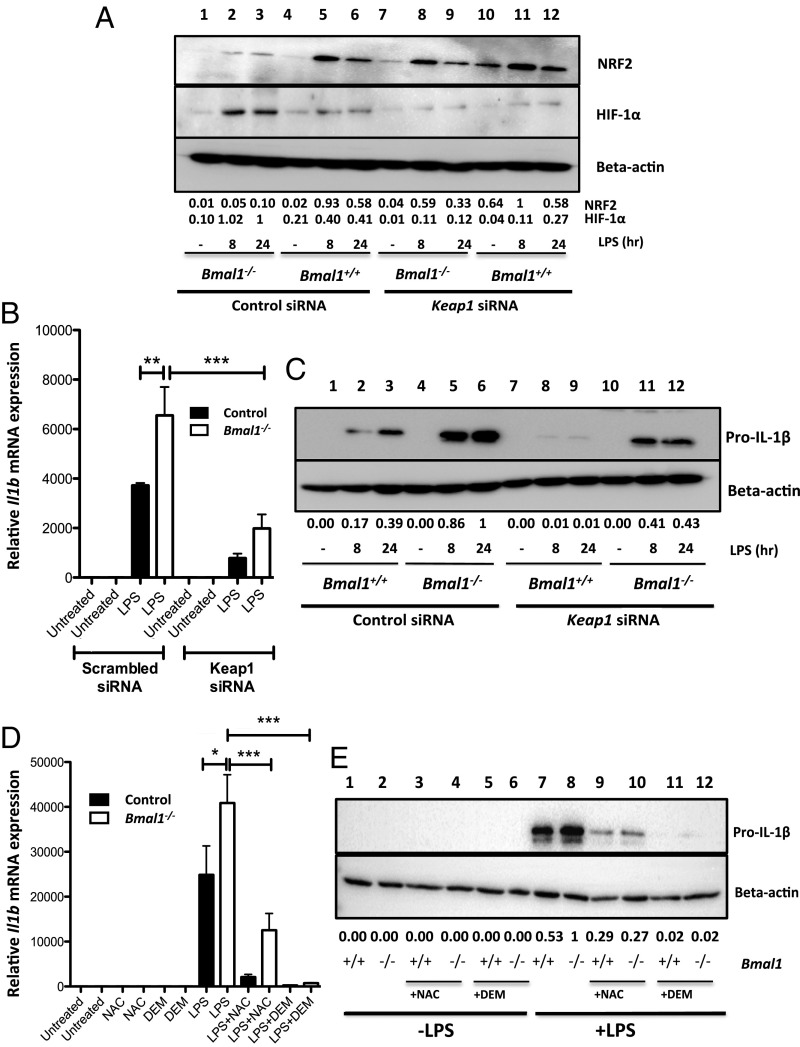
A variety of innate immune responses and functions are dependent on time of day, and many inflammatory conditions are associated with dysfunctional molecular clocks within immune cells. However, the functional importance of these innate immune clocks has yet to be fully characterized. NRF2 plays a critical role in the innate immune system, limiting inflammation via reactive oxygen species (ROS) suppression and direct repression of the proinflammatory cytokines, IL-1β and IL-6. Here we reveal that the core molecular clock protein, BMAL1, controls the mRNA expression of via direct E-box binding to its promoter to regulate its activity. Deletion of decreased the response of NRF2 to LPS challenge, resulting in a blunted antioxidant response and reduced synthesis of glutathione. ROS accumulation was increased in macrophages, facilitating accumulation of the hypoxic response protein, HIF-1α. Increased ROS and HIF-1α levels, as well as decreased activity of NRF2 in cells lacking BMAL1, resulted in increased production of the proinflammatory cytokine, IL-1β. The excessive prooxidant and proinflammatory phenotype of macrophages was rescued by genetic and pharmacological activation of NRF2, or through addition of antioxidants. Our findings uncover a clear role for the molecular clock in regulating NRF2 in innate immune cells to control the inflammatory response. These findings provide insights into the pathology of inflammatory conditions, in which the molecular clock, oxidative stress, and IL-1β are known to play a role.
多种先天免疫反应和功能依赖于时间,许多炎症状态与免疫细胞内功能失调的分子钟有关。然而,这些先天免疫钟的功能重要性尚未得到充分表征。NRF2 在先天免疫系统中起着关键作用,通过抑制活性氧 (ROS) 和直接抑制促炎细胞因子 IL-1β 和 IL-6 来限制炎症。在这里,我们揭示核心分子钟蛋白 BMAL1 通过直接与启动子结合 E 盒来控制其活性,从而控制 NRF2 的 mRNA 表达。缺失 会降低 NRF2 对 LPS 挑战的反应,导致抗氧化反应减弱和谷胱甘肽合成减少。 在 缺失的巨噬细胞中 ROS 积累增加,促进缺氧反应蛋白 HIF-1α 的积累。缺乏 BMAL1 的细胞中 ROS 和 HIF-1α 水平增加以及 NRF2 活性降低导致促炎细胞因子 IL-1β 的产生增加。通过 NRF2 的遗传和药理学激活或通过添加抗氧化剂,可挽救 缺失的巨噬细胞的过度促氧化剂和促炎表型。我们的发现揭示了分子钟在调节先天免疫细胞中的 NRF2 以控制炎症反应中的明确作用。这些发现为炎症状态的病理学提供了新的见解,其中分子钟、氧化应激和 IL-1β 已知在其中发挥作用。