Olukman Murat, Önal Aytül, Celenk Fatma Gül, Uyanıkgil Yiğit, Cavuşoğlu Türker, Düzenli Neslihan, Ülker Sibel
Department of Pharmacology, Faculty of Medicine, Ege University, Bornova, Izmir, Turkey.
Department of Medical Genetics, Faculty of Medicine, Ege University, Bornova, Izmir, Turkey.
Neural Regen Res. 2018 Sep;13(9):1657-1664. doi: 10.4103/1673-5374.232530.
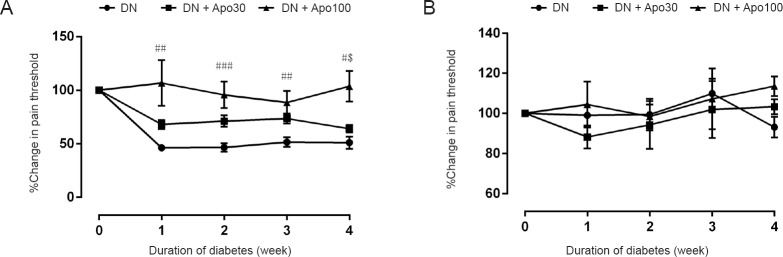
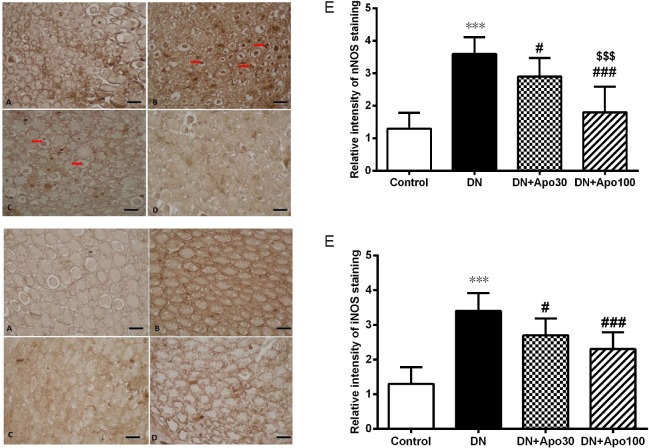
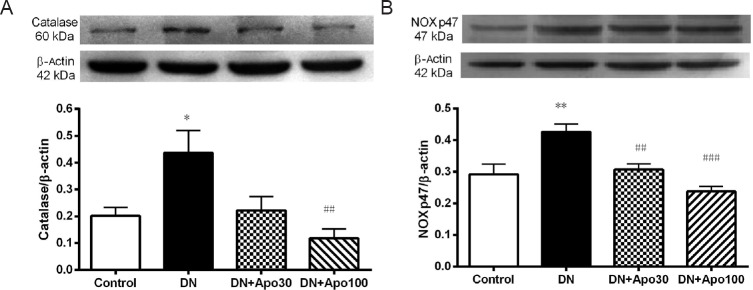
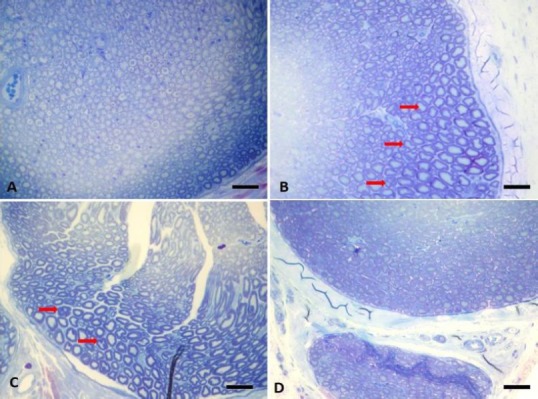
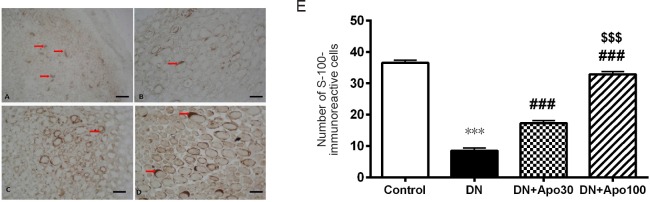
Increased reactive oxygen species by the activation of NADPH oxidase (NOX) contributes to the development of diabetic complications. Apocynin, a NOX inhibitor, increases sciatic nerve conductance and blood flow in diabetic rats. We investigated potential protective effect of apocynin in rat diabetic neuropathy and its precise mechanism of action at molecular level. Rat models of streptozotocin-induced diabetes were treated with apocynin (30 and 100 mg/kg per day, intragastrically) for 4 weeks. Mechanical hyperalgesia and allodynia were determined weekly using analgesimeter and dynamic plantar aesthesiometer. Western blot analysis and histochemistry/immunohistochemistry were performed in the lumbar spinal cord and sciatic nerve respectively. Streptozotocin injection reduced pain threshold in analgesimeter, but not in aesthesiometer. Apocynin treatment increased pain threshold dose-dependently. Western blot analysis showed an increase in catalase and NOX-p47phox protein expression in the spinal cord. However, protein expressions of neuronal and inducible nitric oxide synthase (nNOS, iNOS), superoxide dismutase, glutathion peroxidase, nitrotyrosine, tumor necrosis factor-α, interleukin-6, interleukin-1β, aldose reductase, cyclooxygenase-2 or MAC-1 (marker for increased microgliosis) in the spinal cord remained unchanged. Western blot analysis results also demonstrated that apocynin decreased NOX-p47phox expression at both doses and catalase expression at 100 mg/kg per day. Histochemistry of diabetic sciatic nerve revealed marked degeneration. nNOS and iNOS immunoreactivities were increased, while S-100 immunoreactivity (Schwann cell marker) was decreased in sciatic nerve. Apocynin treatment reversed these changes dose-dependently. In conclusion, decreased pain threshold of diabetic rats was accompanied by increased NOX and catalase expression in the spinal cord and increased degeneration in the sciatic nerve characterized by increased NOS expression and Schwann cell loss. Apocynin treatment attenuates neuropathic pain by decelerating the increased oxidative stress-mediated pathogenesis in diabetic rats.
烟酰胺腺嘌呤二核苷酸磷酸氧化酶(NOX)激活导致活性氧增加,这会促使糖尿病并发症的发展。夹竹桃麻素作为一种NOX抑制剂,可增加糖尿病大鼠的坐骨神经传导和血流量。我们研究了夹竹桃麻素对大鼠糖尿病神经病变的潜在保护作用及其在分子水平上的确切作用机制。用链脲佐菌素诱导的糖尿病大鼠模型,给予夹竹桃麻素(每天30和100mg/kg,灌胃)治疗4周。每周使用痛觉计和动态足底触觉测量仪测定机械性痛觉过敏和异常性疼痛。分别在腰脊髓和坐骨神经中进行蛋白质免疫印迹分析和组织化学/免疫组织化学分析。注射链脲佐菌素降低了痛觉计中的疼痛阈值,但未降低触觉测量仪中的疼痛阈值。夹竹桃麻素治疗剂量依赖性地提高了疼痛阈值。蛋白质免疫印迹分析显示脊髓中过氧化氢酶和NOX-p47phox蛋白表达增加。然而,脊髓中神经元型和诱导型一氧化氮合酶(nNOS、iNOS)、超氧化物歧化酶、谷胱甘肽过氧化物酶、硝基酪氨酸、肿瘤坏死因子-α、白细胞介素-6、白细胞介素-1β、醛糖还原酶、环氧合酶-2或MAC-1(小胶质细胞增生增加的标志物)的蛋白表达保持不变。蛋白质免疫印迹分析结果还表明,夹竹桃麻素在两种剂量下均降低了NOX-p47phox表达,在每天100mg/kg剂量下降低了过氧化氢酶表达。糖尿病坐骨神经的组织化学显示明显退变。坐骨神经中nNOS和iNOS免疫反应性增加,而S-100免疫反应性(雪旺细胞标志物)降低。夹竹桃麻素治疗剂量依赖性地逆转了这些变化。总之,糖尿病大鼠疼痛阈值降低伴随着脊髓中NOX和过氧化氢酶表达增加以及坐骨神经退变增加,其特征为NOS表达增加和雪旺细胞丢失。夹竹桃麻素治疗通过减缓糖尿病大鼠中氧化应激介导的发病机制增加来减轻神经性疼痛。