Department of Biochemistry & Molecular Biology, Georgetown University Medical Center, Washington DC.
Department of Oncology, Lombardi Comprehensive Cancer Center, Georgetown University, Washington DC.
Cancer Prev Res (Phila). 2018 Oct;11(10):665-676. doi: 10.1158/1940-6207.CAPR-18-0160. Epub 2018 Aug 21.
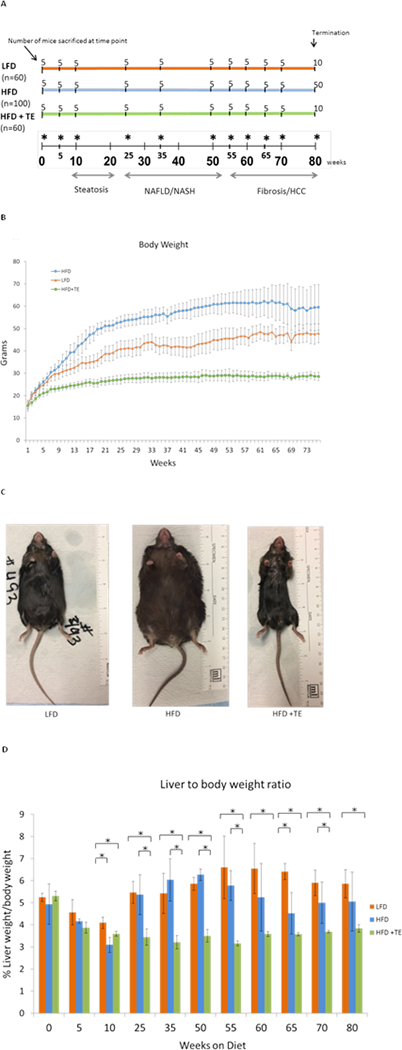
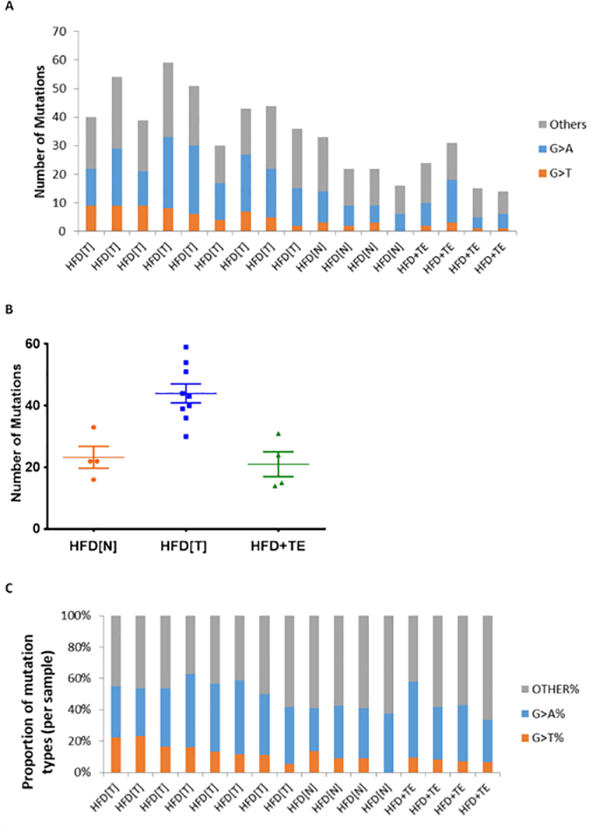
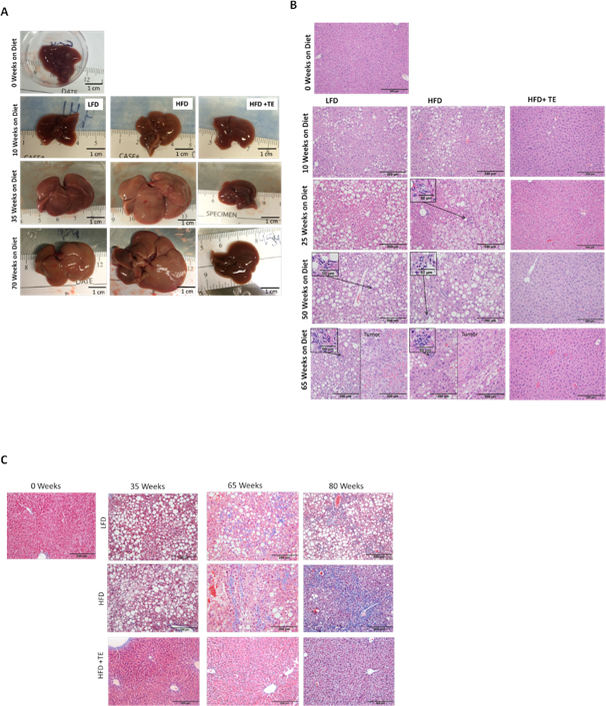
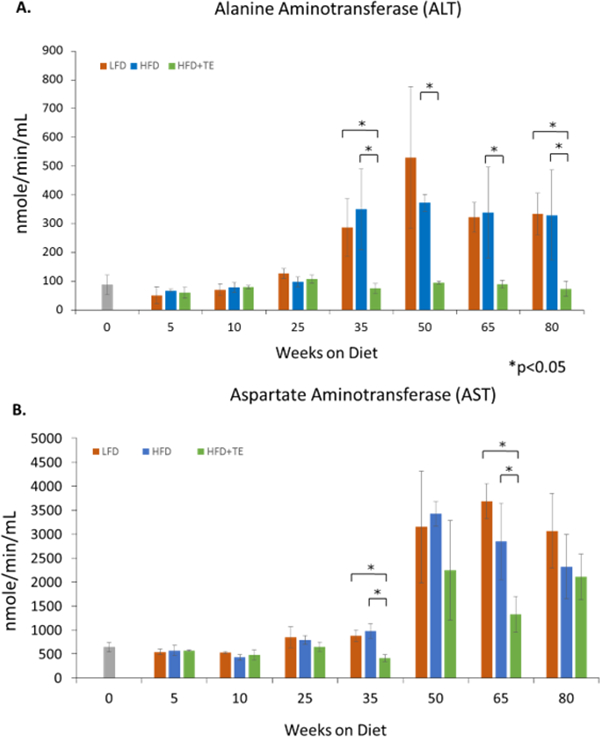
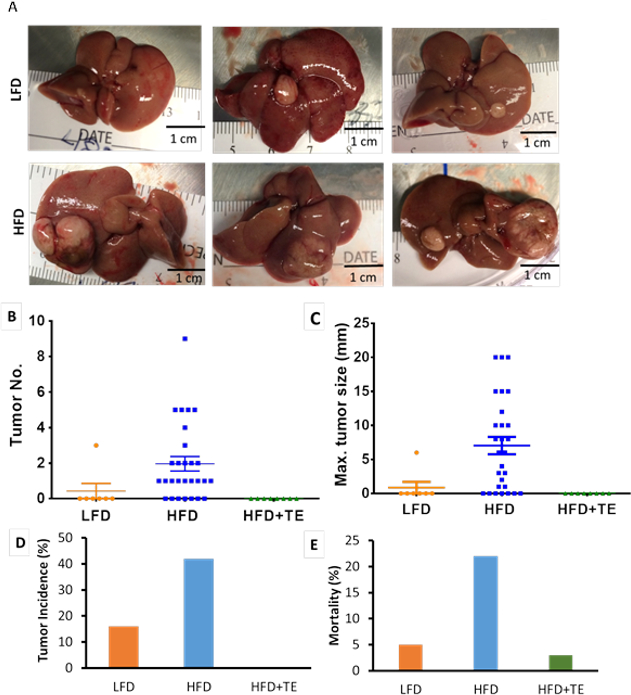
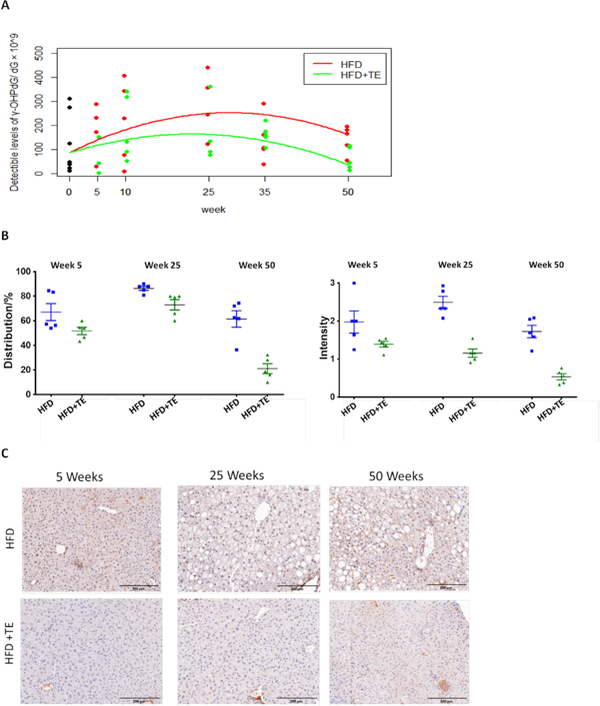
Obesity is associated with cancer risk and its link with liver cancer is particularly strong. Obesity causes non-alcoholic fatty liver disease (NAFLD) that could progress to hepatocellular carcinoma (HCC). Chronic inflammation likely plays a key role. We carried out a bioassay in the high-fat diet (HFD)-fed C57BL/6J mice to provide insight into the mechanisms of obesity-related HCC by studying γ-OHPdG, a mutagenic DNA adduct derived from lipid peroxidation. In an 80-week bioassay, mice received a low-fat diet (LFD), high-fat diet (HFD), and HFD with 2% Theaphenon E (TE) (HFD+TE). HFD mice developed a 42% incidence of HCC and LFD mice a 16%. Remarkably, TE, a standardized green tea extract formulation, completely blocked HCC in HFD mice with a 0% incidence. γ-OHPdG measured in the hepatic DNA of mice fed HFD and HFD+TE showed its levels increased during the early stages of NAFLD in HFD mice and the increases were significantly suppressed by TE, correlating with the tumor data. Whole-exome sequencing showed an increased mutation load in the liver tumors of HFD mice with G>A and G>T as the predominant mutations, consistent with the report that γ-OHPdG induces G>A and G>T. Furthermore, the mutation loads were significantly reduced in HFD+TE mice, particularly G>T, the most common mutation in human HCC. These results demonstrate in a relevant model of obesity-induced HCC that γ-OHPdG formation during fatty liver disease may be an initiating event for accumulated mutations that leads to HCC and this process can be effectively inhibited by TE. .
肥胖与癌症风险相关,其与肝癌的关联尤为密切。肥胖会导致非酒精性脂肪性肝病(NAFLD),进而可能发展为肝细胞癌(HCC)。慢性炎症可能发挥着关键作用。我们在高脂肪饮食(HFD)喂养的 C57BL/6J 小鼠中进行了一项生物测定,通过研究γ-OHPdG(一种源自脂质过氧化的致突变 DNA 加合物),深入了解肥胖相关 HCC 的机制。在 80 周的生物测定中,小鼠接受低脂饮食(LFD)、高脂肪饮食(HFD)和含 2% Theaphenon E(TE)的高脂肪饮食(HFD+TE)。HFD 组小鼠 HCC 发病率为 42%,LFD 组为 16%。值得注意的是,TE(一种标准化绿茶提取物配方)可完全阻断 HFD 小鼠 HCC 的发生,发病率为 0%。在 HFD 和 HFD+TE 喂养的小鼠肝 DNA 中测量的γ-OHPdG 显示,其水平在 HFD 小鼠的 NAFLD 早期阶段增加,并且 TE 显著抑制了增加,与肿瘤数据相关。全外显子组测序显示,HFD 小鼠的肝肿瘤中突变负荷增加,G>A 和 G>T 是主要突变,这与报告称γ-OHPdG 诱导 G>A 和 G>T 一致。此外,HFD+TE 组小鼠的突变负荷明显降低,尤其是 G>T,这是人类 HCC 中最常见的突变。这些结果在肥胖诱导的 HCC 的相关模型中表明,在脂肪性肝病期间形成的γ-OHPdG 可能是导致 HCC 的累积突变的起始事件,并且该过程可以被 TE 有效抑制。