Department of Health Technology and Services Research, Faculty of Behavioural, Management and Social Sciences, Technical Medical Centre, University of Twente, P.O. Box 217, 7500 AE, Enschede, The Netherlands.
Department of Cardiology, Thoraxcentrum Twente, Medisch Spectrum Twente, 7512 KZ, Enschede, The Netherlands.
Am J Cardiovasc Drugs. 2018 Dec;18(6):493-502. doi: 10.1007/s40256-018-0293-0.
Effectiveness of oral anticoagulants (OACs) is critically dependent on patients' adherence to intake regimens. We studied the relative impact of attributes related to effectiveness, safety, convenience, and costs on the value of OAC therapy from the perspective of patients with non-valvular atrial fibrillation.
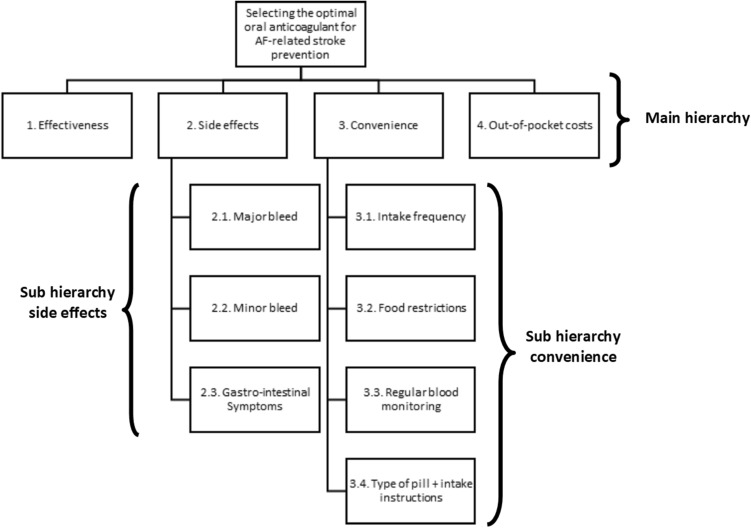
Four attributes were identified by literature review and expert interviews: effectiveness (risk of ischemic stroke), safety (risk of major bleeding, minor bleeding, gastrointestinal complaints), convenience (intake frequency, diet restrictions, international normalized ratio [INR] blood monitoring, pill type/intake instructions), and out-of-pocket costs. Focus groups were held in Spain, Germany, France, Italy and the United Kingdom (N = 48) to elicit patients' preferences through the use of the analytical hierarchy process method.
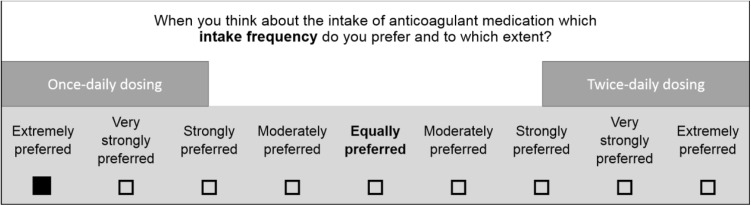
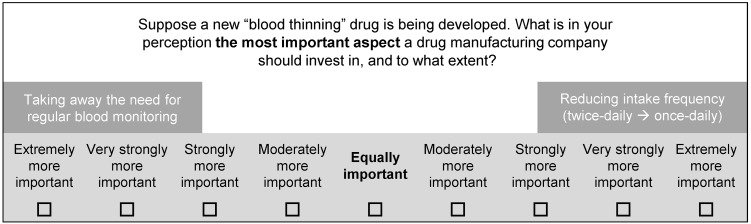
Effectiveness (60%) and side effects (27%) have a higher impact on the perceived value of OACs than drug convenience (7%) and out-of-pocket costs (6%). As for convenience, eliminating monthly INR monitoring was given the highest priority (40%), followed by reducing diet restrictions (27%), reducing intake frequency (17%) and improving the pill type/intake instructions (15%). The most important side effect was major bleeding (75%), followed by minor bleeding (15%) and gastrointestinal complaints (10%). Furthermore, 71% of patients preferred once-daily intake to twice-daily intake.
Although the relative impact of convenience on therapy value is small, patients have different preferences for options within convenience criteria. Besides considerations on safety and effectiveness, physicians should also discuss attributes of convenience with patients, as it can be assumed that alignment to patient preferences in drug prescription and better patient education could result in higher adherence.
口服抗凝剂 (OAC) 的有效性严重依赖于患者对摄入方案的依从性。我们从非瓣膜性心房颤动患者的角度研究了与有效性、安全性、便利性和成本相关的属性对 OAC 治疗价值的相对影响。
通过文献回顾和专家访谈确定了四个属性:有效性(缺血性中风风险)、安全性(大出血风险、小出血风险、胃肠道不适风险)、便利性(摄入频率、饮食限制、国际标准化比值 [INR] 血液监测、药丸类型/摄入说明)和自付费用。在西班牙、德国、法国、意大利和英国举行了焦点小组会议(N=48),通过使用层次分析法来征求患者的偏好。
有效性(60%)和副作用(27%)对 OAC 感知价值的影响大于药物便利性(7%)和自付费用(6%)。至于便利性,消除每月 INR 监测的优先级最高(40%),其次是减少饮食限制(27%)、减少摄入频率(17%)和改善药丸类型/摄入说明(15%)。最重要的副作用是大出血(75%),其次是小出血(15%)和胃肠道不适(10%)。此外,71%的患者更喜欢每日一次摄入而不是每日两次摄入。
尽管便利性对治疗价值的相对影响较小,但患者对便利性标准内的各种选择有不同的偏好。除了安全性和有效性的考虑外,医生还应该与患者讨论便利性属性,因为可以假设在药物处方中与患者偏好保持一致并进行更好的患者教育可能会导致更高的依从性。