Department of Abdominal Radiotherapy, Zhejiang Cancer Hospital, Hangzhou, Zhejiang, 310022, People's Republic of China.
Comprehensive Cancer Center, Charité Universitätsmedizin Berlin, Charitéplatz 1, D-10117, Berlin, Germany.
BMC Cancer. 2018 Aug 22;18(1):842. doi: 10.1186/s12885-018-4749-z.
High-grade spindle cell sarcomas are a subtype of rare, undifferentiated pleomorphic sarcomas (UPSs) for which diagnosis is difficult and no specific treatment strategies have been established. The limited published data on UPSs suggest an aggressive clinical course, high rates of local recurrence and distant metastasis, and poor prognosis.
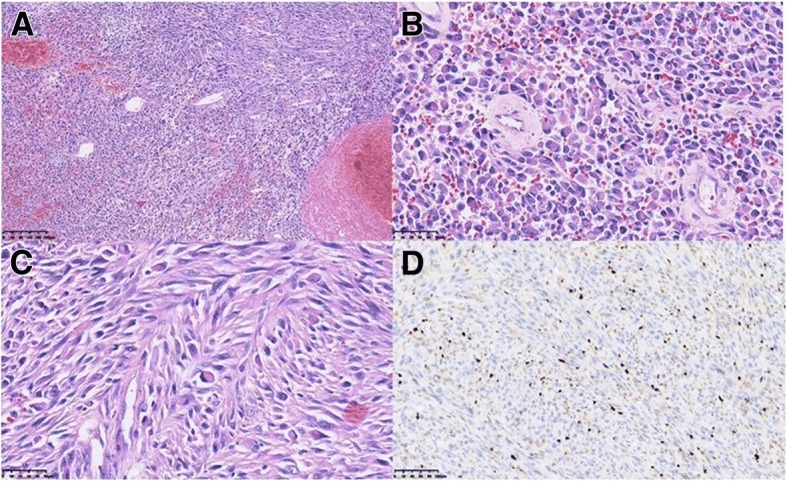
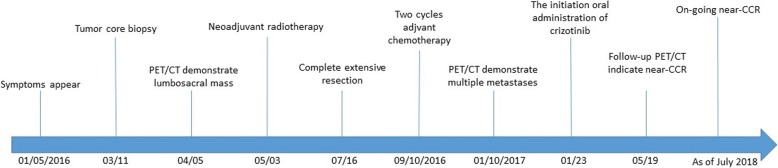
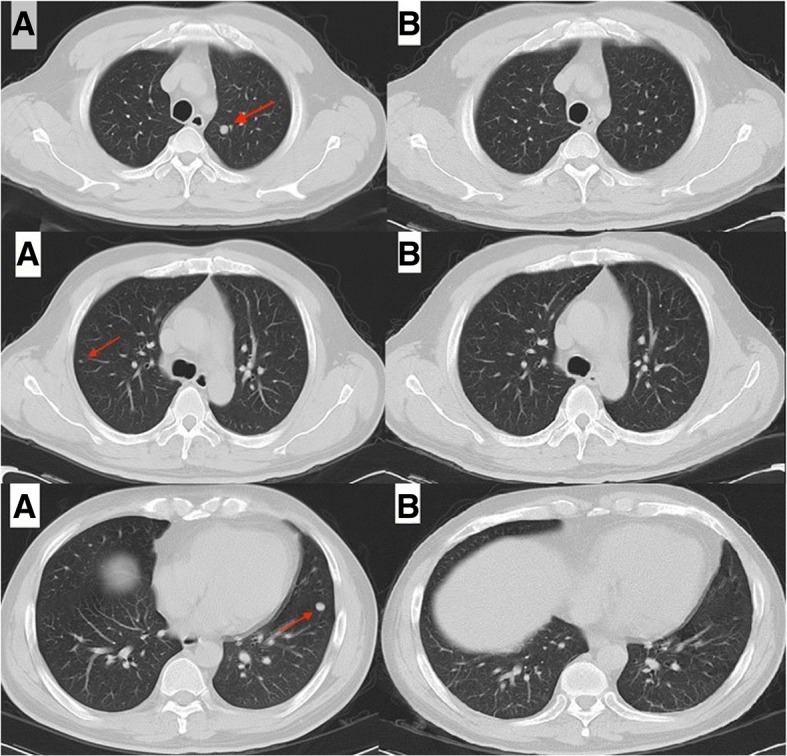
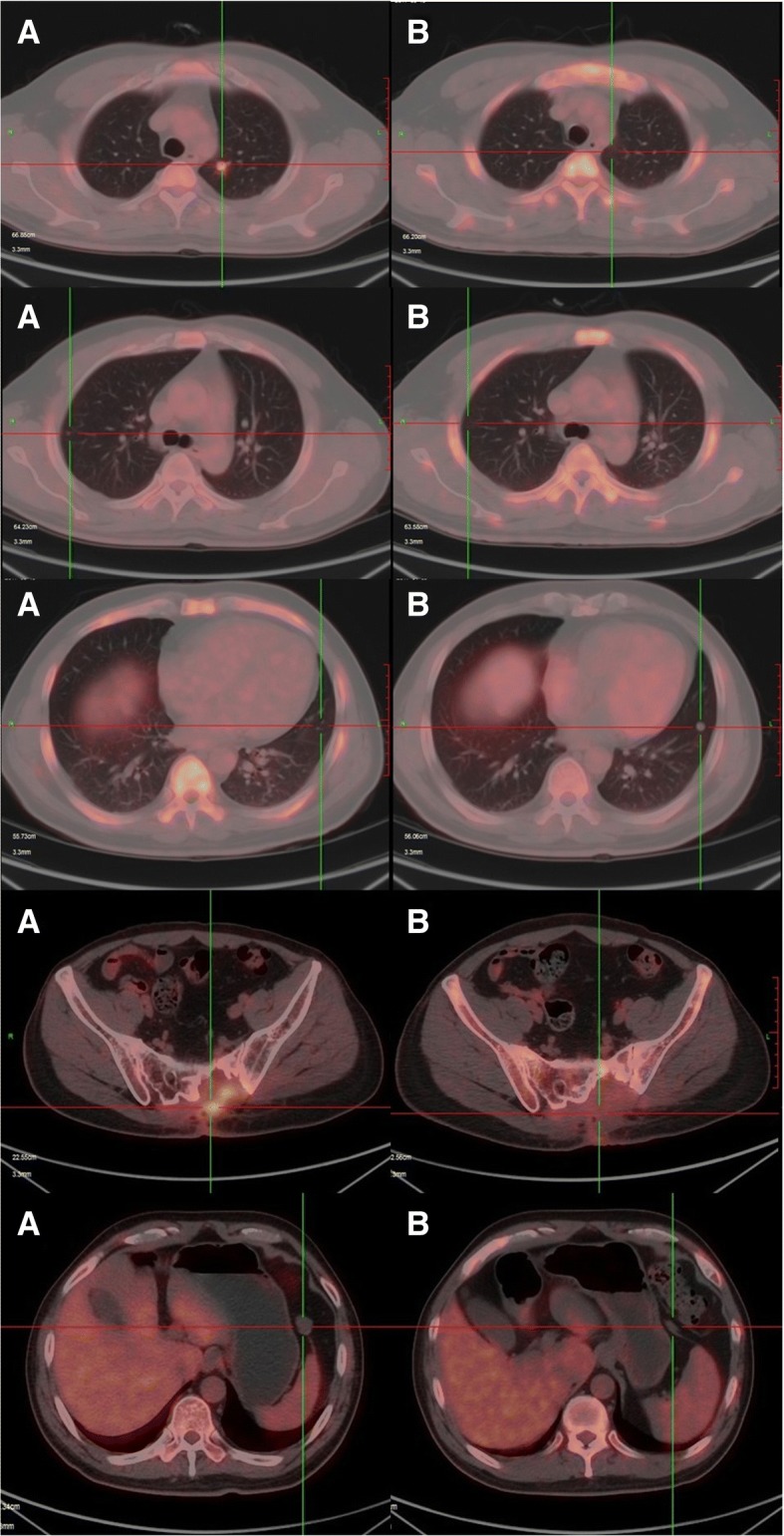
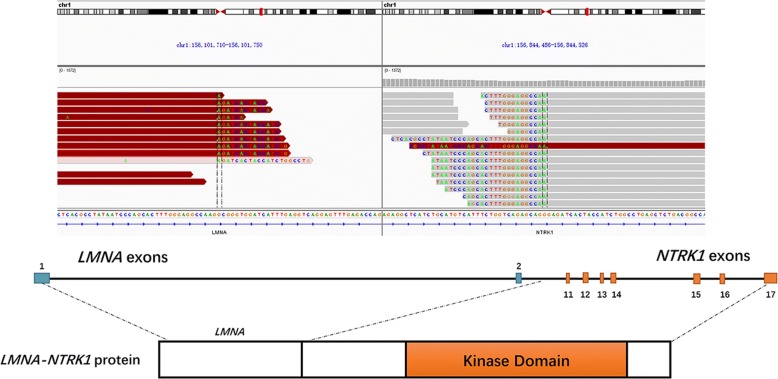
Here we present the unusual case of a 45-year-old male patient with a lumbosacral UPS extending into the sacrum. An initial diagnosis of a low-grade malignant spindle cell tumor was based on a tumor core biopsy. After complete extensive resection, the diagnosis of an UPS of the lumbosacral region was confirmed by excluding other types of cancers. Despite treatment with neoadjuvant radiotherapy, extensive resection, and adjuvant chemotherapy, the patient presented with multiple pulmonary metastases 3 months after surgery. The patient then began treatment with crizotinib at an oral dose of 450 mg per day, based on the detection of a LMNA-NTRK1 fusion gene in the tumor by next-generation sequencing. Over 18 months of follow-up through July 2018, the patient maintained a near-complete clinical response to crizotinib.
The LMNA-NTRK1 fusion was likely the molecular driver of tumorigenesis and metastasis in this patient, and the observed effectiveness of crizotinib treatment provides clinical validation of this molecular target. Molecular and cytogenetic evaluations are critical to accurate prognosis and treatment planning in cases of UPS, especially when treatment options are limited or otherwise exhausted. Molecularly targeted therapy of these rare but aggressive lesions represents a novel treatment option that may lead to fewer toxic side effects and better clinical outcomes.
高级别梭形细胞肉瘤是一种罕见的未分化多形性肉瘤(UPS)的亚型,其诊断困难,尚未建立明确的治疗策略。UPS 的有限的已发表数据表明其具有侵袭性临床病程、高局部复发率和远处转移率以及不良预后。
本案例报告了一名不常见的 45 岁男性腰骶部 UPS 患者,肿瘤延伸至骶骨。最初的肿瘤核心活检诊断为低度恶性梭形细胞瘤。在广泛彻底切除后,通过排除其他类型的癌症,明确了腰骶部 UPS 的诊断。尽管进行了新辅助放疗、广泛切除和辅助化疗,但患者在手术后 3 个月出现了多发性肺转移。然后,根据下一代测序检测到肿瘤中存在 LMNA-NTRK1 融合基因,该患者开始接受每天 450mg 克唑替尼治疗。在 2018 年 7 月的 18 个月随访中,患者对克唑替尼的治疗保持了近乎完全的临床缓解。
在该患者中,LMNA-NTRK1 融合可能是肿瘤发生和转移的分子驱动因素,观察到克唑替尼治疗的有效性为该分子靶标提供了临床验证。在 UPS 病例中,分子和细胞遗传学评估对于准确的预后和治疗计划至关重要,特别是在治疗选择有限或已经用尽的情况下。对这些罕见但侵袭性病变进行分子靶向治疗代表了一种新的治疗选择,可能会减少毒性副作用并改善临床结果。