Varidaki Artemis, Hong Ye, Coffey Eleanor T
Turku Centre for Biotechnology, Åbo Akademi University and University of Turku, Biocity, Tykistokatu, Turku, Finland.
Front Cell Neurosci. 2018 Aug 8;12:226. doi: 10.3389/fncel.2018.00226. eCollection 2018.
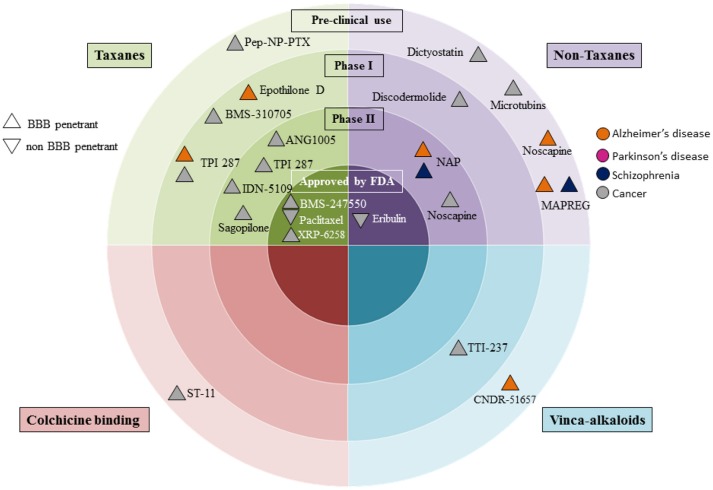
Microtubule stabilizing agents are among the most clinically useful chemotherapeutic drugs. Mostly, they act to stabilize microtubules and inhibit cell division. While not without side effects, new generations of these compounds display improved pharmacokinetic properties and brain penetrance. Neurological disorders are intrinsically associated with microtubule defects, and efforts to reposition microtubule-targeting chemotherapeutic agents for treatment of neurodegenerative and psychiatric illnesses are underway. Here we catalog microtubule regulators that are associated with Alzheimer's and Parkinson's disease, amyotrophic lateral sclerosis, schizophrenia and mood disorders. We outline the classes of microtubule stabilizing agents used for cancer treatment, their brain penetrance properties and neuropathy side effects, and describe efforts to apply these agents for treatment of brain disorders. Finally, we summarize the current state of clinical trials for microtubule stabilizing agents under evaluation for central nervous system disorders.
微管稳定剂是临床上最有用的化疗药物之一。大多数情况下,它们的作用是稳定微管并抑制细胞分裂。虽然并非没有副作用,但新一代的这些化合物显示出改善的药代动力学特性和脑渗透性。神经疾病与微管缺陷有着内在联系,目前正在努力重新定位靶向微管的化疗药物,用于治疗神经退行性疾病和精神疾病。在这里,我们梳理了与阿尔茨海默病、帕金森病、肌萎缩侧索硬化症、精神分裂症和情绪障碍相关的微管调节因子。我们概述了用于癌症治疗的微管稳定剂类别、它们的脑渗透性特性和神经病变副作用,并描述了将这些药物应用于脑部疾病治疗的努力。最后,我们总结了目前正在评估用于中枢神经系统疾病的微管稳定剂的临床试验现状。