Huang Rongshuang, Shi Min, Guo Fan, Feng Yuying, Feng Yanhuan, Liu Jing, Li Lingzhi, Liang Yan, Xiang Jin, Lei Song, Ma Liang, Fu Ping
Kidney Research Laboratory, Division of Nephrology, West China Hospital of Sichuan University, Chengdu, China.
Core Facility of West China Hospital, Chengdu, China.
Front Pharmacol. 2018 Aug 8;9:917. doi: 10.3389/fphar.2018.00917. eCollection 2018.
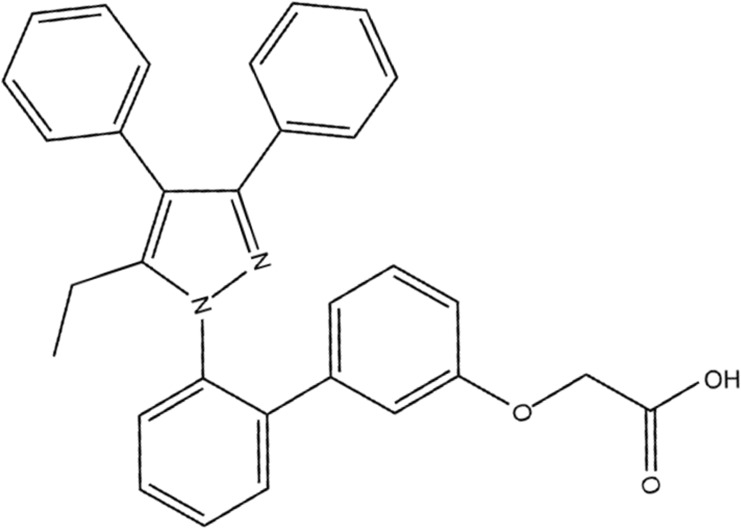
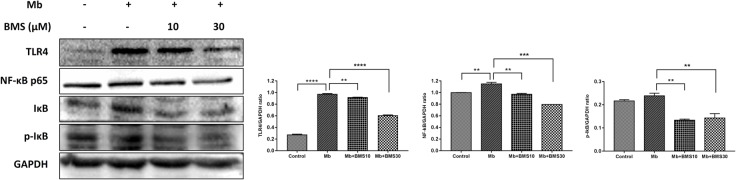
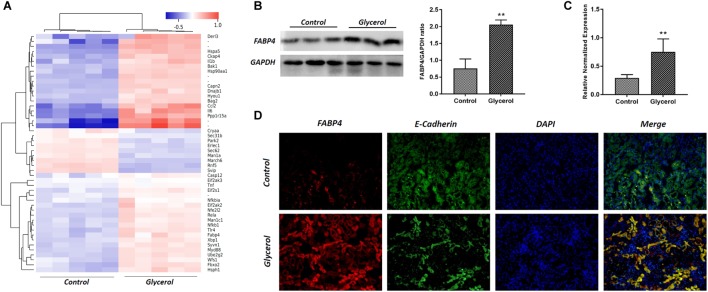
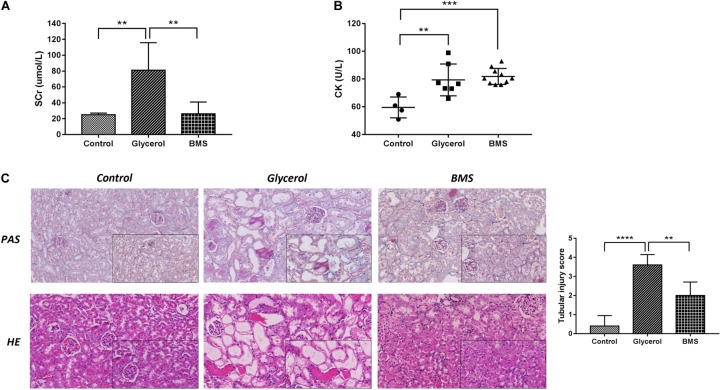
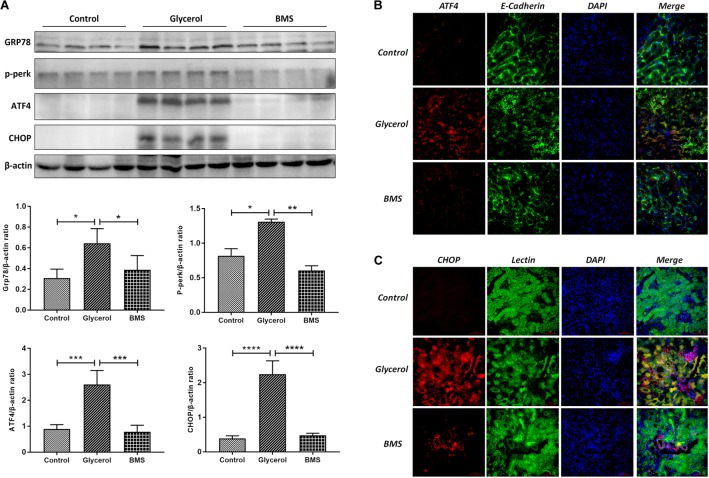
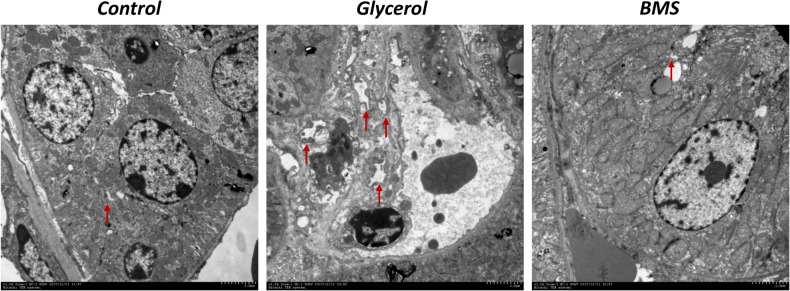
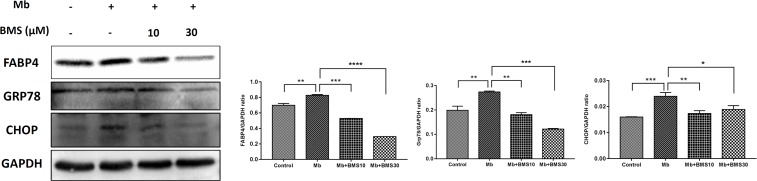
Acute kidney injury (AKI) is a common and potentially life-threatening complication. Studies confirmed that circulating FABP4 depended on renal function of AKI patients. In our previous study, FABP4 was involved in the pathogenesis of I/R-induced AKI. However, the function of FABP4 in rhabdomyolysis-induced AKI remained poorly understood. In the study, we further investigated the effect of FABP4 in a murine model of glycerol injection-induced rhabdomyolysis. Following glycerol injection, the mice developed severe AKI as indicated by acute renal dysfunction and histologic changes, companied by the increased FABP4 expression in the cytoplasm of tubular epithelial cells. Pharmacological inhibition of FABP4 by a highly selective inhibitor BMS309403 significantly reduced serum creatinine level, proinflammatory cytokine mRNA expression of tumor necrosis factor-α, interleukin-6, and monocyte chemoattractant protein 1 as well as attenuated renal tubular damage in glycerol-injured kidneys. Oral administration of FABP4 inhibitor also resulted in a significant attenuation of ER stress indicated by transmission electron microscope analysis and its maker proteins expression of GRP78, CHOP, p-perk, and ATF4 in kidneys of AKI. Furthermore, BMS309403 could attenuate myoglobin-induced ER stress and inflammation in renal proximal tubular epithelial cell line (HK-2). Overall, these data highlighted that renal protection of selective FABP4 inhibitor was substantiated by the reduction of ER stress and inflammation in tubular epithelial cells of rhabdomyolysis-induced injured kidneys and suggested that the inhibition of FABP4 might be a promising therapeutic strategy for AKI treatment.
急性肾损伤(AKI)是一种常见且可能危及生命的并发症。研究证实,循环中的脂肪酸结合蛋白4(FABP4)依赖于AKI患者的肾功能。在我们之前的研究中,FABP4参与了缺血/再灌注诱导的AKI的发病机制。然而,FABP4在横纹肌溶解诱导的AKI中的作用仍知之甚少。在本研究中,我们进一步研究了FABP4在甘油注射诱导的横纹肌溶解小鼠模型中的作用。注射甘油后,小鼠出现严重的AKI,表现为急性肾功能障碍和组织学改变,同时肾小管上皮细胞胞质中FABP4表达增加。一种高度选择性抑制剂BMS309403对FABP4的药理抑制作用显著降低了血清肌酐水平、肿瘤坏死因子-α、白细胞介素-6和单核细胞趋化蛋白1的促炎细胞因子mRNA表达,并减轻了甘油损伤肾脏的肾小管损伤。口服FABP4抑制剂还导致通过透射电子显微镜分析及其在AKI肾脏中GRP78、CHOP、p-perk和ATF4的标志物蛋白表达所表明的内质网应激显著减轻。此外,BMS309403可减轻肾近端小管上皮细胞系(HK-2)中肌红蛋白诱导的内质网应激和炎症。总体而言,这些数据表明,选择性FABP4抑制剂对肾脏的保护作用通过减轻横纹肌溶解诱导的损伤肾脏肾小管上皮细胞的内质网应激和炎症得到证实,并提示抑制FABP4可能是一种有前景的AKI治疗策略。