Department of Zoology, Stockholm University, Stockholm, Sweden.
PLoS Genet. 2018 Aug 23;14(8):e1007618. doi: 10.1371/journal.pgen.1007618. eCollection 2018 Aug.
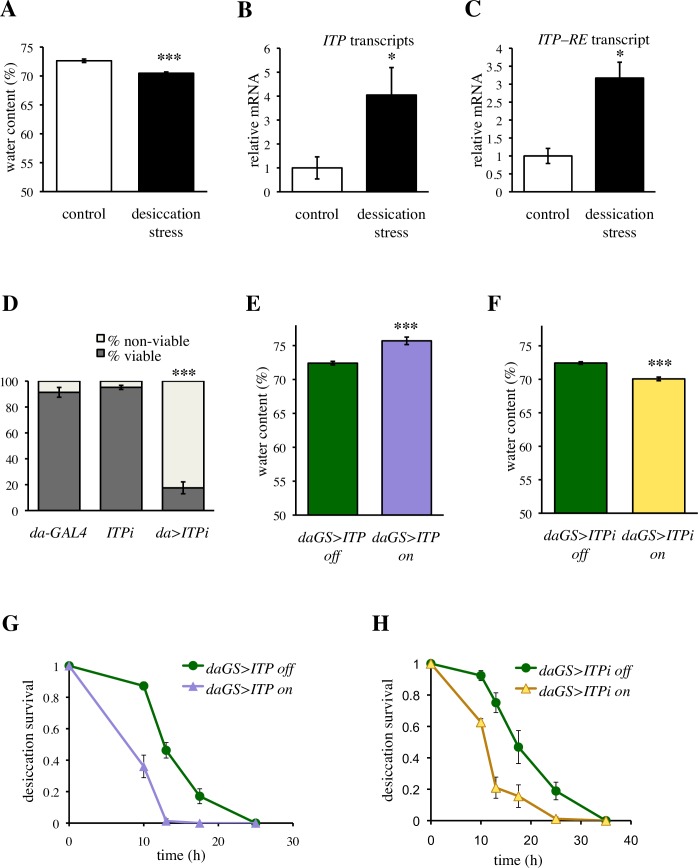
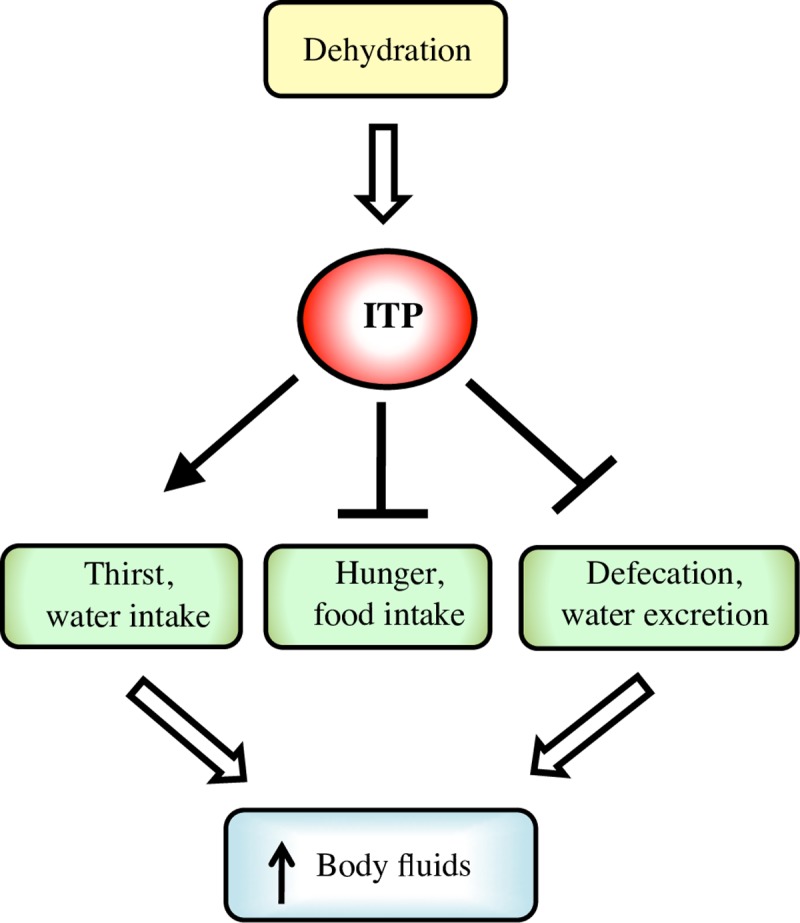
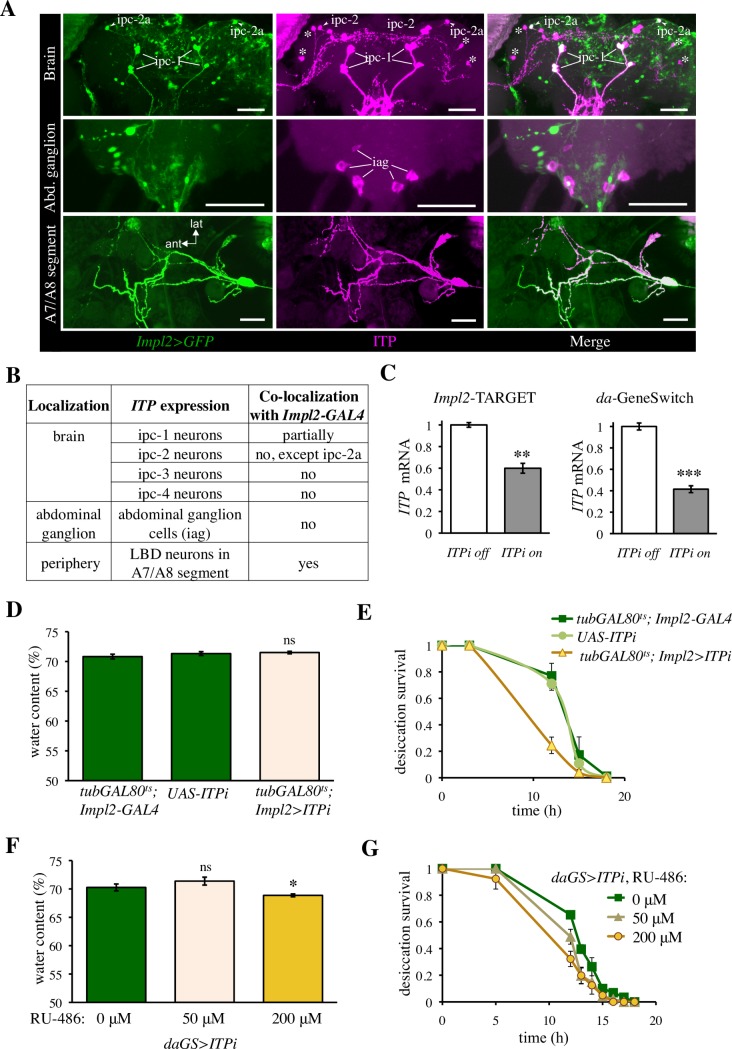
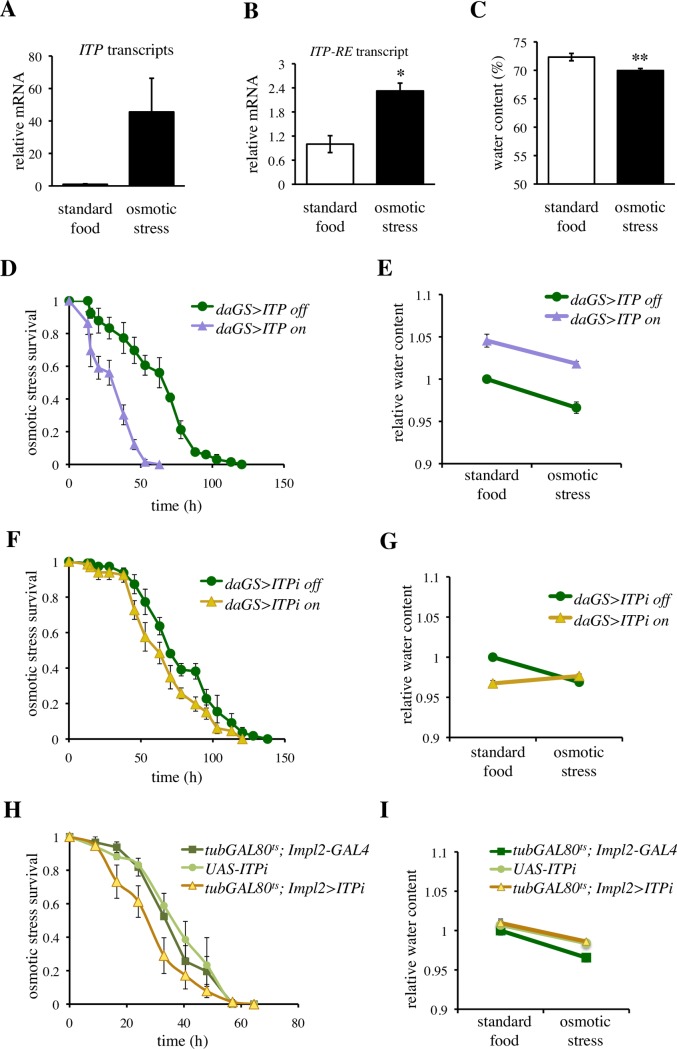
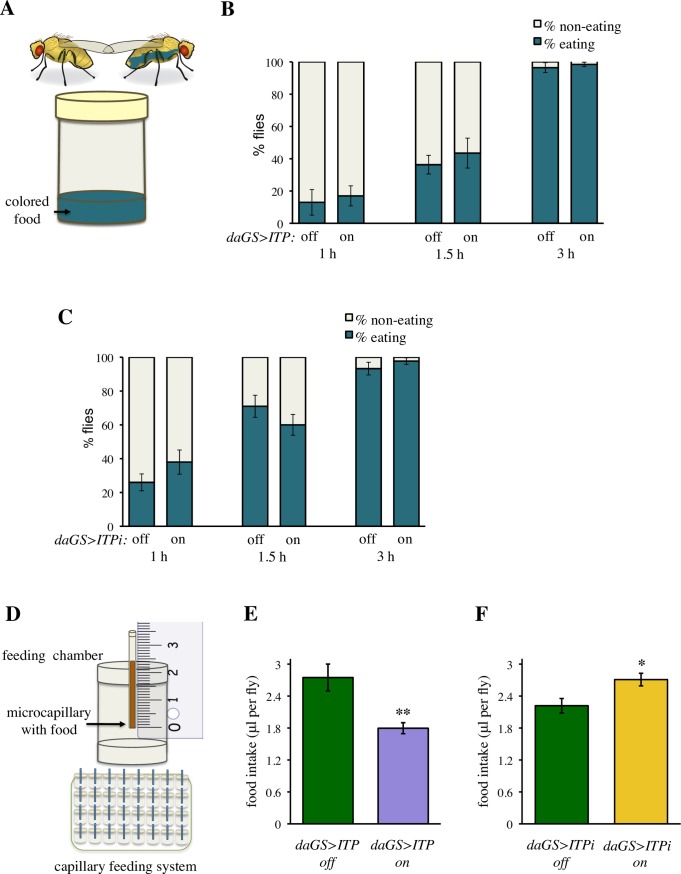
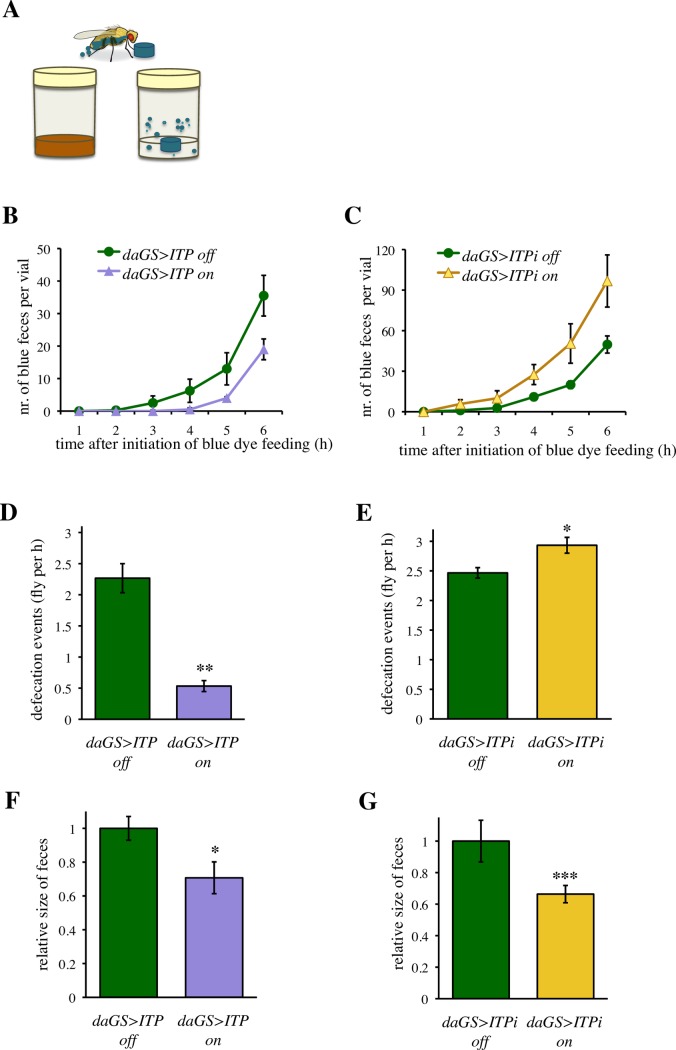
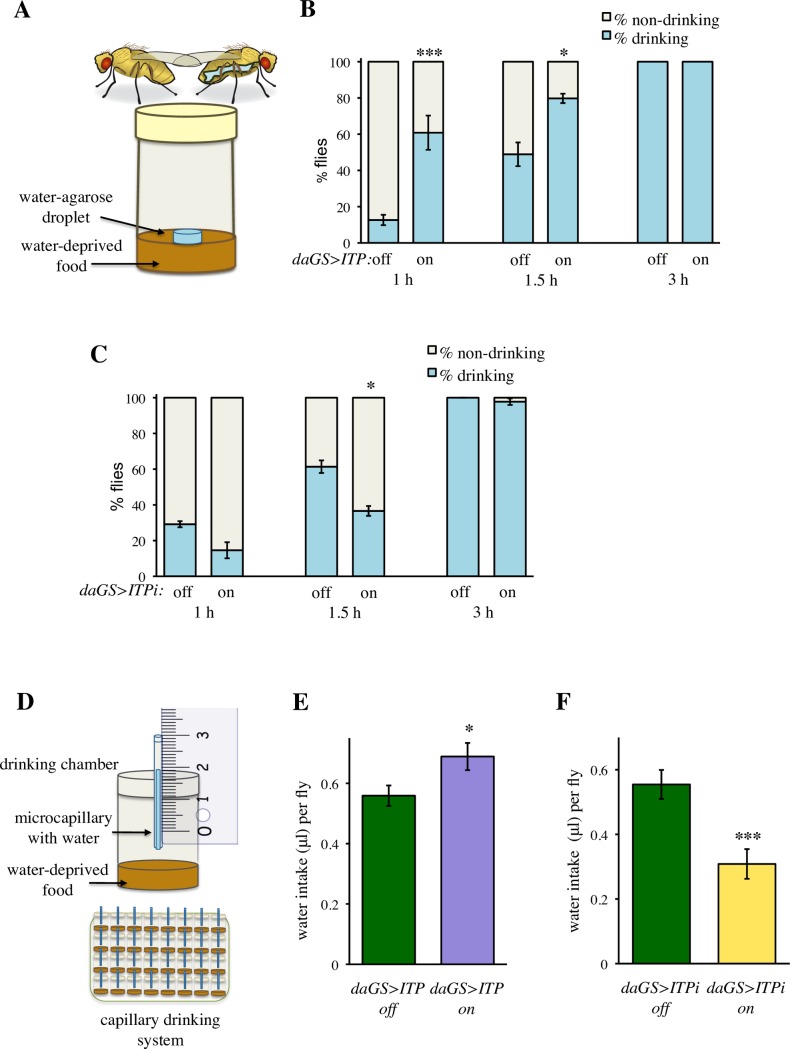
Animals need to continuously adjust their water metabolism to the internal and external conditions. Homeostasis of body fluids thus requires tight regulation of water intake and excretion, and a balance between ingestion of water and solid food. Here, we investigated how these processes are coordinated in Drosophila melanogaster. We identified the first thirst-promoting and anti-diuretic hormone of Drosophila, encoded by the gene Ion transport peptide (ITP). This endocrine regulator belongs to the CHH (crustacean hyperglycemic hormone) family of peptide hormones. Using genetic gain- and loss-of-function experiments, we show that ITP signaling acts analogous to the human vasopressin and renin-angiotensin systems; expression of ITP is elevated by dehydration of the fly, and the peptide increases thirst while repressing excretion, promoting thus conservation of water resources. ITP responds to both osmotic and desiccation stress, and dysregulation of ITP signaling compromises the fly's ability to cope with these stressors. In addition to the regulation of thirst and excretion, ITP also suppresses food intake. Altogether, our work identifies ITP as an important endocrine regulator of thirst and excretion, which integrates water homeostasis with feeding of Drosophila.
动物需要不断调整其水代谢以适应内部和外部条件。因此,体液的动态平衡需要严格调节水的摄入和排泄,以及水和固体食物的摄入之间的平衡。在这里,我们研究了这些过程在果蝇中是如何协调的。我们鉴定了果蝇中第一个促进口渴和抗利尿的激素,由基因 Ion transport peptide (ITP)编码。这种内分泌调节剂属于 CHH(甲壳动物高血糖激素)家族的肽激素。通过遗传增益和功能丧失实验,我们表明 ITP 信号作用类似于人类的血管加压素和肾素-血管紧张素系统;果蝇脱水时 ITP 的表达会升高,而这种肽会增加口渴感,同时抑制排泄,从而促进水资源的保存。ITP 对渗透和干燥应激均有反应,而 ITP 信号的失调会损害果蝇应对这些应激源的能力。除了调节口渴和排泄外,ITP 还抑制了食物摄入。总的来说,我们的工作确定了 ITP 作为口渴和排泄的重要内分泌调节剂,它将果蝇的水动态平衡与摄食整合在一起。