Goel Raghuveera Kumar, Meyer Mona, Paczkowska Marta, Reimand Jüri, Vizeacoumar Frederick, Vizeacoumar Franco, Lam TuKiet T, Lukong Kiven Erique
1Department of Biochemistry, College of Medicine, University of Saskatchewan, 107 Wiggins Road, Saskatoon, SK S7N 5E5 Canada.
2Computational Biology Program, Ontario Institute for Cancer Research, 661 University Ave Suite 510, Toronto, ON M5G 0A3 Canada.
Proteome Sci. 2018 Aug 18;16:16. doi: 10.1186/s12953-018-0143-7. eCollection 2018.
The non-receptor tyrosine kinase, SRMS (Src-related kinase lacking C-terminal regulatory tyrosine and N-terminal myristoylation sites) is a member of the BRK family kinases (BFKs) which represents an evolutionarily conserved relative of the Src family kinases (SFKs). Tyrosine kinases are known to regulate a number of cellular processes and pathways via phosphorylating substrate proteins directly and/or by partaking in signaling cross-talks leading to the indirect modulation of various signaling intermediates. In a previous study, we profiled the tyrosine-phosphoproteome of SRMS and identified multiple candidate substrates of the kinase. The broader cellular signaling intermediates of SRMS are unknown.
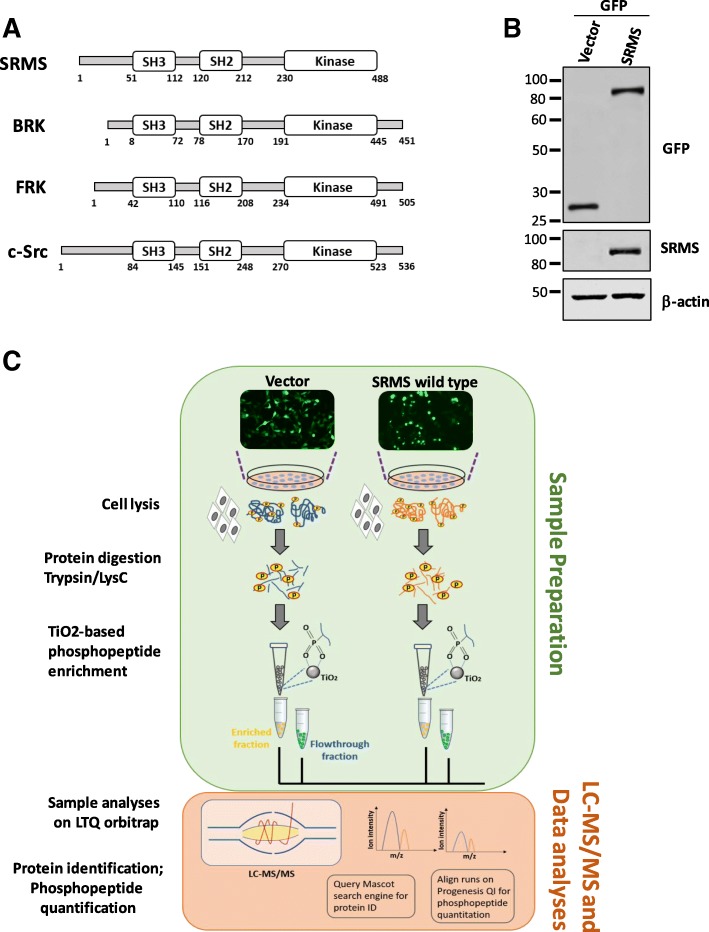
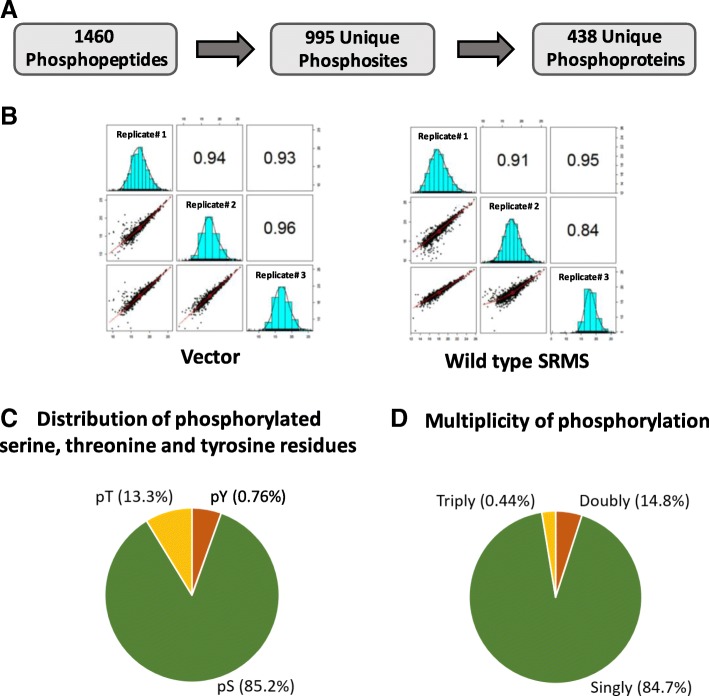
In order to uncover the broader SRMS-regulated phosphoproteome and identify the SRMS-regulated indirect signaling intermediates, we performed label-free global phosphoproteomics analysis on cells expressing wild-type SRMS. Using computational database searching and bioinformatics analyses we characterized the dataset.
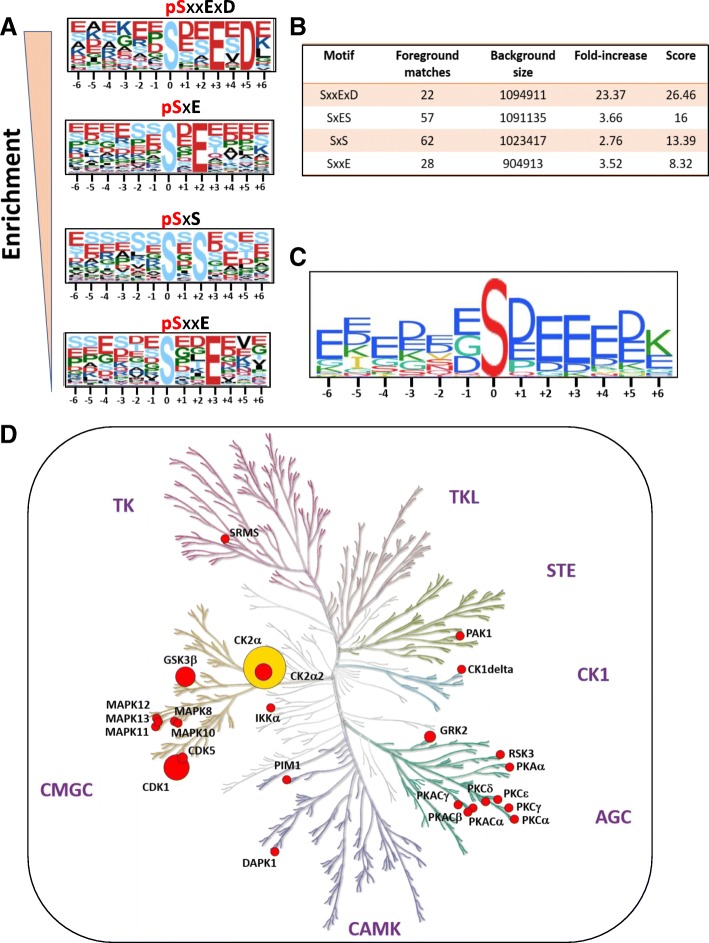
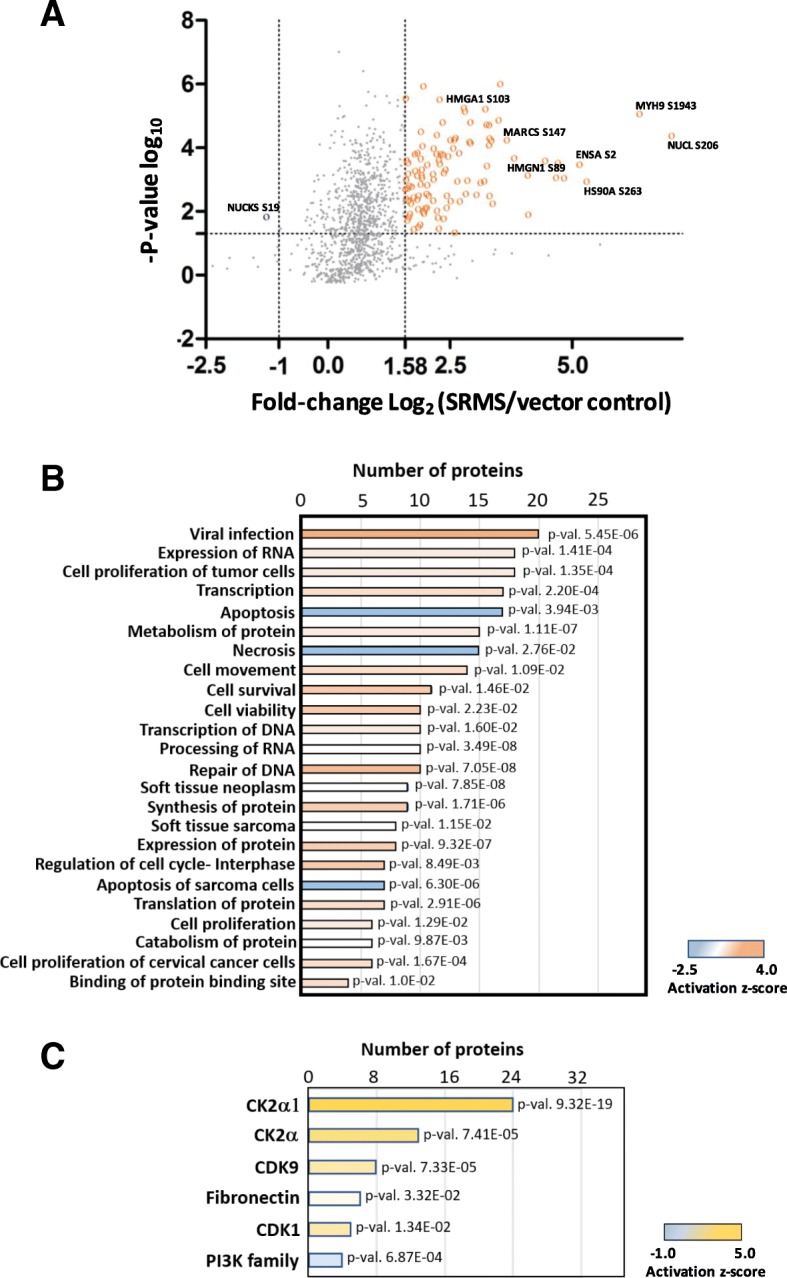
Our analyses identified 60 hyperphosphorylated (phosphoserine/phosphothreonine) proteins mapped from 140 hyperphosphorylated peptides. Bioinfomatics analyses identified a number of significantly enriched biological and cellular processes among which DNA repair pathways were found to be upregulated while apoptotic pathways were found to be downregulated. Analyses of motifs derived from the upregulated phosphosites identified Casein kinase 2 alpha (CK2α) as one of the major potential kinases contributing to the SRMS-dependent indirect regulation of signaling intermediates.
Overall, our phosphoproteomics analyses identified serine/threonine phosphorylation dynamics as important secondary events of the SRMS-regulated phosphoproteome with implications in the regulation of cellular and biological processes.
非受体酪氨酸激酶SRMS(缺乏C末端调节酪氨酸和N末端肉豆蔻酰化位点的Src相关激酶)是BRK家族激酶(BFK)的成员,它是Src家族激酶(SFK)在进化上保守的亲属。已知酪氨酸激酶通过直接磷酸化底物蛋白和/或参与信号串扰来调节多种细胞过程和信号通路,从而间接调节各种信号中间体。在之前的一项研究中,我们分析了SRMS的酪氨酸磷酸化蛋白质组,并鉴定了该激酶的多个候选底物。SRMS更广泛的细胞信号中间体尚不清楚。
为了揭示更广泛的SRMS调节的磷酸化蛋白质组并鉴定SRMS调节的间接信号中间体,我们对表达野生型SRMS的细胞进行了无标记的全局磷酸化蛋白质组分析。使用计算数据库搜索和生物信息学分析对数据集进行了表征。
我们的分析鉴定了从140个高磷酸化肽段定位的60个高磷酸化(磷酸丝氨酸/磷酸苏氨酸)蛋白。生物信息学分析确定了许多显著富集的生物学和细胞过程,其中发现DNA修复途径上调,而凋亡途径下调。对上调的磷酸化位点衍生的基序分析确定酪蛋白激酶2α(CK2α)是导致SRMS依赖的信号中间体间接调节的主要潜在激酶之一。
总体而言,我们的磷酸化蛋白质组分析确定丝氨酸/苏氨酸磷酸化动态是SRMS调节的磷酸化蛋白质组的重要二级事件,对细胞和生物学过程的调节具有重要意义。