Human Immunology Section, Vaccine Research Center, National Institute of Allergy and Infectious Disease, National Institutes of Health, Bethesda, Maryland, United States of America.
Division of Microbiology and Immunology, Emory Vaccine Center, Yerkes National Primate Research Center, Atlanta, Georgia, United States of America.
PLoS Pathog. 2018 Aug 24;14(8):e1007246. doi: 10.1371/journal.ppat.1007246. eCollection 2018 Aug.
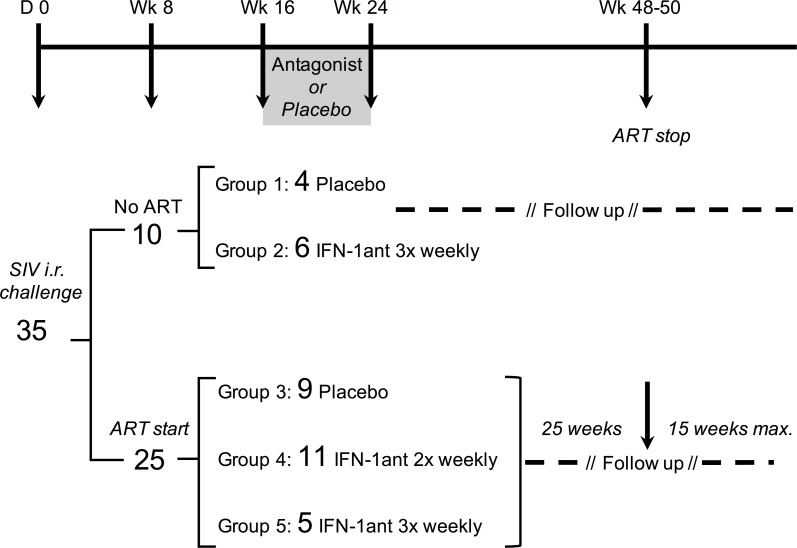
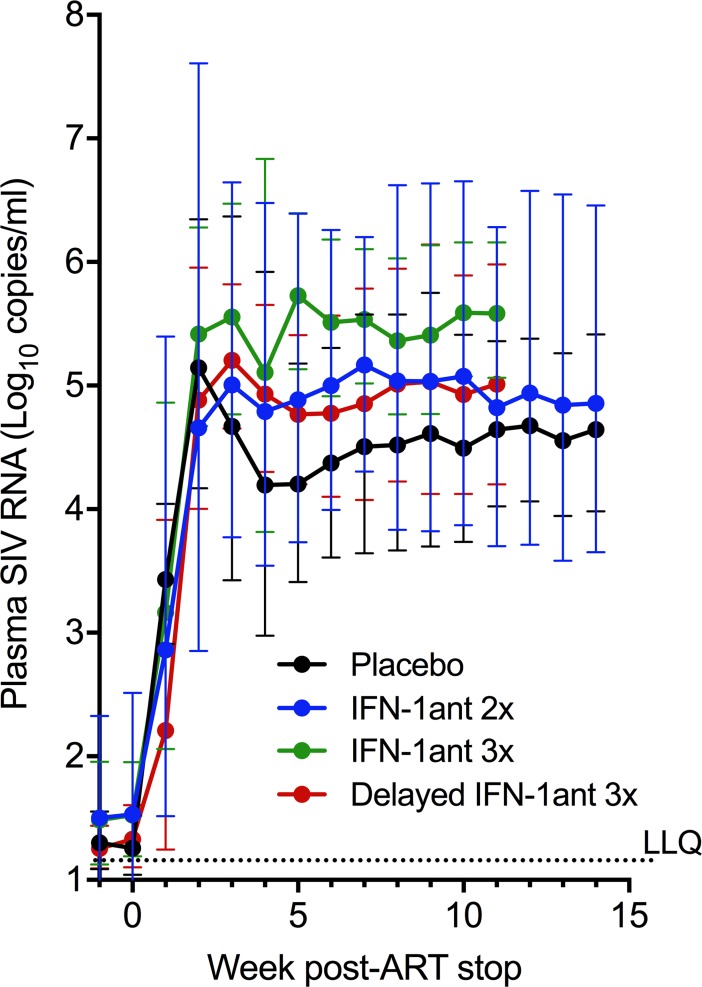
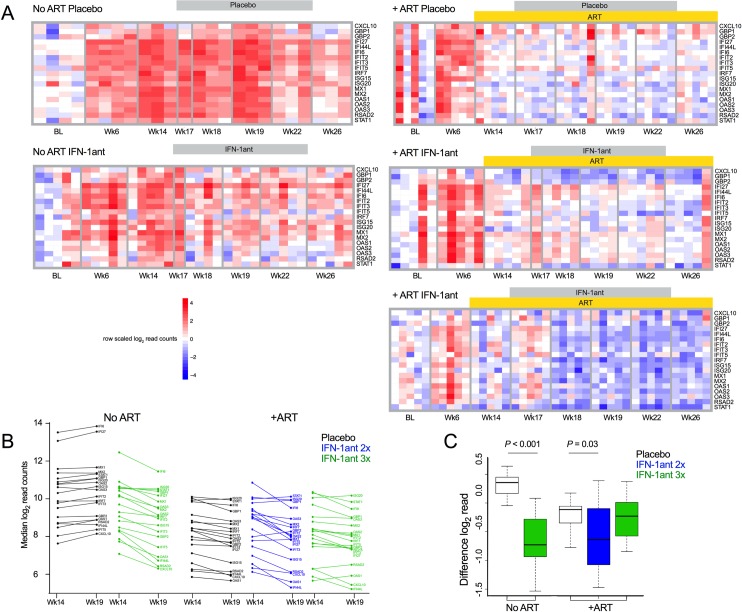
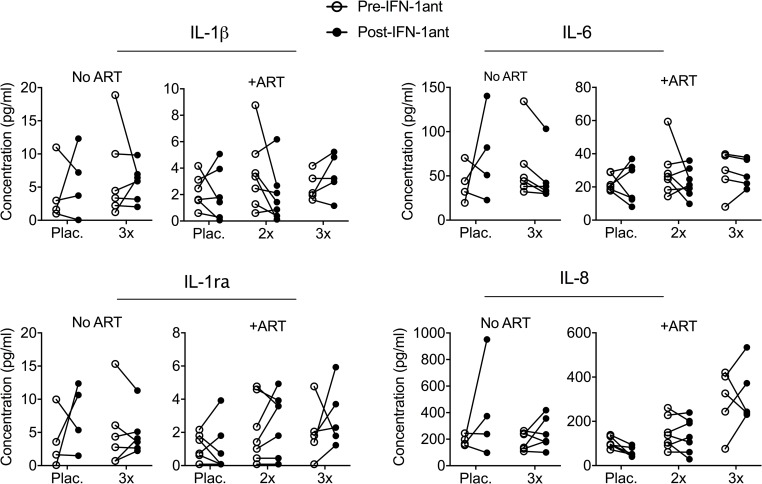
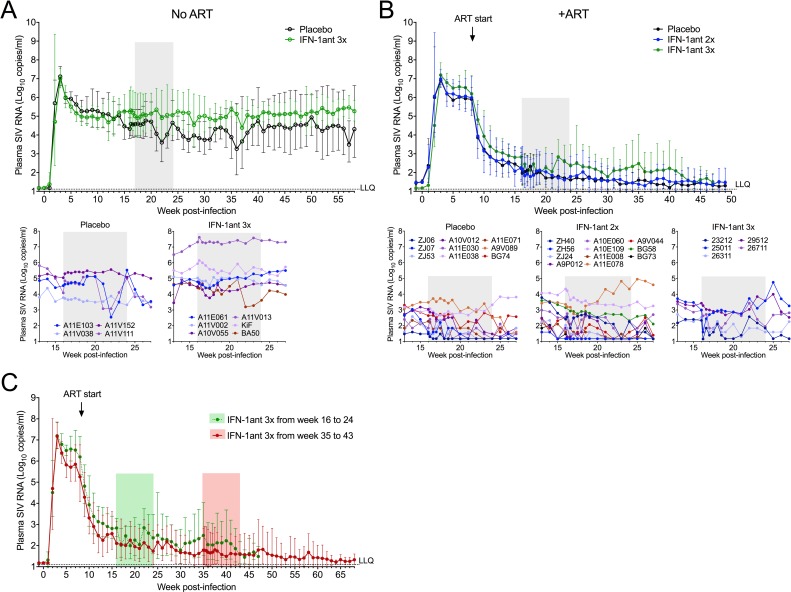
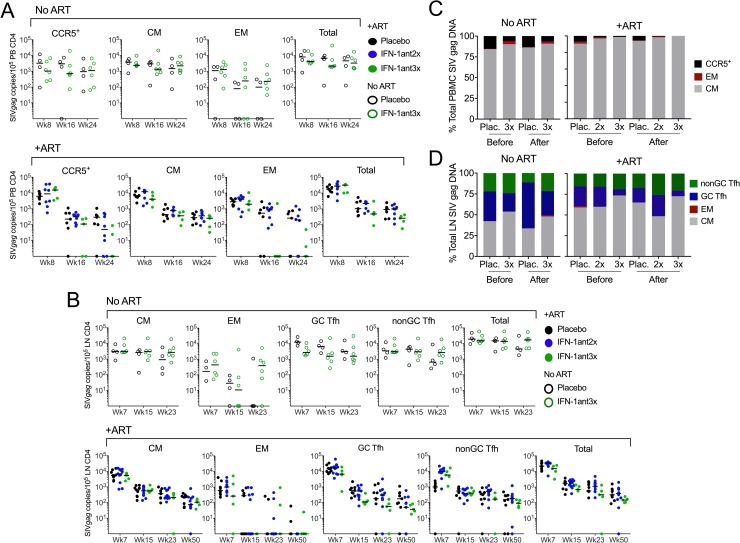
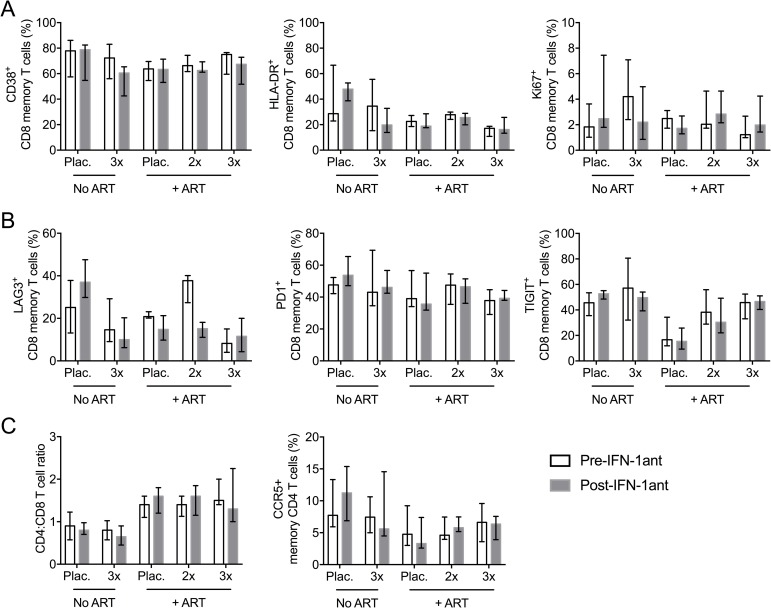
Chronic activation of the immune system in HIV infection is one of the strongest predictors of morbidity and mortality. As such, approaches that reduce immune activation have received considerable interest. Previously, we demonstrated that administration of a type I interferon receptor antagonist (IFN-1ant) during acute SIV infection of rhesus macaques results in increased virus replication and accelerated disease progression. Here, we administered a long half-life PASylated IFN-1ant to ART-treated and ART-naïve macaques during chronic SIV infection and measured expression of interferon stimulated genes (ISG) by RNA sequencing, plasma viremia, plasma cytokines, T cell activation and exhaustion as well as cell-associated virus in CD4 T cell subsets sorted from peripheral blood and lymph nodes. Our study shows that IFN-1ant administration in both ART-suppressed and ART-untreated chronically SIV-infected animals successfully results in reduction of IFN-I-mediated inflammation as defined by reduced expression of ISGs but had no effect on plasma levels of IL-1β, IL-1ra, IL-6 and IL-8. Unlike in acute SIV infection, we observed no significant increase in plasma viremia up to 25 weeks after IFN-1ant administration or up to 15 weeks after ART interruption. Likewise, cell-associated virus measured by SIV gag DNA copies was similar between IFN-1ant and placebo groups. In addition, evaluation of T cell activation and exhaustion by surface expression of CD38, HLA-DR, Ki67, LAG-3, PD-1 and TIGIT, as well as transcriptome analysis showed no effect of IFN-I blockade. Thus, our data show that blocking IFN-I signaling during chronic SIV infection suppresses IFN-I-related inflammatory pathways without increasing virus replication, and thus may constitute a safe therapeutic intervention in chronic HIV infection.
慢性免疫激活是 HIV 感染导致发病率和死亡率的最强预测因素之一。因此,减少免疫激活的方法受到了广泛关注。此前,我们证明在恒河猴急性 SIV 感染期间给予 I 型干扰素受体拮抗剂(IFN-1ant)会导致病毒复制增加和疾病进展加速。在这里,我们在慢性 SIV 感染期间给接受 ART 治疗和未接受 ART 治疗的恒河猴施用长半衰期 PASylated IFN-1ant,并通过 RNA 测序测量干扰素刺激基因(ISG)的表达、血浆病毒血症、血浆细胞因子、T 细胞激活和耗竭以及从外周血和淋巴结分选的 CD4 T 细胞亚群中的细胞相关病毒。我们的研究表明,在接受 ART 抑制和未接受 ART 治疗的慢性 SIV 感染动物中,IFN-1ant 的给药成功地导致 IFN-I 介导的炎症减少,这定义为 ISG 的表达减少,但对血浆中 IL-1β、IL-1ra、IL-6 和 IL-8 的水平没有影响。与急性 SIV 感染不同,我们观察到在 IFN-1ant 给药后长达 25 周或在 ART 中断后长达 15 周,血浆病毒血症没有显著增加。同样,通过 SIV gag DNA 拷贝测量的细胞相关病毒在 IFN-1ant 和安慰剂组之间相似。此外,通过表面表达 CD38、HLA-DR、Ki67、LAG-3、PD-1 和 TIGIT 以及转录组分析评估 T 细胞激活和耗竭,没有发现 IFN-I 阻断的影响。因此,我们的数据表明,在慢性 SIV 感染期间阻断 IFN-I 信号会抑制 IFN-I 相关的炎症途径,而不会增加病毒复制,因此可能成为慢性 HIV 感染的安全治疗干预措施。