Institute of Legal Medicine, Medical Faculty University of Leipzig, Leipzig, Germany.
Emergency Department, University Hospital of Leipzig, Leipzig, Germany.
Sci Rep. 2018 Aug 24;8(1):12811. doi: 10.1038/s41598-018-31252-5.
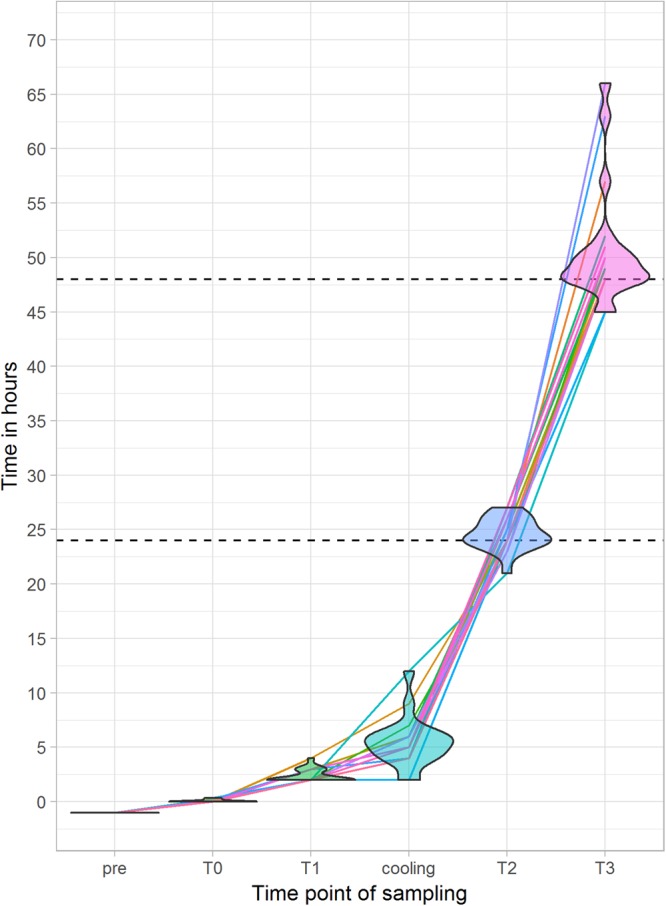
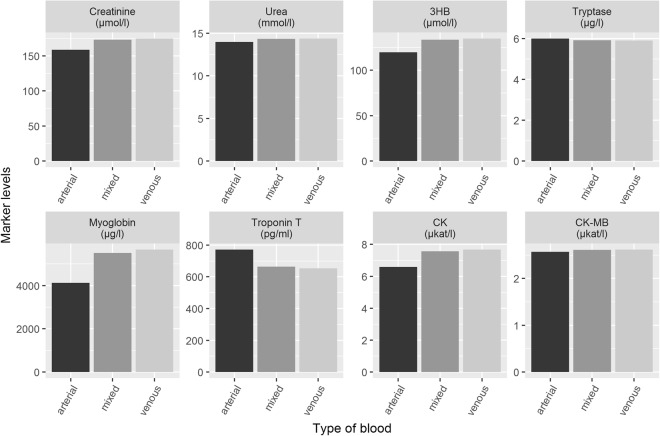
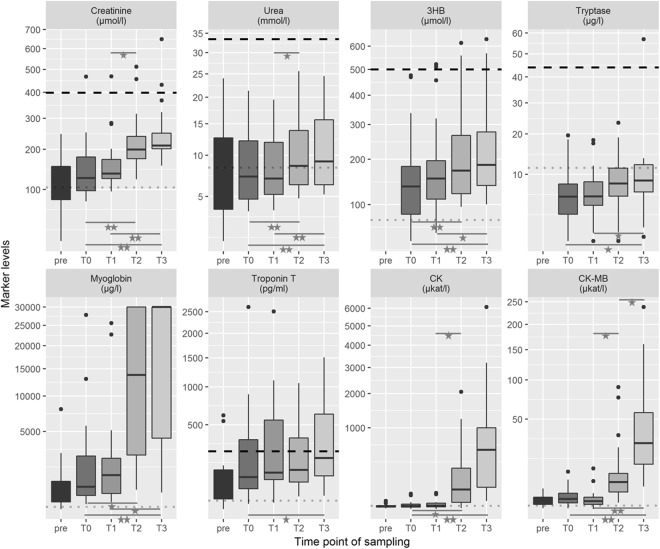
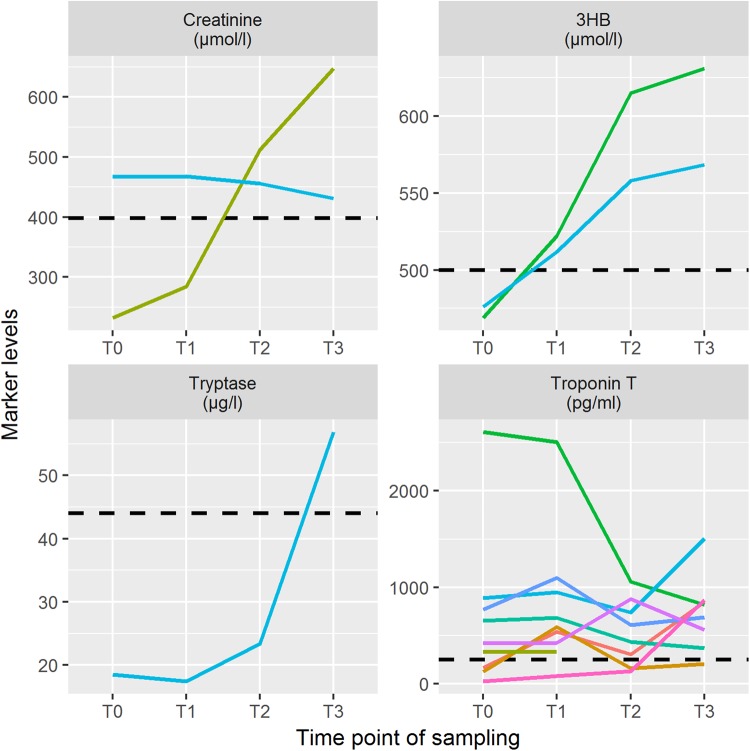
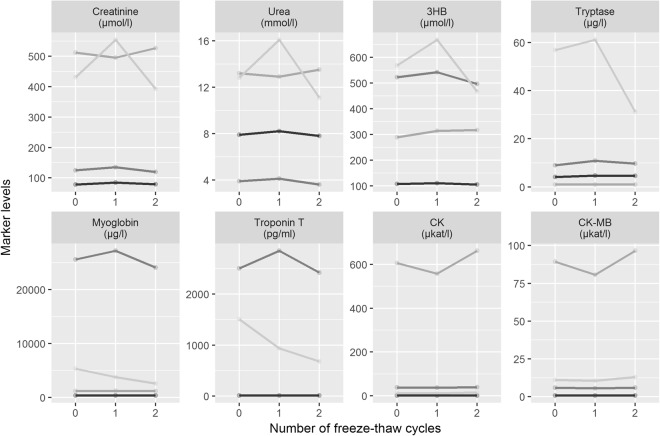
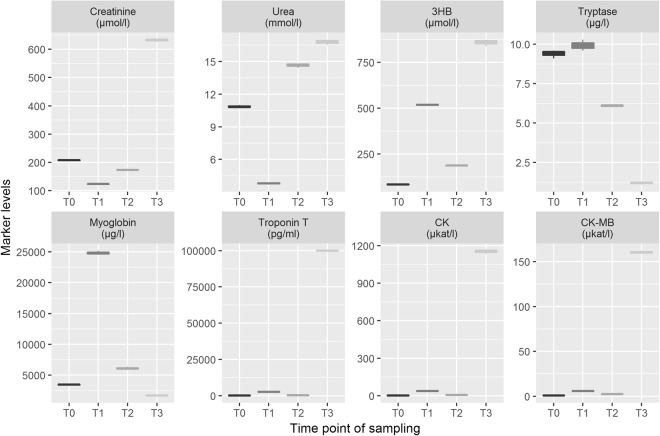
Post-mortem biochemistry of serum markers has been the subject of numerous studies, but in-situ marker stability after death has not been sufficiently evaluated yet. Such laboratory analyses are especially necessary in the cases of functional deaths without morphological evidence of the death causes and also in cardiac death cases with only very short survival times. The aim of the study was to determine the post-mortem stability of commonly-used serum markers at predefined time points. In 20 cases, peripheral venous samples were taken starting immediately after circulatory arrest and ending 48 hours after death. Serum creatinine, urea, 3-β-hydroxybutyrate, tryptase, myoglobin, troponin T, creatin kinase and creatin kinase-MB have been included. For all markers, we observed increasing marker levels for longer post-mortem intervals. Significant marker level changes began two hours after death. Excessive increases were observed for cardiac and muscle markers. Marker levels showed high intra-assay precision. Furthermore, the markers were robust enough to withstand freeze-thaw cycles. Potential contamination of arteriovenous blood did not influence the post-mortem marker levels. Post-mortem blood should be sampled as soon as possible, as increased post-mortem intervals may heavily change marker levels in-situ in individual cases, whereas the markers are mostly unaffected by laboratory conditions.
死后血清标志物的生化变化一直是许多研究的主题,但死后标志物的原位稳定性尚未得到充分评估。在没有形态学死因证据的功能性死亡病例中,以及在心脏死亡病例中存活时间极短的情况下,这些实验室分析尤为必要。本研究的目的是确定常用血清标志物在预定时间点的死后稳定性。在 20 例病例中,从循环停止后立即开始抽取外周静脉样本,并在死后 48 小时结束。纳入的标志物包括血清肌酐、尿素、3-β-羟丁酸、胰蛋白酶、肌红蛋白、肌钙蛋白 T、肌酸激酶和肌酸激酶-MB。对于所有标志物,我们观察到随着死后时间的延长,标志物水平逐渐升高。死亡后两小时开始出现显著的标志物水平变化。心脏和肌肉标志物的增加幅度较大。标志物水平具有较高的批内精密度。此外,这些标志物足够稳健,能够经受住冻融循环。动静脉血的潜在污染不会影响死后标志物水平。应尽快采集死后血液,因为在个别情况下,死后时间的延长可能会严重改变原位标志物水平,而这些标志物受实验室条件的影响较小。