The Charles Bronfman Institute for Personalized Medicine, Icahn School of Medicine at Mount Sinai, New York, NY, USA.
The Mindich Child Health and Development Institute, Icahn School of Medicine at Mount Sinai, Copenhagen, Denmark.
J Intern Med. 2018 Nov;284(5):450-463. doi: 10.1111/joim.12827. Epub 2018 Oct 2.
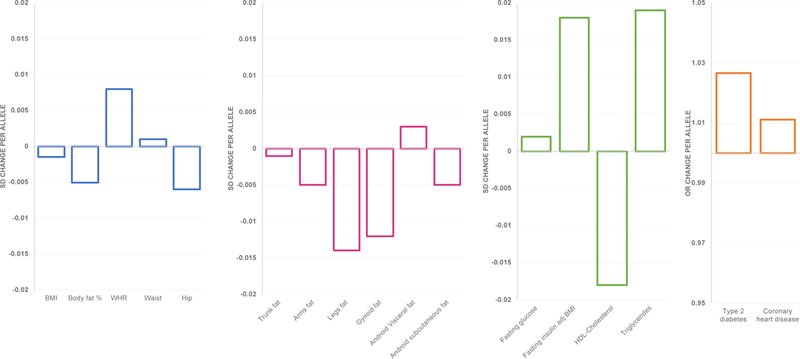
Obesity prevalence continues to rise worldwide, posing a substantial burden on people's health. However, up to 45% of obese individuals do not suffer from cardiometabolic complications, also called the metabolically healthy obese (MHO). Concurrently, up to 30% of normal-weight individuals demonstrate cardiometabolic risk factors that are generally observed in obese individuals, the metabolically obese normal weight (MONW). Besides lifestyle, environmental factors and demographic factors, innate biological mechanisms are known to contribute to the aetiology of the MHO and MONW phenotypes, as well. Experimental studies in animal models have shown that adipose tissue expandability, fat distribution, adipogenesis, adipose tissue vascularization, inflammation and fibrosis, and mitochondrial function are the main mechanisms that uncouple adiposity from its cardiometabolic comorbidities. We reviewed current genetic association studies to expand insights into the biology of MHO/MONW phenotypes. At least four genetic loci were identified through genome-wide association studies for body fat percentage (BF%) of which the BF%-increasing allele was associated with a protective effect on glycemic and lipid outcomes. For some, this association was mediated through favourable effects on body fat distribution. Other studies that characterized the genetic susceptibility of insulin resistance found that a higher susceptibility was associated with lower overall adiposity due to less fat accumulation at hips and legs, suggesting that an impaired capacity to store fat subcutaneously or a preferential storage in the intra-abdominal cavity may be metabolically harmful. Clearly, more work remains to be done in this field, first through gene discovery and subsequently through functional follow-up of identified genes.
肥胖患病率在全球范围内持续上升,给人们的健康带来了巨大负担。然而,多达 45%的肥胖者没有患代谢心血管并发症,也称为代谢健康型肥胖(MHO)。同时,多达 30%的正常体重者表现出一般在肥胖者中观察到的代谢心血管危险因素,即代谢肥胖正常体重(MONW)。除了生活方式、环境和人口因素外,先天的生物机制也被认为是导致 MHO 和 MONW 表型发生的原因之一。动物模型的实验研究表明,脂肪组织扩展性、脂肪分布、脂肪生成、脂肪组织血管生成、炎症和纤维化以及线粒体功能是将肥胖与代谢心血管合并症分离的主要机制。我们回顾了目前的遗传关联研究,以扩展对 MHO/MONW 表型生物学的认识。通过全基因组关联研究,至少确定了四个与体脂肪百分比(BF%)相关的遗传位点,其中 BF%增加的等位基因与血糖和血脂结果的保护作用相关。对于某些人来说,这种关联是通过对体脂肪分布的有利影响介导的。其他研究表明,胰岛素抵抗的遗传易感性与较低的总体肥胖相关,这是由于臀部和腿部的脂肪积累较少,表明储存脂肪的能力受损,或者优先在腹腔内储存可能对代谢有害。显然,在这一领域还有更多的工作要做,首先是通过基因发现,然后是通过对已识别基因的功能后续研究。