Heidemann F, Tsilimparis N, Rohlffs F, Debus E S, Larena-Avellaneda A, Wipper S, Kölbel T
German Aortic Center Hamburg, Department and Outpatient Clinic for Vascular Medicine, University Heart Center, University Hospital Hamburg-Eppendorf, Martinistraße 52, 20246 Hamburg, Germany.
Gefasschirurgie. 2018;23(Suppl 2):39-45. doi: 10.1007/s00772-018-0410-z. Epub 2018 Jul 2.
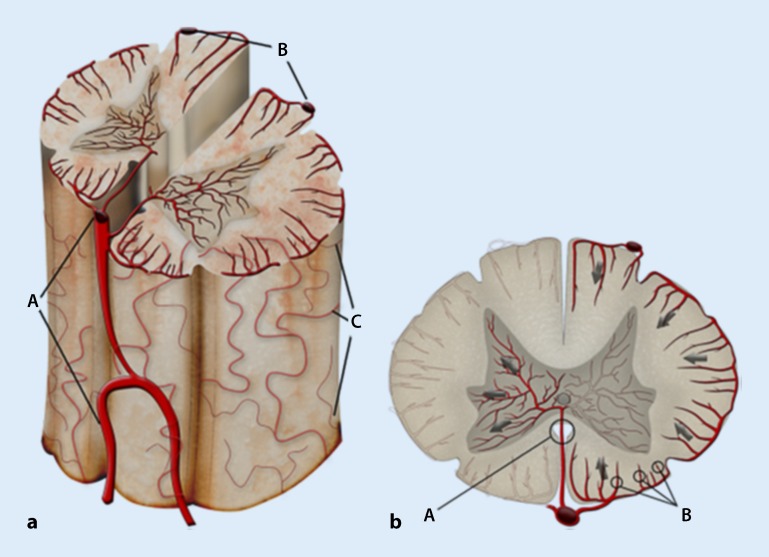
Spinal cord ischemia with development of paraplegia is the most relevant complication of thoracoabdominal aortic surgery caused by compromising the segmental arteries. To prevent this devastating complication in endovascular aortic surgery, staging procedures have been developed to reinforce collateral blood flood to the spinal cord.
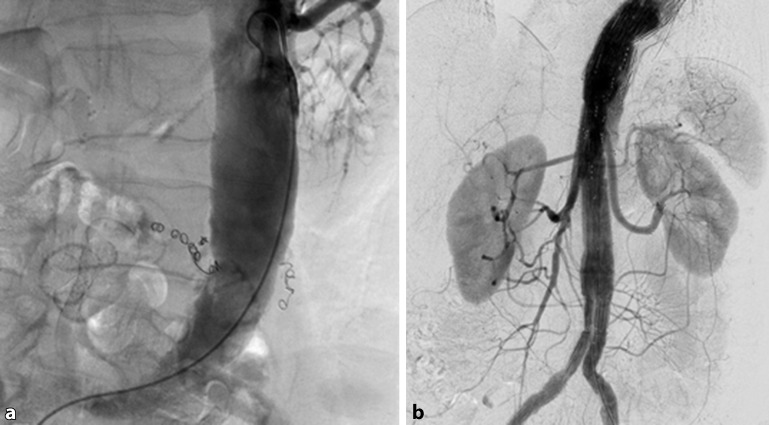
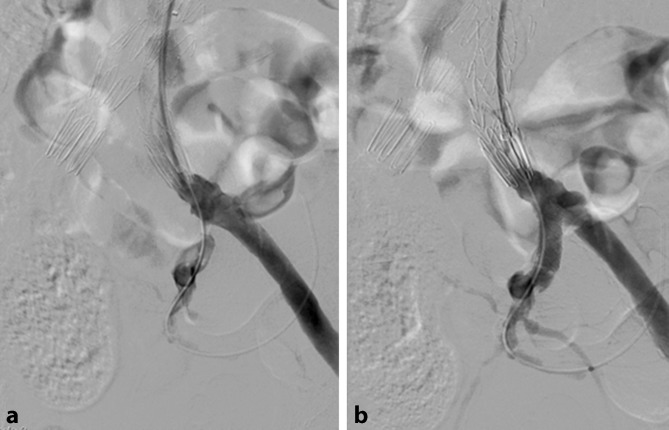
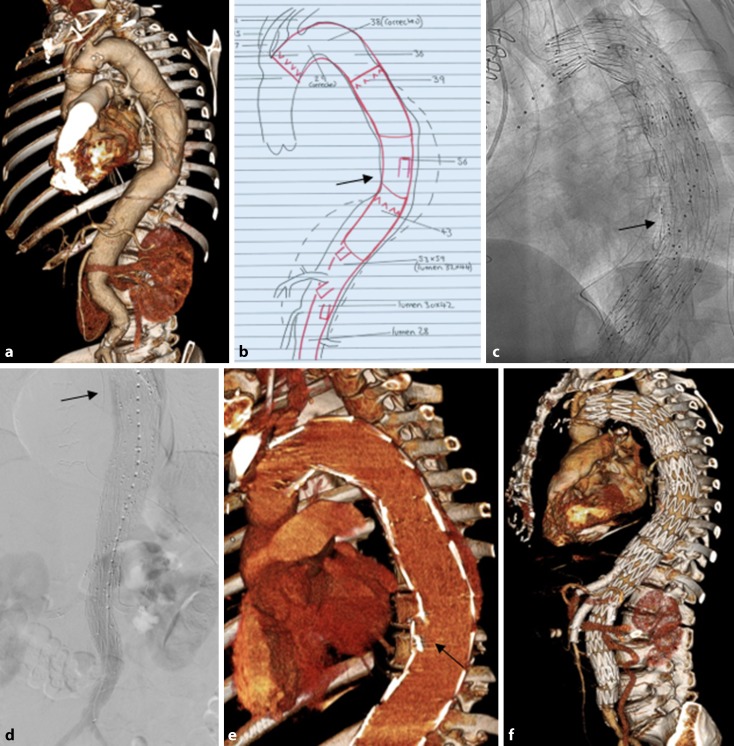
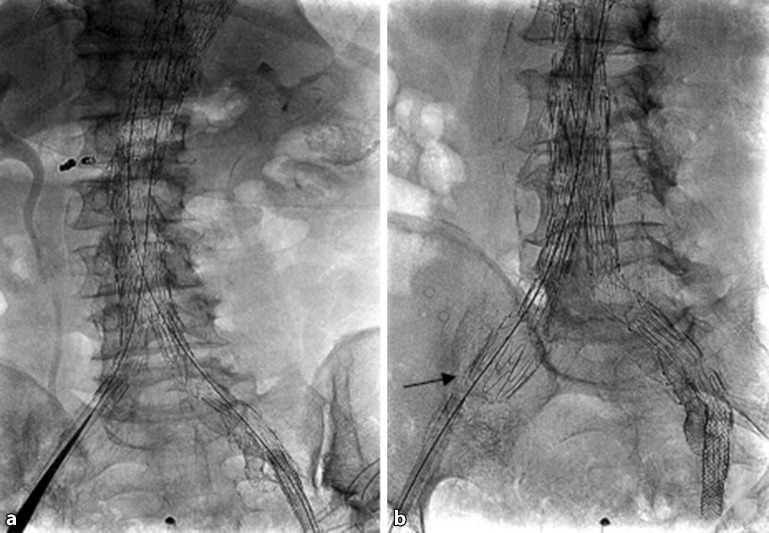
In patients with a medium to high risk for spinal cord ischemia, staged aortic repair is recommended. The classical staged repair is the two-step repair with delayed implantation of the aortic stent grafts. Additionally, more recent methods for short-term salvage of segmental artery perfusion by leaving an endoleak have been developed. Perfusion branches, delayed bridging stents as well as the open branch technique are among these methods. The latest option of staged repair is minimally invasive segmental artery embolization.
Besides the nonsurgical options for monitoring and therapy of spinal cord ischemia, various staging procedures are available, which can be implemented depending on the patient and the aortic anatomy. Evidence that underlines staged repair for endovascular treatment of thoracoabdominal aortic pathologies is mostly based on retrospective studies.
脊髓缺血并发展为截瘫是胸腹主动脉手术最相关的并发症,由节段动脉受压引起。为防止血管腔内主动脉手术中出现这种毁灭性并发症,已开发出分期手术以加强脊髓的侧支血流灌注。
对于脊髓缺血中高风险患者,建议进行分期主动脉修复。经典的分期修复是两步修复,延迟植入主动脉支架移植物。此外,还开发了通过保留内漏进行节段动脉灌注短期挽救的最新方法。灌注分支、延迟桥接支架以及开放分支技术都属于这些方法。分期修复的最新选择是微创节段动脉栓塞。
除了脊髓缺血监测和治疗的非手术选择外,还有各种分期手术可供选择,可根据患者和主动脉解剖结构实施。强调胸腹主动脉病变血管腔内治疗分期修复的证据大多基于回顾性研究。