Nyarko Jennifer N K, Quartey Maa O, Heistad Ryan M, Pennington Paul R, Poon Lisa J, Knudsen Kaeli J, Allonby Odette, El Zawily Amr M, Freywald Andrew, Rauw Gail, Baker Glen B, Mousseau Darrell D
Cell Signalling Laboratory, Department of Psychiatry, University of Saskatchewan, Saskatoon, SK, Canada.
Department of Pathology and Laboratory Medicine, University of Saskatchewan, Saskatoon, SK, Canada.
Front Neurosci. 2018 Aug 10;12:545. doi: 10.3389/fnins.2018.00545. eCollection 2018.
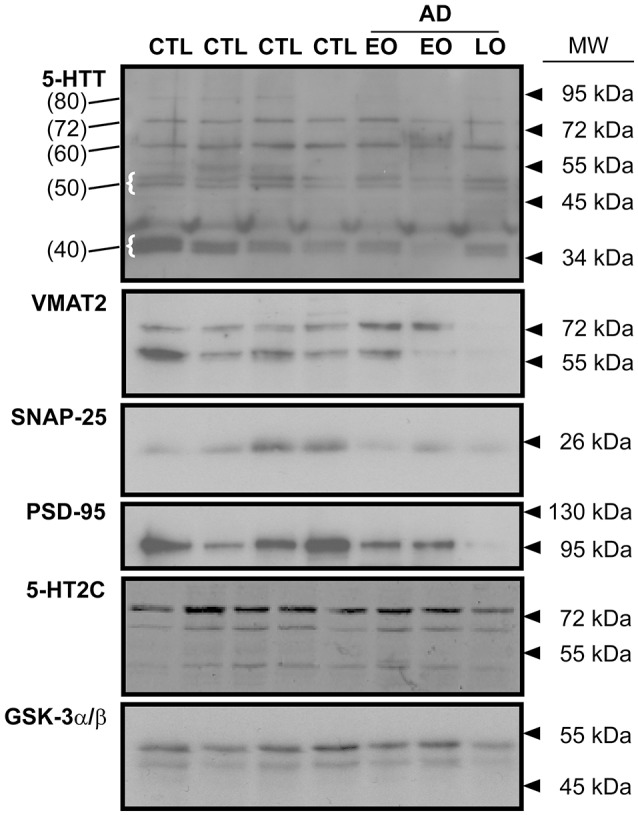
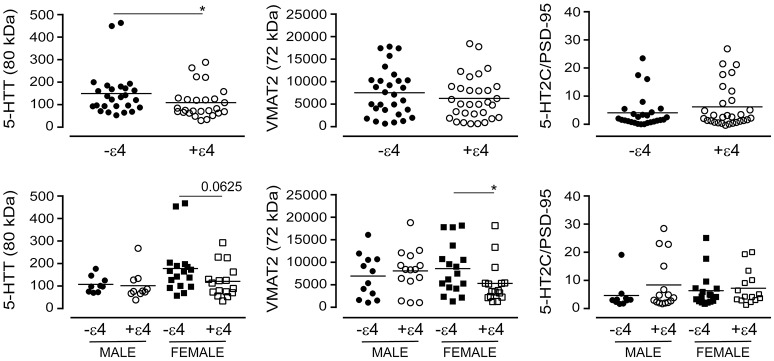
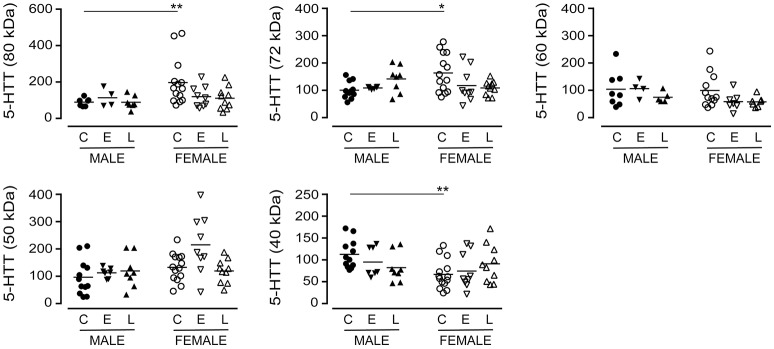
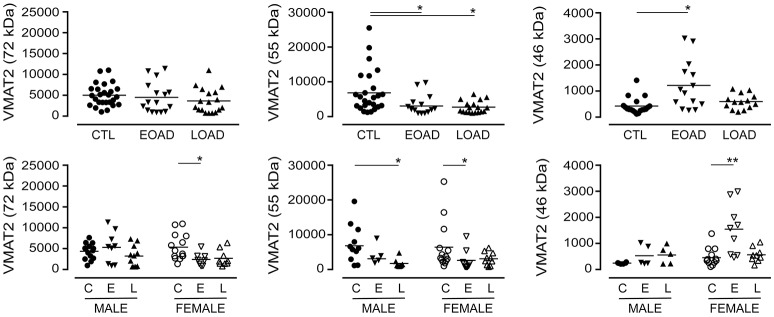
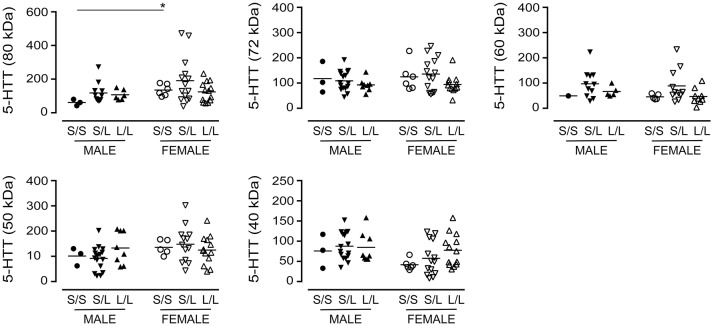
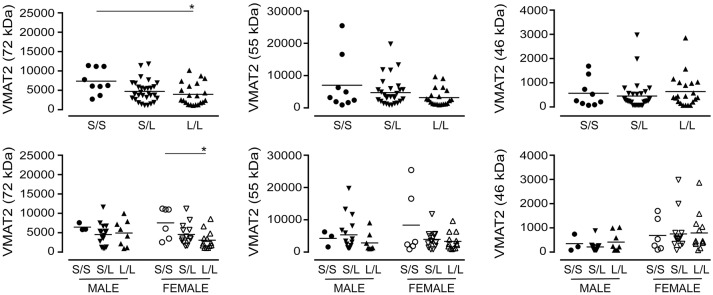
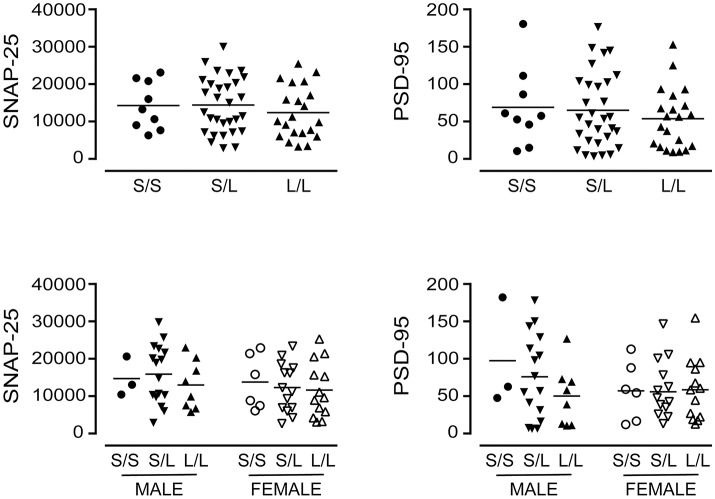
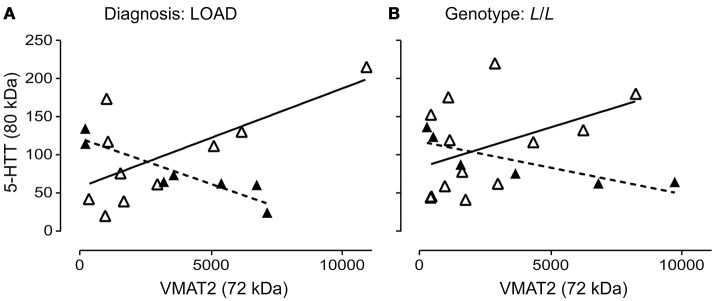
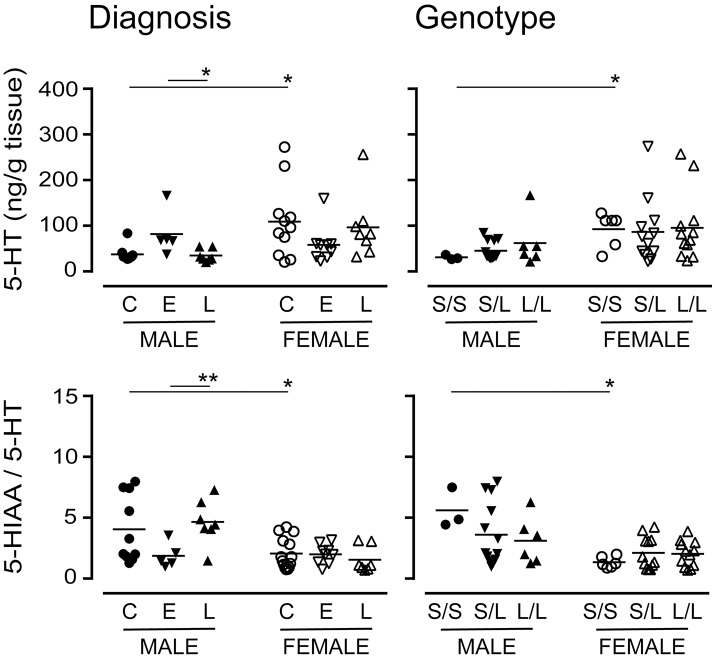
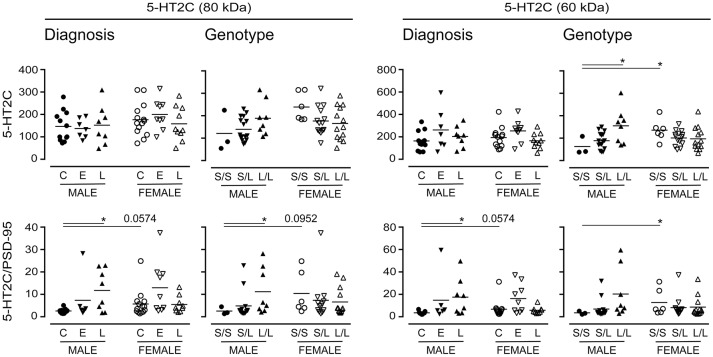
The serotonin (5-hydroxytryptamine, 5-HT) transporter (5-HTT) gene-linked polymorphic region (5-HTTLPR) is thought to alter 5-HT signaling and contribute to behavioral and cognitive phenotypes in depression as well as Alzheimer disease (AD). We explored how well the short () and long () alleles of the 5-HTTLPR align with serotoninergic indices in 60 autopsied cortical samples from early-onset AD/EOAD and late-onset AD/LOAD donors, and age- and sex-matched controls. Stratifying data by either diagnosis-by-genotype or by sex-by-genotype revealed that the donor's 5-HTTLPR genotype, i.e., //, or /, did not affect 5-HTT mRNA or protein expression. However, the glycosylation of 5-HTT was significantly higher in control female (. male) samples and tended to decrease in female EOAD/LOAD samples, but remained unaltered in male LOAD samples. Glycosylated forms of the vesicular monoamine transporter (VMAT2) were lower in both male and female AD samples, while a sex-by-genotype stratification revealed a loss of VMAT2 glycosylation specifically in females with an / genotype. VMAT2 and 5-HTT glycosylation were correlated in male samples and inversely correlated in female samples in both stratification models. The / genotype aligned with lower levels of 5-HT turnover in females (but not males) and with an increased glycosylation of the post-synaptic 5-HT2C receptor. Interestingly, the changes in presynaptic glycosylation were evident primarily in female carriers of the ε4 risk factor for AD. Our data do not support an association between 5-HTTLPR genotype and 5-HTT expression, but they do reveal a non-canonical association of 5-HTTLPR genotype with sex-dependent glycosylation changes in pre- and post-synaptic markers of serotoninergic neurons. These patterns of change suggest adaptive responses in 5-HT signaling and could certainly be contributing to the female prevalence in risk for either depression or AD.
血清素(5-羟色胺,5-HT)转运体(5-HTT)基因连锁多态性区域(5-HTTLPR)被认为会改变5-HT信号传导,并导致抑郁症以及阿尔茨海默病(AD)中的行为和认知表型。我们研究了来自早发性AD/EOAD和晚发性AD/LOAD供体以及年龄和性别匹配的对照的60个尸检皮质样本中,5-HTTLPR的短(S)和长(L)等位基因与血清素能指标的匹配程度。按基因型诊断或按基因型性别分层数据显示,供体的5-HTTLPR基因型,即S/S、S/L或L/L,不影响5-HTT mRNA或蛋白质表达。然而,5-HTT的糖基化在对照女性(与男性相比)样本中显著更高,并且在女性EOAD/LOAD样本中趋于降低,但在男性LOAD样本中保持不变。囊泡单胺转运体(VMAT2)的糖基化形式在男性和女性AD样本中均较低,而按基因型性别分层显示,VMAT2糖基化的缺失仅在基因型为S/L的女性中出现。在两种分层模型中,VMAT2和5-HTT糖基化在男性样本中呈正相关,在女性样本中呈负相关。S/L基因型与女性(而非男性)较低水平的5-HT周转率以及突触后5-HT2C受体糖基化增加相关。有趣的是,突触前糖基化的变化主要在携带AD的ε4风险因素的女性中明显。我们的数据不支持5-HTTLPR基因型与5-HTT表达之间的关联,但确实揭示了5-HTTLPR基因型与血清素能神经元突触前和突触后标志物中性别依赖性糖基化变化的非典型关联。这些变化模式表明5-HT信号传导中的适应性反应,并且肯定可能导致女性在抑郁症或AD风险中的患病率较高。