Nestlé Institute of Health Sciences SA, Lausanne, Switzerland.
School of Physiology, Pharmacology & Neuroscience, University of Bristol, Bristol, UK.
Nat Med. 2018 Sep;24(9):1395-1406. doi: 10.1038/s41591-018-0159-7. Epub 2018 Aug 27.
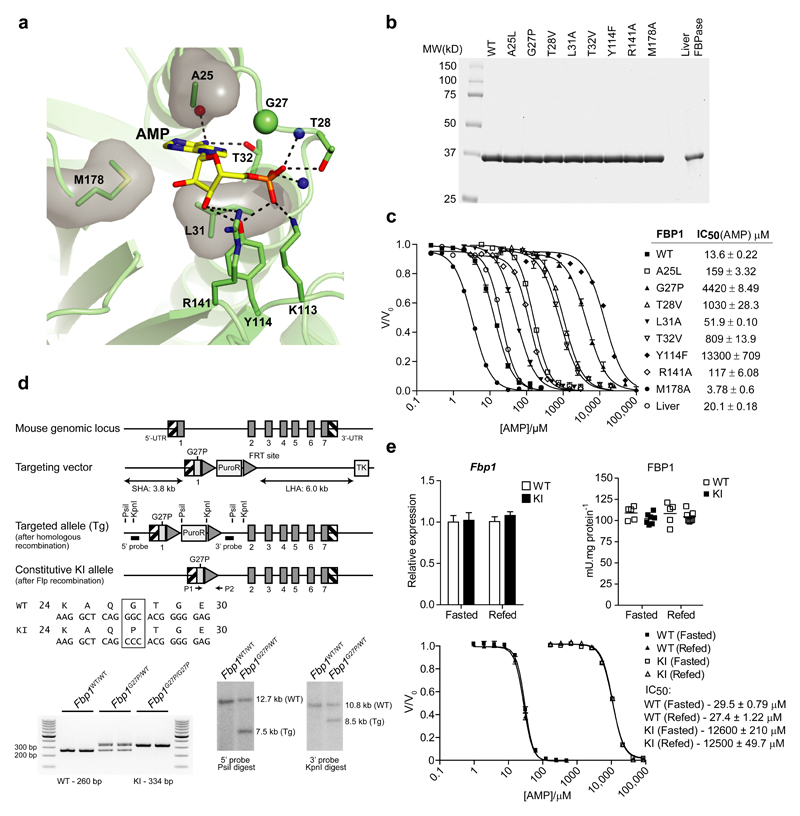
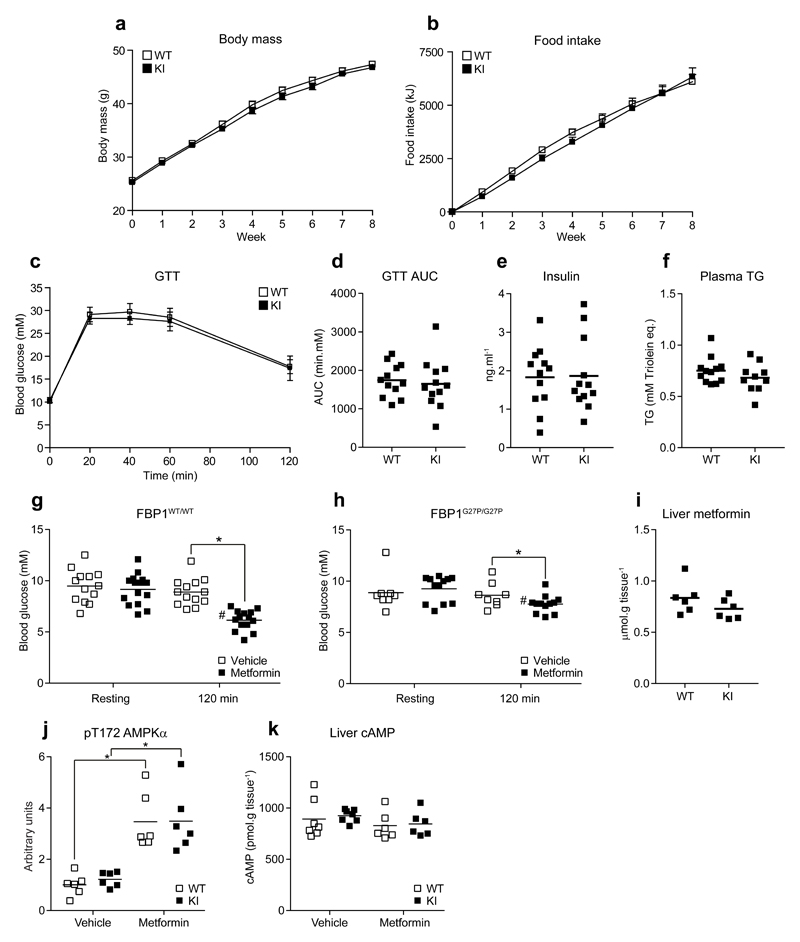
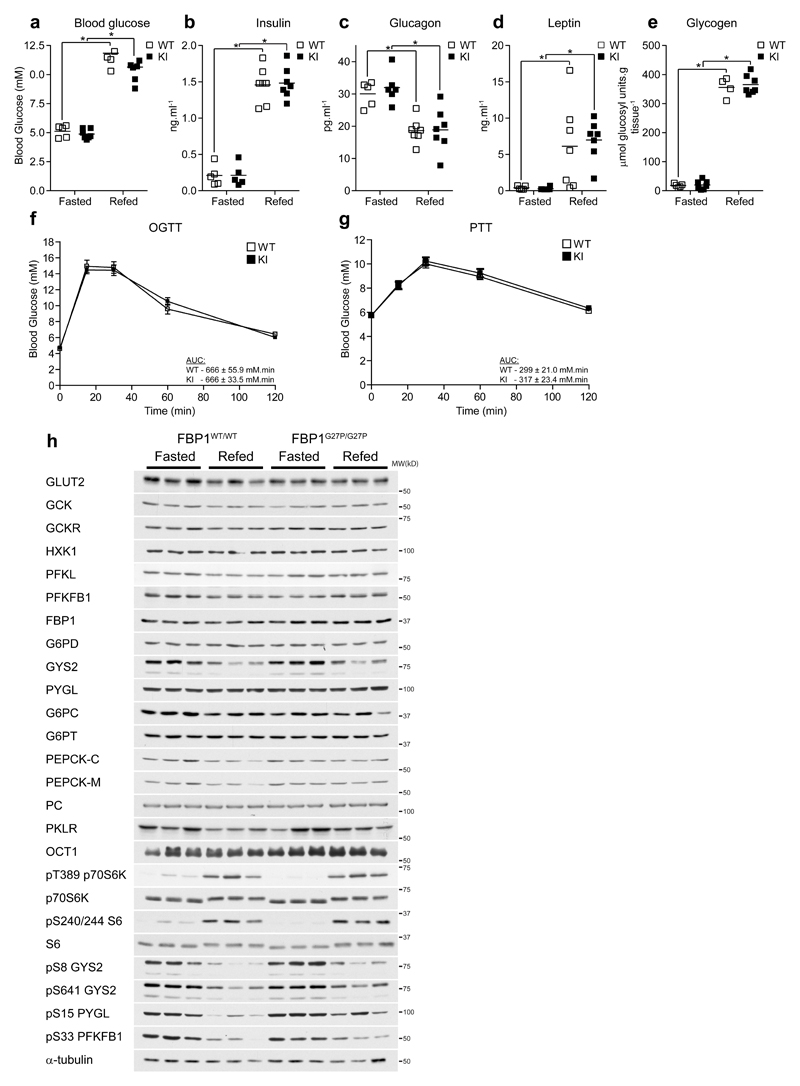
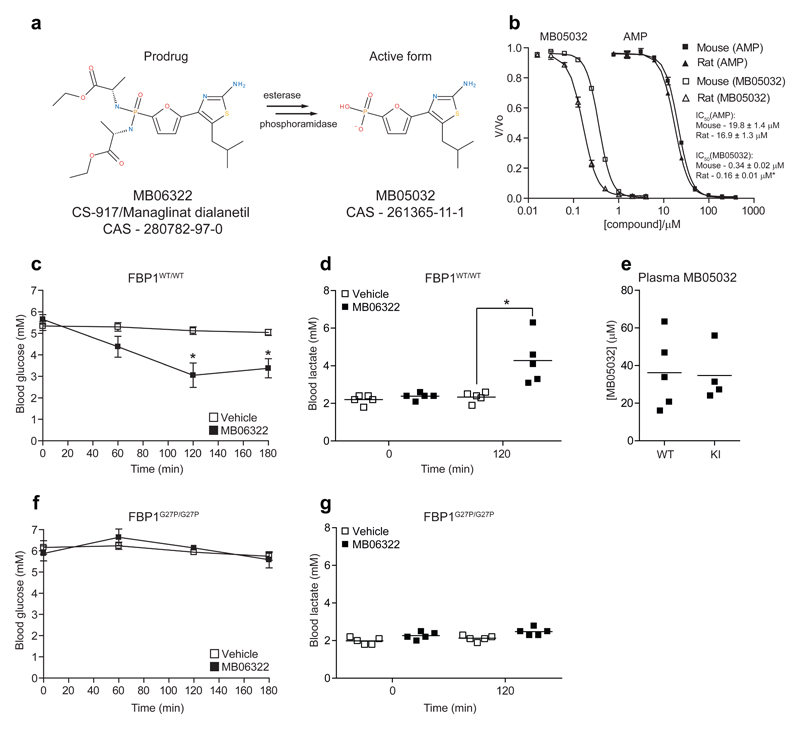
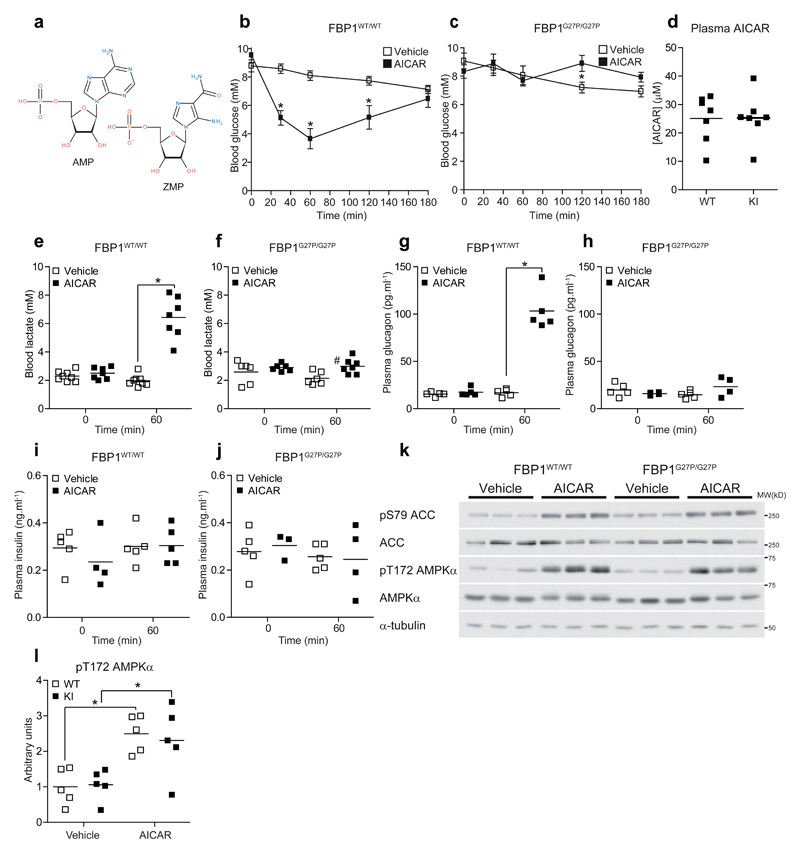
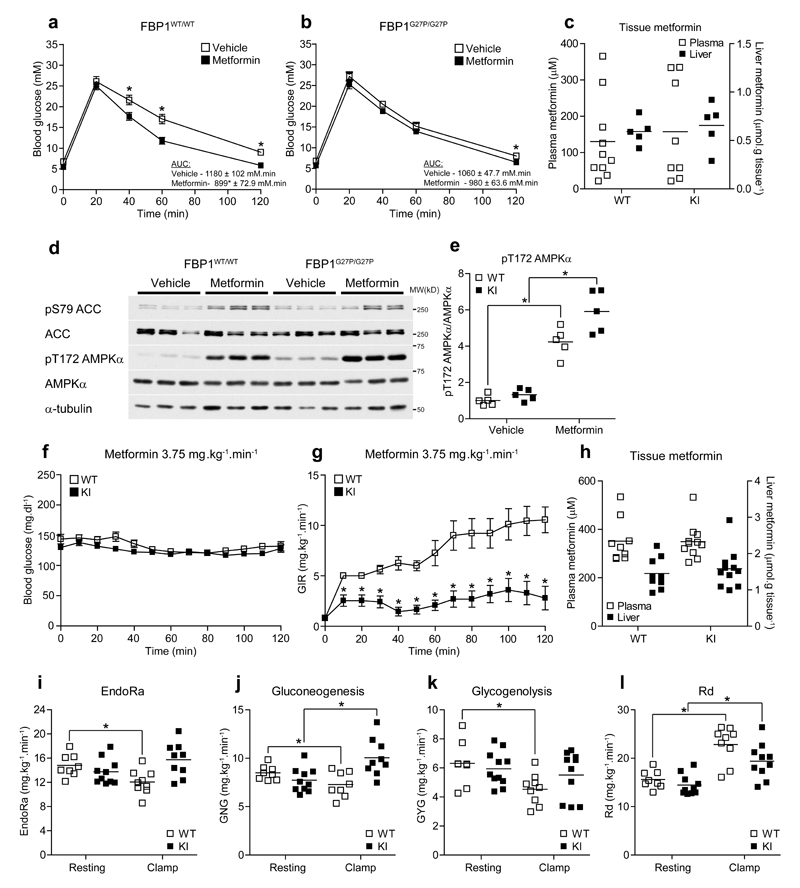
Metformin is a first-line drug for the treatment of individuals with type 2 diabetes, yet its precise mechanism of action remains unclear. Metformin exerts its antihyperglycemic action primarily through lowering hepatic glucose production (HGP). This suppression is thought to be mediated through inhibition of mitochondrial respiratory complex I, and thus elevation of 5'-adenosine monophosphate (AMP) levels and the activation of AMP-activated protein kinase (AMPK), though this proposition has been challenged given results in mice lacking hepatic AMPK. Here we report that the AMP-inhibited enzyme fructose-1,6-bisphosphatase-1 (FBP1), a rate-controlling enzyme in gluconeogenesis, functions as a major contributor to the therapeutic action of metformin. We identified a point mutation in FBP1 that renders it insensitive to AMP while sparing regulation by fructose-2,6-bisphosphate (F-2,6-P), and knock-in (KI) of this mutant in mice significantly reduces their response to metformin treatment. We observe this during a metformin tolerance test and in a metformin-euglycemic clamp that we have developed. The antihyperglycemic effect of metformin in high-fat diet-fed diabetic FBP1-KI mice was also significantly blunted compared to wild-type controls. Collectively, we show a new mechanism of action for metformin and provide further evidence that molecular targeting of FBP1 can have antihyperglycemic effects.
二甲双胍是治疗 2 型糖尿病患者的一线药物,但确切的作用机制仍不清楚。二甲双胍主要通过降低肝葡萄糖生成(HGP)发挥其降血糖作用。这种抑制被认为是通过抑制线粒体呼吸复合物 I 介导的,从而升高 5'-腺苷一磷酸(AMP)水平并激活 AMP 激活的蛋白激酶(AMPK),尽管这一观点受到了缺乏肝 AMPK 的小鼠结果的挑战。在这里,我们报告 AMP 抑制的酶果糖-1,6-二磷酸酶-1(FBP1),糖异生的限速酶,作为二甲双胍治疗作用的主要贡献者。我们鉴定了 FBP1 中的一个点突变,使其对 AMP 不敏感,同时对果糖-2,6-二磷酸(F-2,6-P)的调节不受影响,并且该突变的敲入(KI)在小鼠中显著降低了它们对二甲双胍治疗的反应。我们在二甲双胍耐受试验和我们开发的二甲双胍等血糖钳夹试验中观察到了这一点。与野生型对照相比,高脂肪饮食喂养的糖尿病 FBP1-KI 小鼠的二甲双胍降血糖作用也明显减弱。总的来说,我们展示了二甲双胍的一种新作用机制,并提供了进一步的证据表明,FBP1 的分子靶向可能具有降血糖作用。