Clinical Division of Nephrology, Department of Internal Medicine, Medical University of Graz, Graz, Austria.
Institute of Pathology, Medical University of Graz, Graz, Austria.
Front Immunol. 2018 Aug 14;9:1866. doi: 10.3389/fimmu.2018.01866. eCollection 2018.
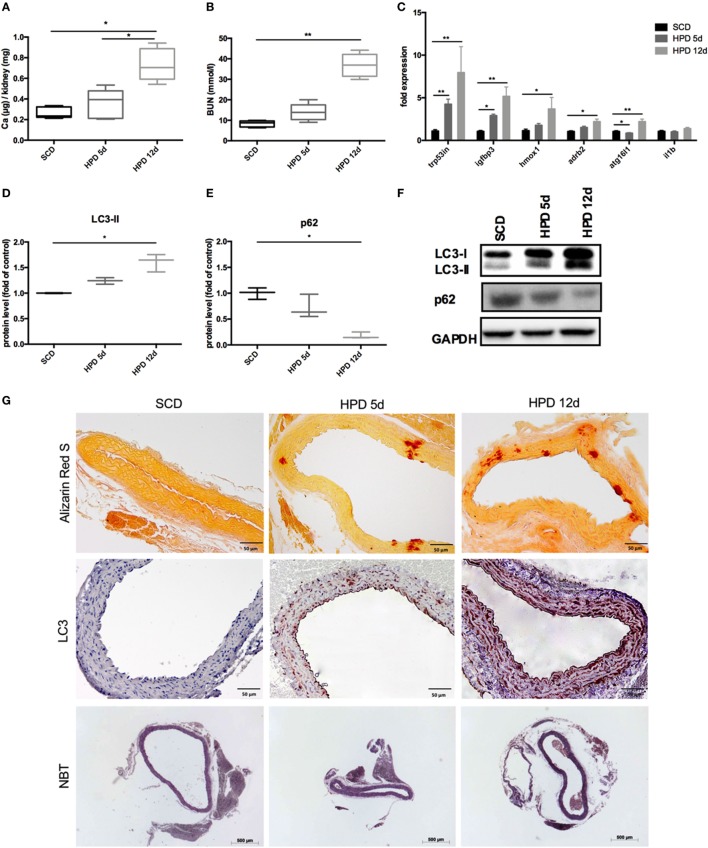
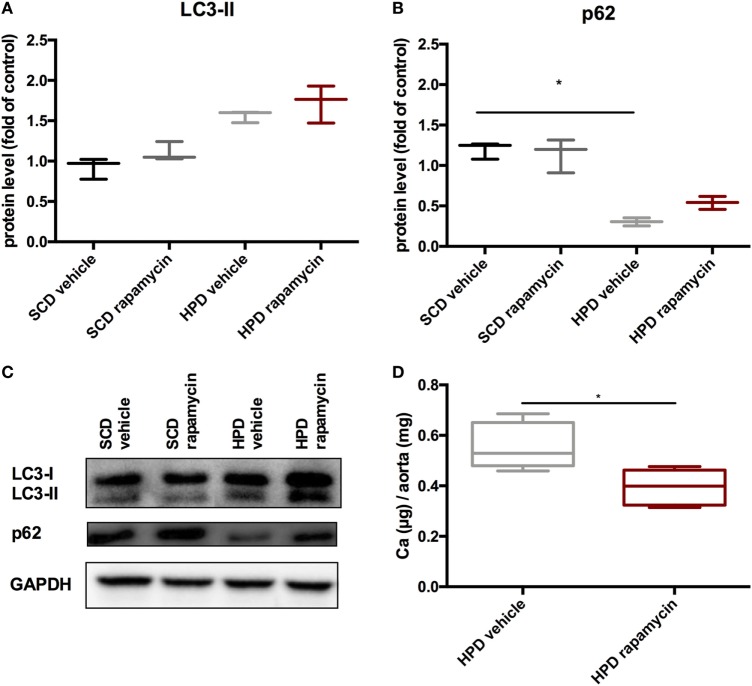
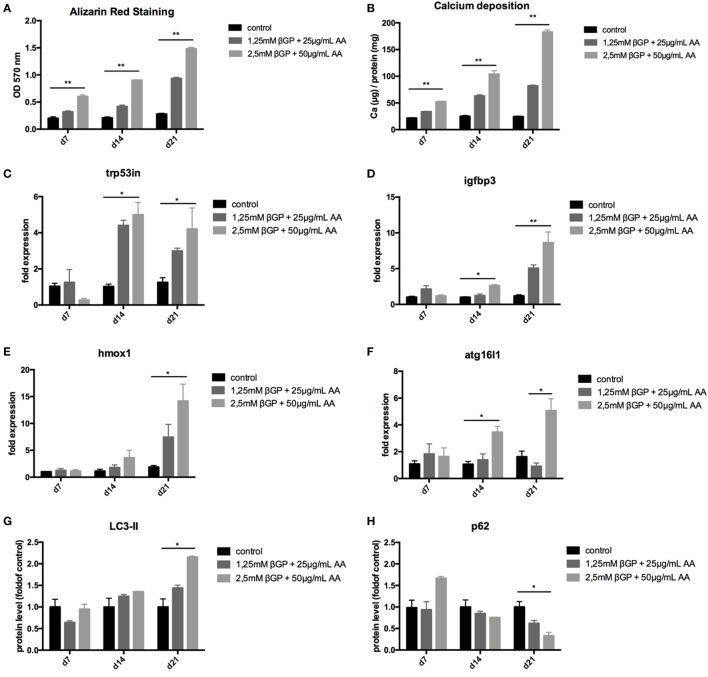
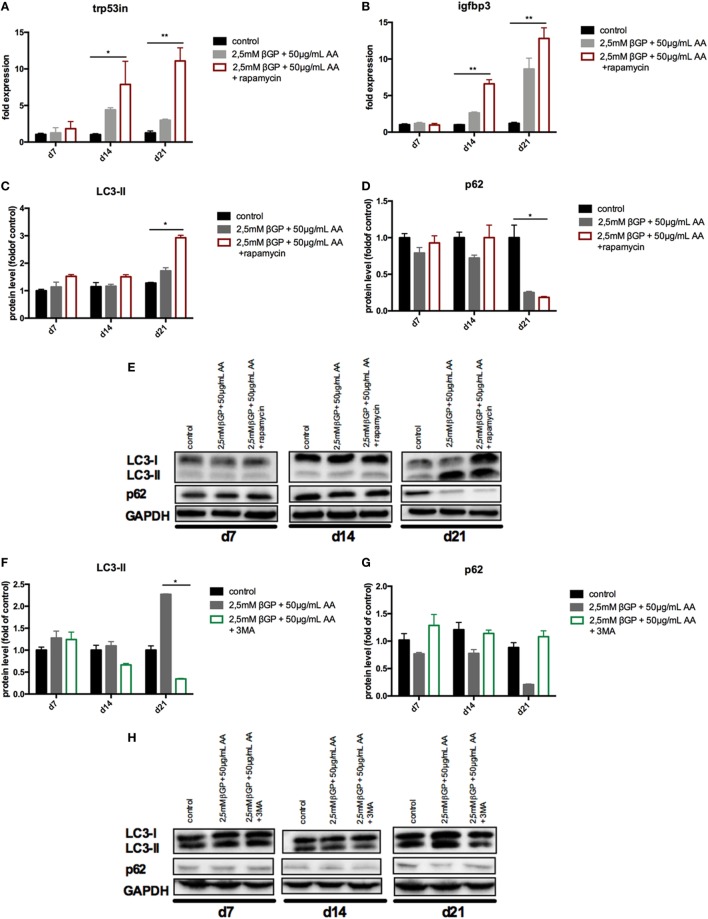
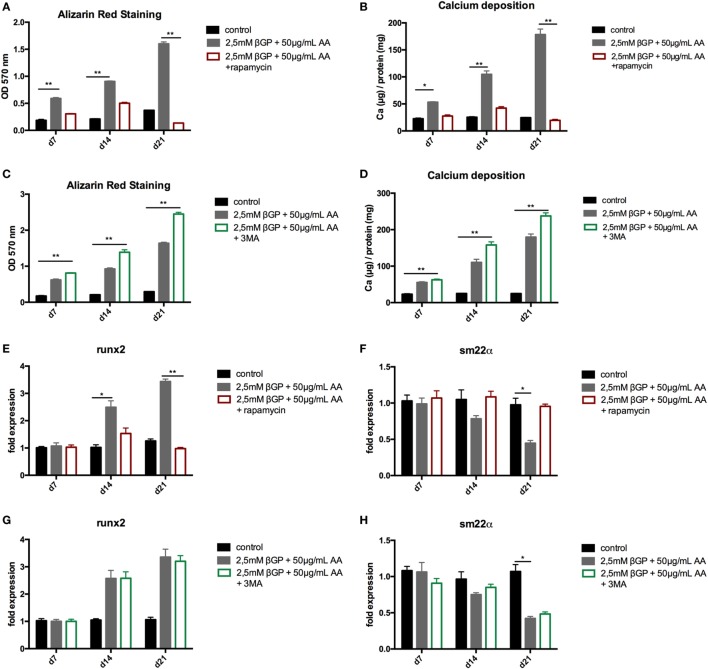
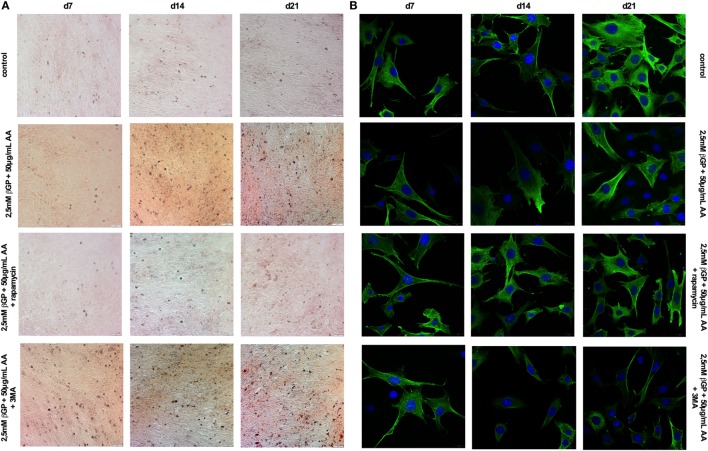
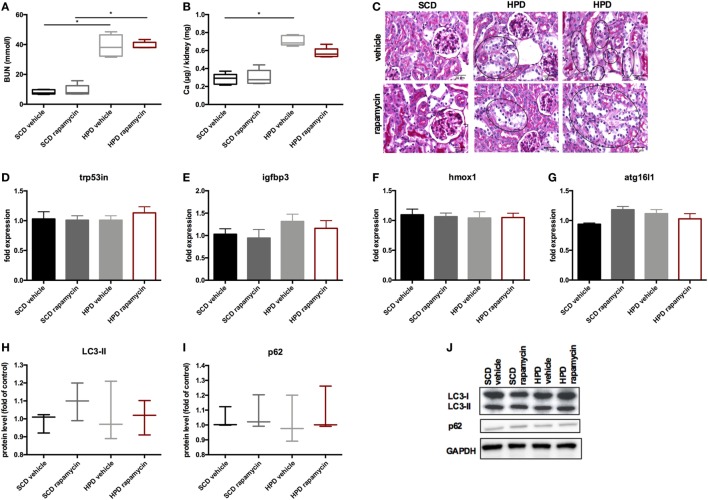
Chronic kidney disease and diabetes mellitus are associated with extensive media calcification, which leads to increased cardiovascular morbidity and mortality. Here, we investigated the role of autophagy in the pathogenesis of uremic vascular media calcification. DBA/2 mice were fed with high-phosphate diet (HPD) in order to cause vascular calcification. DBA/2 mice on standard chow diet were used as control. In parallel, autophagy and its response to rapamycin, 3-methyladenine (3-MA), and bafilomycin were studied in an model using mouse vascular smooth muscle cells (MOVAS). DBA/2 mice on HPD developed severe vascular media calcification, which is mirrored by culturing MOVAS under calcifying conditions. Both, and , autophagy significantly increased in MOVAS under calcifying conditions and in aortas of HPD mice, respectively. Histologically, autophagy was located to the aortic , but also vascular endothelial cells, and was found to continuously increase during HPD treatment. 3-MA as well as bafilomycin blocked autophagy in MOVAS and increased calcification. , rapamycin treatment further increased autophagy and resulted in a significant decrease of vascular calcification and . Rapamycin reduced transcription levels in aortas and MOVAS to control levels, whereas it increased α-smooth muscle actin and transcription in MOVAS to control levels. Furthermore, rapamycin-treated HPD mice survived significantly longer compared to HPD controls. These findings indicate that autophagy is an endogenous response of vascular smooth muscle cells (VSMC) to protect from calcification in uremia. Induction of autophagy by rapamycin protects cells and mice from uremic media calcification possibly by inhibiting osteogenic transdifferentiation of VSMC.
慢性肾脏病和糖尿病与广泛的血管中层钙化有关,这导致心血管发病率和死亡率增加。在这里,我们研究了自噬在尿毒症血管中层钙化发病机制中的作用。DBA/2 小鼠用高磷饮食(HPD)喂养以引起血管钙化。用标准饲料喂养的 DBA/2 小鼠作为对照。同时,在使用小鼠血管平滑肌细胞(MOVAS)的模型中研究了自噬及其对雷帕霉素、3-甲基腺嘌呤(3-MA)和巴弗洛霉素的反应。HPD 饮食的 DBA/2 小鼠发生严重的血管中层钙化,这与在钙化条件下培养的 MOVAS 相吻合。在钙化条件下,以及在 HPD 小鼠的主动脉中,自噬和均显著增加。组织学上,自噬位于主动脉,但也位于血管内皮细胞中,并且在 HPD 治疗期间不断增加。3-MA 和巴弗洛霉素在 MOVAS 中阻断自噬并增加钙化。雷帕霉素进一步增加自噬,并导致血管钙化和显著减少。雷帕霉素将主动脉和 MOVAS 中的转录水平降低至对照水平,而在 MOVAS 中增加α-平滑肌肌动蛋白和转录水平至对照水平。此外,与 HPD 对照组相比,接受雷帕霉素治疗的 HPD 小鼠的存活率显著提高。这些发现表明,自噬是血管平滑肌细胞(VSMC)对尿毒症中钙化的一种内源性反应。雷帕霉素诱导的自噬通过抑制 VSMC 的成骨转化来保护细胞和小鼠免受尿毒症中层钙化。