Mangano Silvina, Denita-Juarez Silvina P, Marzol Eliana, Borassi Cecilia, Estevez José M
Fundación Instituto Leloir and Instituto de Investigaciones Bioquímicas de Buenos Aires (IIBBA-CONICET), Buenos Aires, Argentina.
Front Plant Sci. 2018 Aug 14;9:1164. doi: 10.3389/fpls.2018.01164. eCollection 2018.
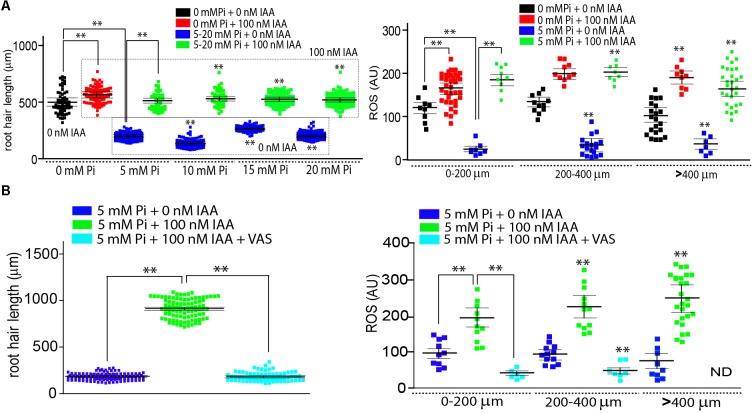
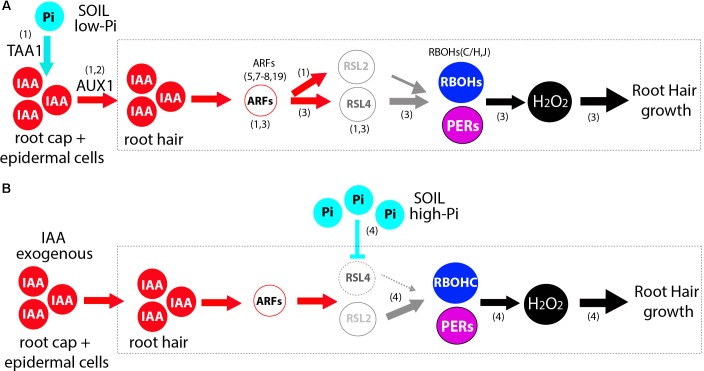
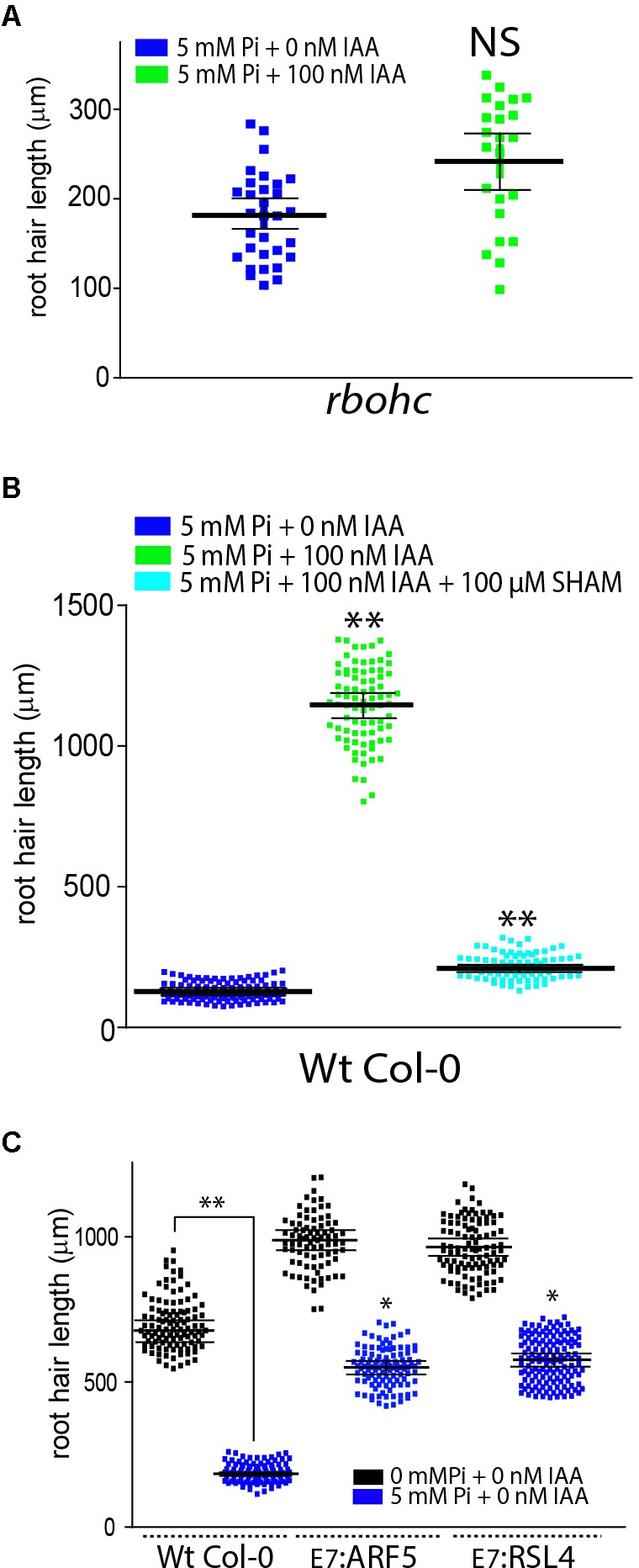
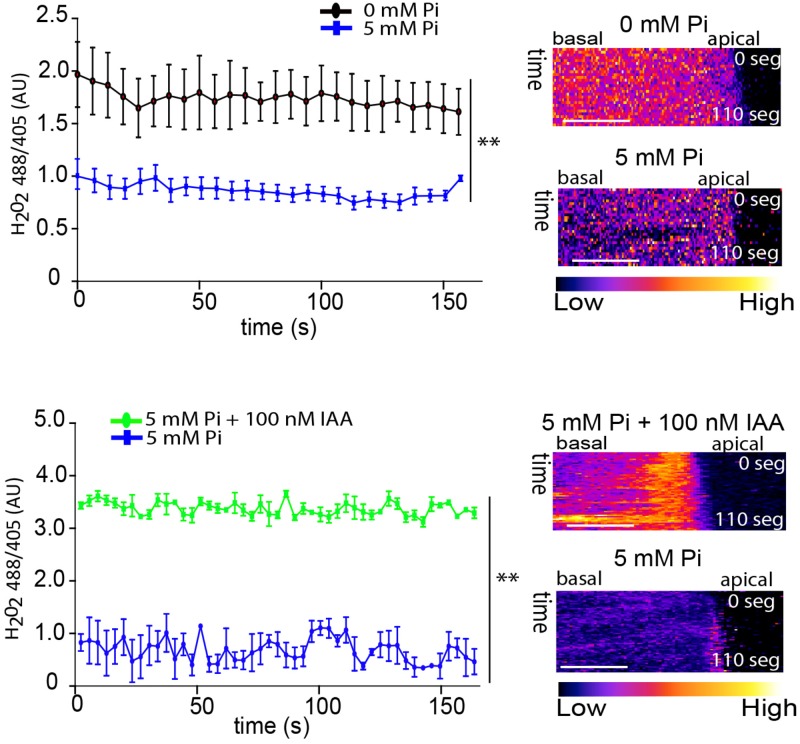
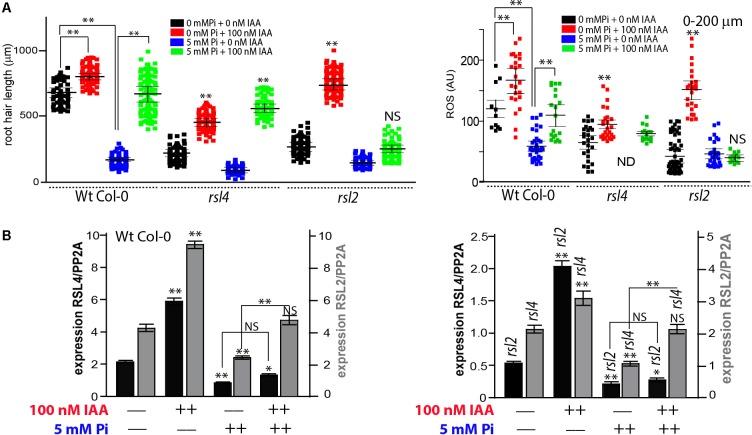
Root hair size determines the surface area/volume ratio of the whole roots exposed to the nutrient and water pools, thereby likely impacting nutrient and water uptake rates. The speed at which they grow is determined both by cell-intrinsic factors like hormones (e.g., auxin) and external environmental signals like nutrient availability in the soil (e.g., phosphate). Overall root hair growth is controlled by the transcription factors RSL4 and RSL2. While high levels of auxin promote root hair growth, high levels of inorganic phosphate (Pi) in the media are able to strongly repress RSL4 and RSL2 expression linked to a decreased polar growth. In this work, we inquired the mechanism used by root hairs to integrate conflicting growth signals like the repressive signal of high Pi levels and a concomitant high auxin exposure that promotes growth and questioned whether these complex signals might activate known molecular players in root hair polar growth. Under these conditions, RSL2 expression (but not RSL4) is activated linked to ROS production and root hair growth. On the other hand, by blocking ROS production derived from the NADPH Oxidase C (or RBOHC for RESPIRATORY BURST OXIDASE HOMOLOG C) and ROS production from Secreted type-III Peroxidases (PERs), it was possible to repress the auxin growth-promoting effect. This study identifies a new layer of complexity between auxin, Pi nutrient availability and RSL2/RSL4 transcription factors all acting on ROS homeostasis and growth at the root hair level.
根毛大小决定了整个根系暴露于养分和水池中的表面积与体积之比,从而可能影响养分和水分的吸收速率。它们的生长速度既由激素(如生长素)等细胞内在因素决定,也由土壤中养分有效性(如磷酸盐)等外部环境信号决定。根毛的整体生长由转录因子RSL4和RSL2控制。虽然高水平的生长素促进根毛生长,但培养基中高水平的无机磷酸盐(Pi)能够强烈抑制与极性生长降低相关的RSL4和RSL2表达。在这项研究中,我们探究了根毛整合相互冲突的生长信号(如高Pi水平的抑制信号和促进生长的高生长素暴露)所采用的机制,并质疑这些复杂信号是否可能激活根毛极性生长中已知的分子参与者。在这些条件下,RSL2表达(而非RSL4)与活性氧(ROS)产生和根毛生长相关而被激活。另一方面,通过阻断源自NADPH氧化酶C(或呼吸爆发氧化酶同源物C,即RBOHC)的ROS产生以及分泌型III类过氧化物酶(PERs)产生的ROS,有可能抑制生长素促进生长的作用。这项研究揭示了生长素、Pi养分有效性和RSL2/RSL4转录因子之间在根毛水平上作用于ROS稳态和生长的新一层复杂性。