Department of Biochemistry, Okayama University of Science, Okayama, Okayama Prefecture 700-0005, Japan.
Int J Environ Res Public Health. 2018 Aug 29;15(9):1871. doi: 10.3390/ijerph15091871.
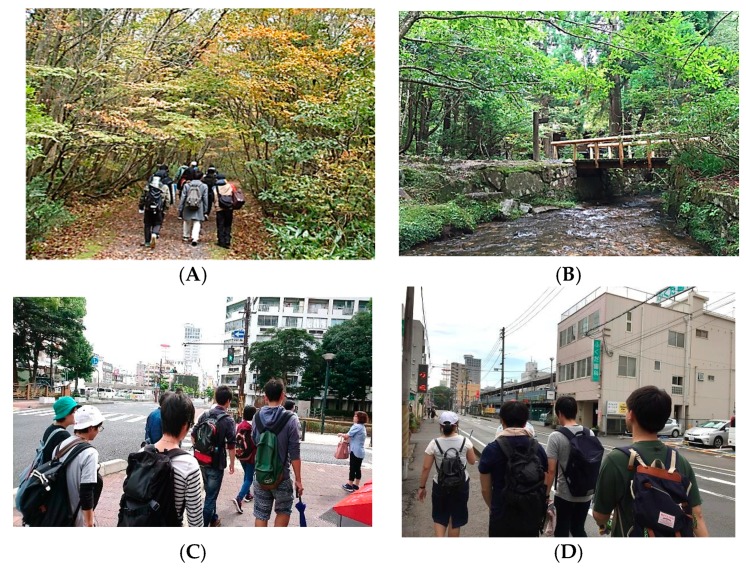
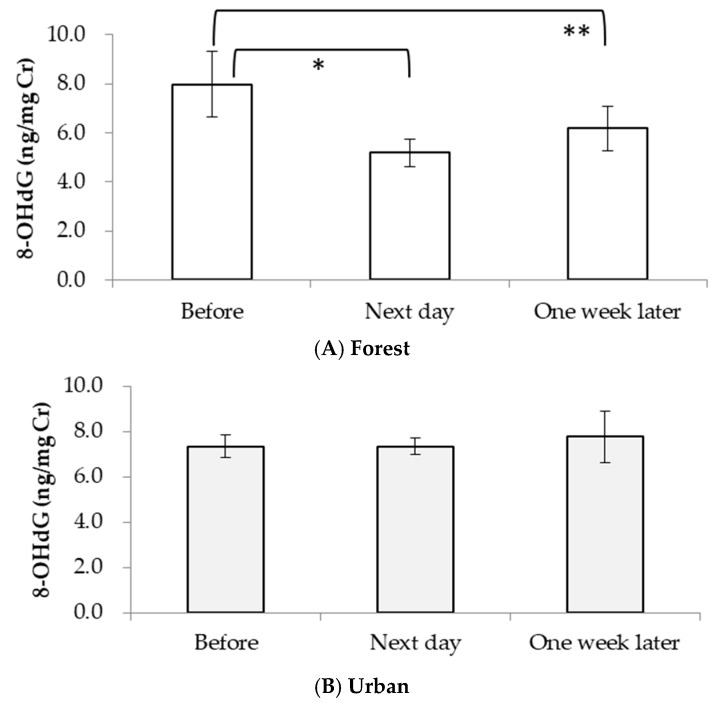
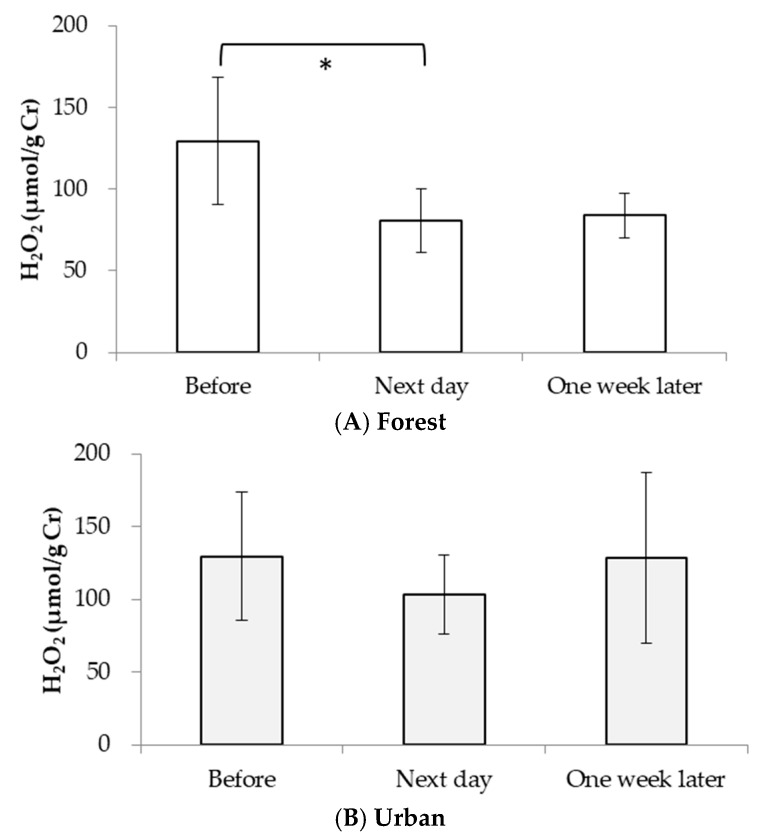
Some studies have shown that exposure to forests has positive effects on human health, although the mechanisms underlying the health benefits of a forest environment have not been elucidated yet. The current study was aimed at examining how the levels of urinary hydrogen peroxide (H₂O₂) and 8-hydroxy-2'deoxyguanosine (8-OHdG) change after a forest or urban walk in healthy subjects. Twenty-eight volunteers (19 men and 9 women) participated in the study. The forest walks were carried out in a forest in Okayama Prefecture, Japan, and the urban walks (15 men and 7 women) were carried out in the downtown area of Okayama city, each for two hours. Spot urine samples were collected before the walk, the next day and one week after the forest or urban walk. Compared with pre-forest walk levels, urinary H₂O₂ ( < 0.1) and 8-OHdG ( < 0.1) concentrations significantly decreased in the participants the day after the forest walk; furthermore, urinary 8-OHdG remained at a low level even at one week after the forest walk ( < 0.05). However, there were no significant changes in the concentrations of these oxidative biomarkers after the urban walk. These findings suggest the possibility that exposure to forests may alleviate oxidative stress in the body.
一些研究表明,暴露于森林环境对人类健康具有积极影响,尽管森林环境对健康的益处的潜在机制尚未阐明。本研究旨在检验在健康受试者进行森林或城市散步后,尿液中过氧化氢(H₂O₂)和 8-羟基-2'-脱氧鸟苷(8-OHdG)的水平如何变化。28 名志愿者(19 名男性和 9 名女性)参加了这项研究。森林散步在日本冈山县的森林中进行,城市散步(15 名男性和 7 名女性)在冈山市中心进行,每次持续两小时。在散步前、第二天和森林或城市散步后一周采集点尿样。与森林散步前的水平相比,森林散步后一天参与者的尿液 H₂O₂(<0.1)和 8-OHdG(<0.1)浓度显著降低;此外,即使在森林散步后一周,尿液 8-OHdG 仍保持低水平(<0.05)。然而,城市散步后这些氧化生物标志物的浓度没有显著变化。这些发现提示,暴露于森林可能有助于减轻体内的氧化应激。