Department of Urology, First Affiliated Hospital of Xi'an Jiaotong University, Xi'an, 710061, P.R. China.
Department of Urology, University of Texas Southwestern Medical Center, Dallas, 75235, TX, USA.
Cell Death Dis. 2018 Aug 29;9(9):881. doi: 10.1038/s41419-018-0898-x.
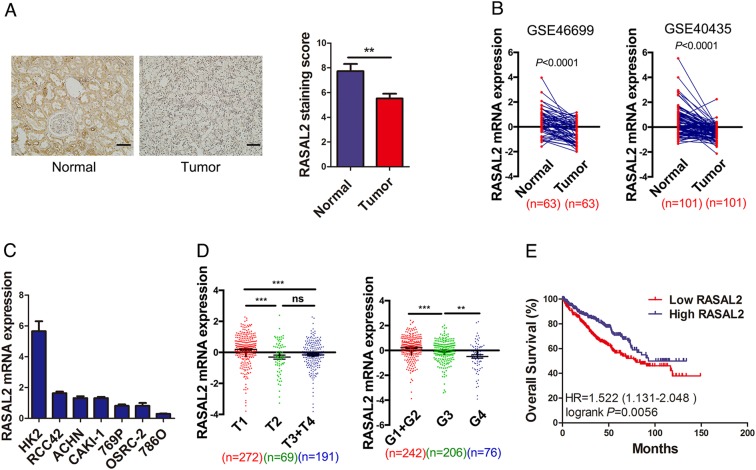
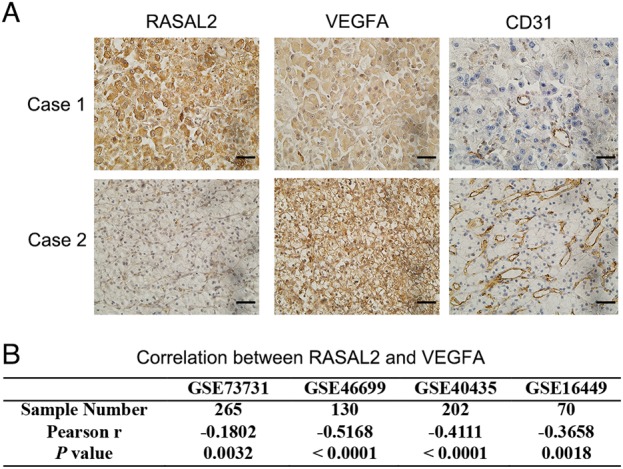
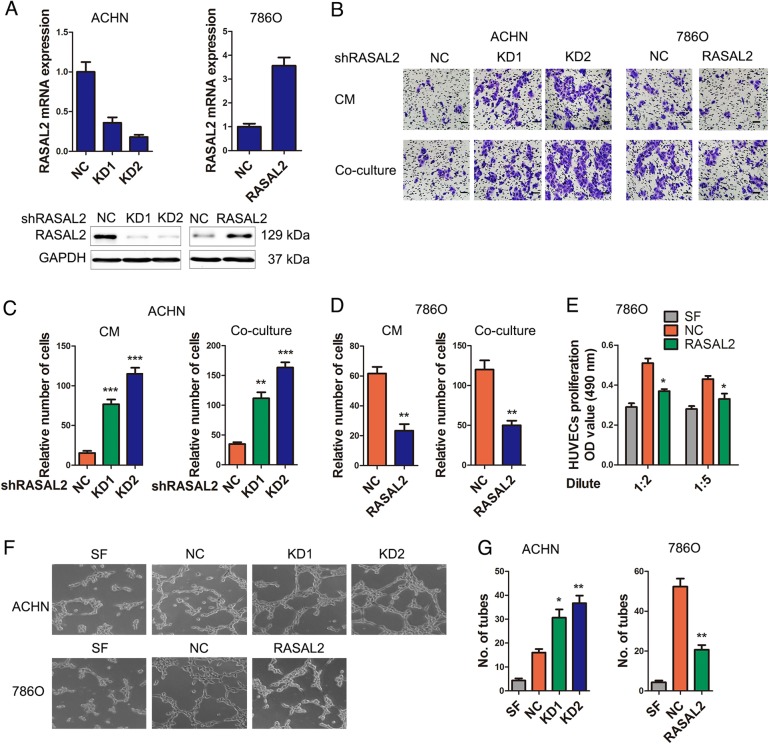
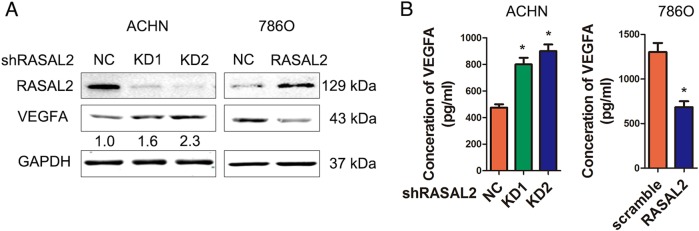
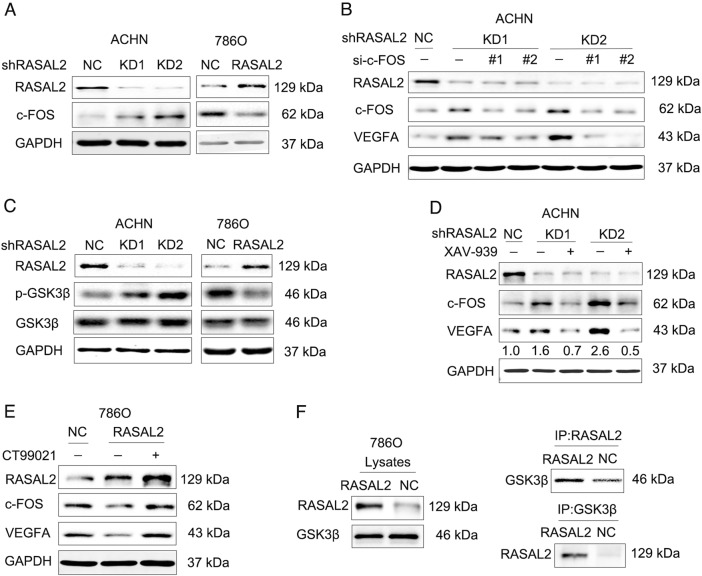
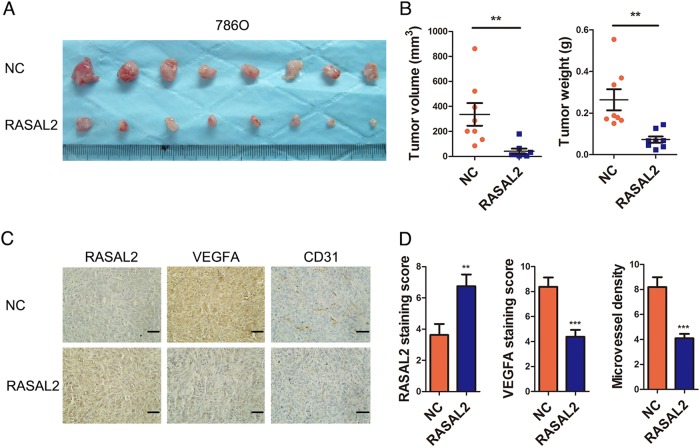
Patients with renal cell carcinoma (RCC) often develop resistance to antivascular drugs and eventually succumb to disease. However, the underlying molecular mechanism remains poorly understood. In this study, we demonstrated that RASAL2, a RAS GTPase-activating protein, played a tumor-suppressive role in RCC by targeting tumor angiogenesis. Firstly, we showed that RASAL2 was frequently epigenetically silenced in RCC, and its loss was negatively correlated with overall survival of RCC patients. Furthermore, we discovered that RASAL2 could inhibit RCC angiogenesis in vitro and in vivo. Mechanistically, we identified that RASAL2 could activate GSK3β by reducing Ser9 phosphorylation and subsequently decrease the expression of c-FOS and vascular endothelial growth factor A (VEGFA). Interruption of the p-GSK3β/c-FOS pathway with the specific inhibitor or small interfering RNA could reverse the expression of VEGFA, which may provide a new insight to prevent RCC from resistance to antivascular therapy.
患者肾细胞癌 (RCC) 往往产生抗血管药物耐药性,并最终屈服于疾病。然而,其潜在的分子机制仍知之甚少。在这项研究中,我们证明 RASAL2,一种 RAS GTP 酶激活蛋白,通过靶向肿瘤血管生成在 RCC 中发挥肿瘤抑制作用。首先,我们表明 RASAL2 在 RCC 中经常被表观遗传沉默,其缺失与 RCC 患者的总生存率呈负相关。此外,我们发现 RASAL2 可以在体外和体内抑制 RCC 血管生成。在机制上,我们确定 RASAL2 可以通过减少 Ser9 磷酸化来激活 GSK3β,从而降低 c-FOS 和血管内皮生长因子 A (VEGFA) 的表达。用特异性抑制剂或小干扰 RNA 中断 p-GSK3β/c-FOS 通路可以逆转 VEGFA 的表达,这可能为预防 RCC 对血管生成治疗的耐药性提供新的见解。