Leibniz Institute on Aging, Fritz Lipmann Institute, Jena, Germany.
Department of Genetics and Program in Cellular Neuroscience, Neurodegeneration and Repair, Yale University School of Medicine, New Haven, Connecticut.
Aging Cell. 2018 Dec;17(6):e12833. doi: 10.1111/acel.12833. Epub 2018 Aug 31.
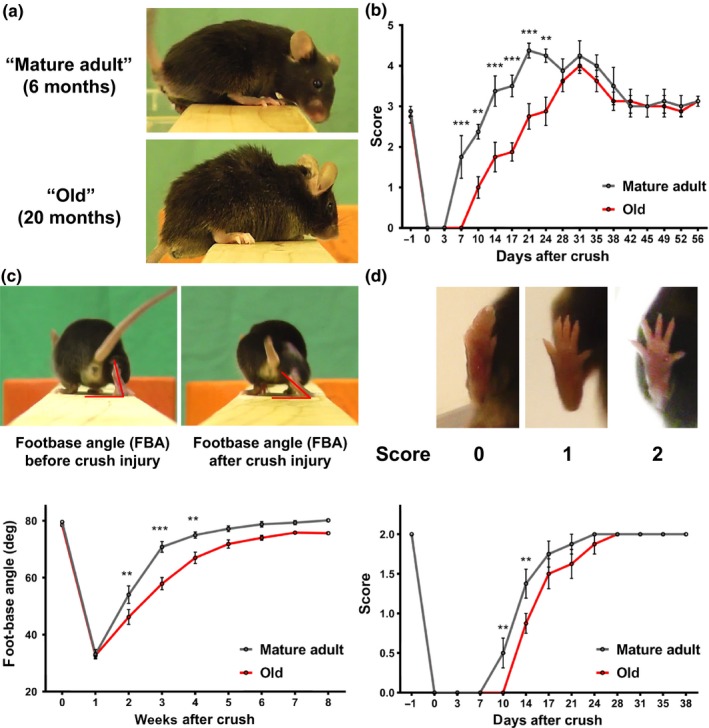
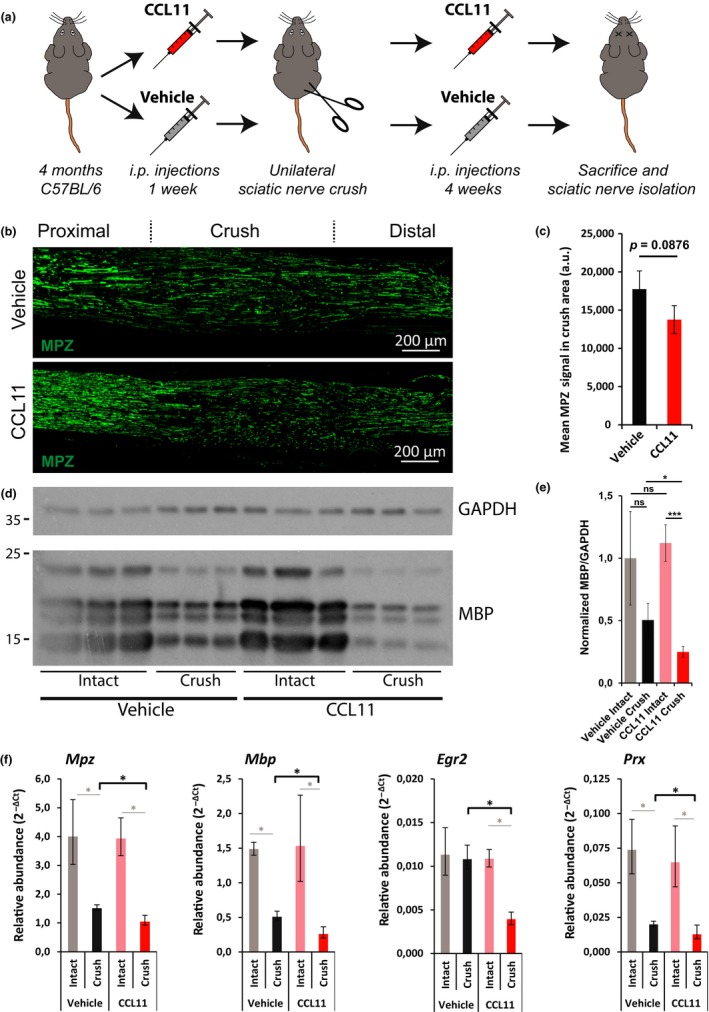
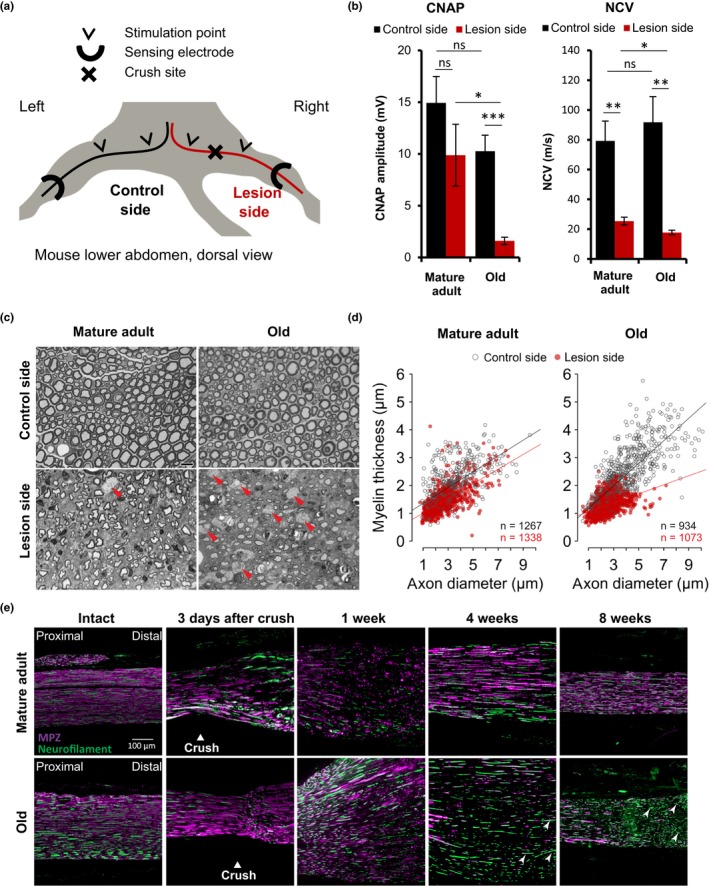
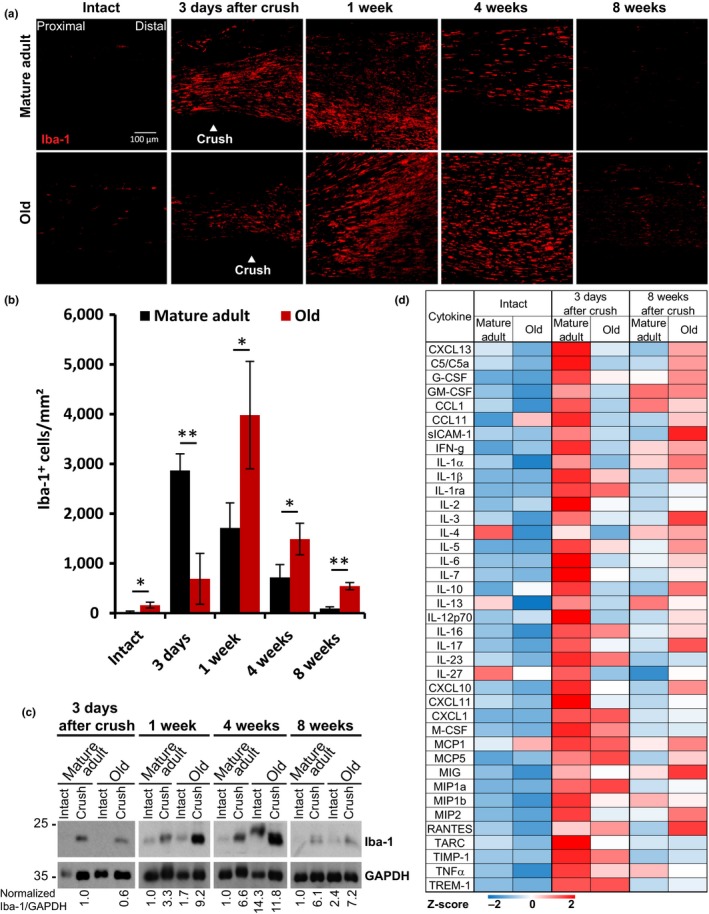
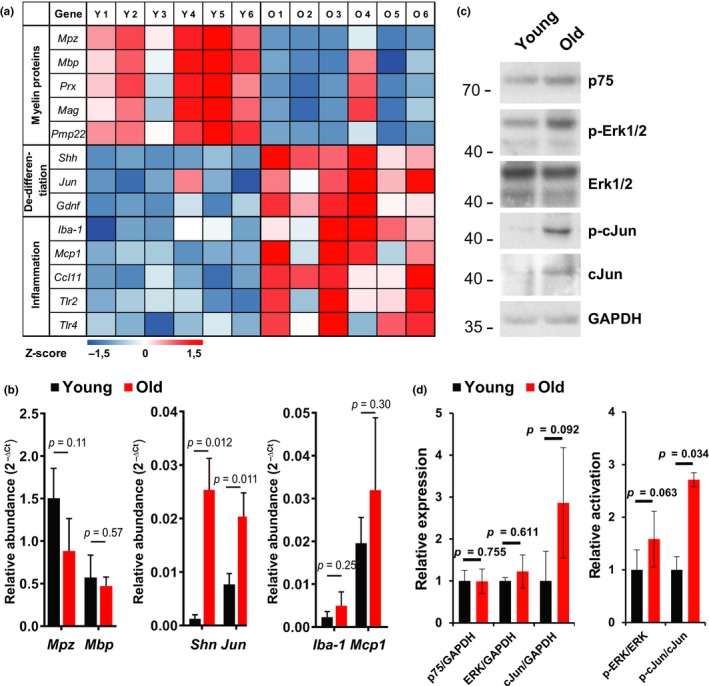
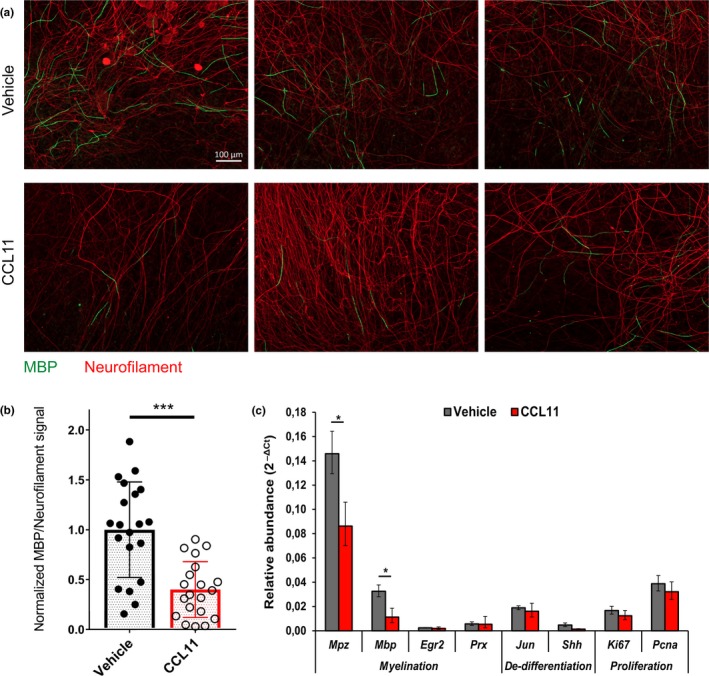
The regenerative capacity of peripheral nerves declines during aging, contributing to the development of neuropathies, limiting organism function. Changes in Schwann cells prompt failures in instructing maintenance and regeneration of aging nerves; molecular mechanisms of which have yet to be delineated. Here, we identified an altered inflammatory environment leading to a defective Schwann cell response, as an underlying mechanism of impaired nerve regeneration during aging. Chronic inflammation was detected in intact uninjured old nerves, characterized by increased macrophage infiltration and raised levels of monocyte chemoattractant protein 1 (MCP1) and CC chemokine ligand 11 (CCL11). Schwann cells in the old nerves appeared partially dedifferentiated, accompanied by an activated repair program independent of injury. Upon sciatic nerve injury, an initial delayed immune response was followed by a persistent hyperinflammatory state accompanied by a diminished repair process. As a contributing factor to nerve aging, we showed that CCL11 interfered with Schwann cell differentiation in vitro and in vivo. Our results indicate that increased infiltration of macrophages and inflammatory signals diminish regenerative capacity of aging nerves by altering Schwann cell behavior. The study identifies CCL11 as a promising target for anti-inflammatory therapies aiming to improve nerve regeneration in old age.
外周神经的再生能力随着年龄的增长而下降,这导致神经病变的发展,限制了机体功能。施万细胞的变化促使衰老神经的维持和再生指令出现故障;其分子机制尚未阐明。在这里,我们发现一种改变的炎症环境导致施万细胞反应缺陷,这是衰老过程中神经再生受损的潜在机制。在完整的未受伤的老年神经中检测到慢性炎症,其特征是巨噬细胞浸润增加,单核细胞趋化蛋白 1(MCP1)和 CC 趋化因子配体 11(CCL11)水平升高。老年神经中的施万细胞似乎部分去分化,伴随着独立于损伤的激活修复程序。在坐骨神经损伤后,最初的延迟免疫反应后是持续的超炎症状态,伴随着修复过程的减少。作为神经衰老的一个促成因素,我们表明 CCL11 干扰了体外和体内施万细胞的分化。我们的研究结果表明,巨噬细胞的浸润增加和炎症信号通过改变施万细胞的行为,降低了衰老神经的再生能力。该研究确定 CCL11 是一种有前途的抗炎治疗靶点,旨在改善老年时期的神经再生。