Singh Prim B, Belyakin Stepan N
Nazarbayev University School of Medicine, 5/1 Kerei, Zhanibek Khandar Street, Astana Z05K4F4, Kazakhstan.
Epigenetics Laboratory, Department of Natural Sciences, Novosibirsk State University, Pirogov str. 2, Novosibirsk 630090, Russia.
Genes (Basel). 2018 Sep 3;9(9):440. doi: 10.3390/genes9090440.
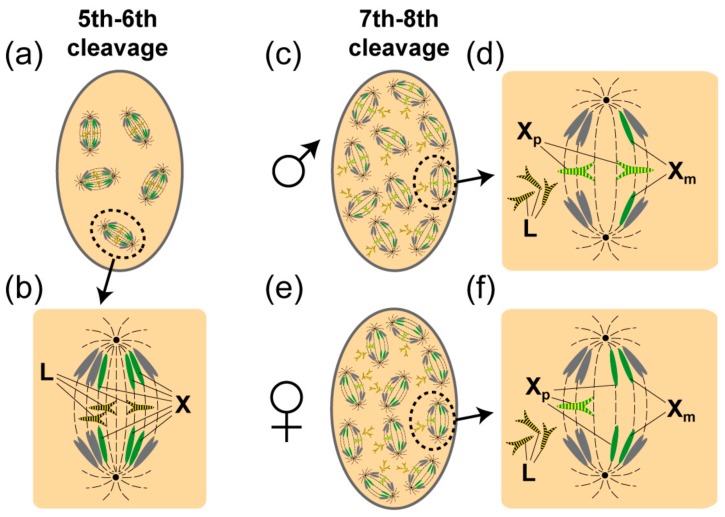
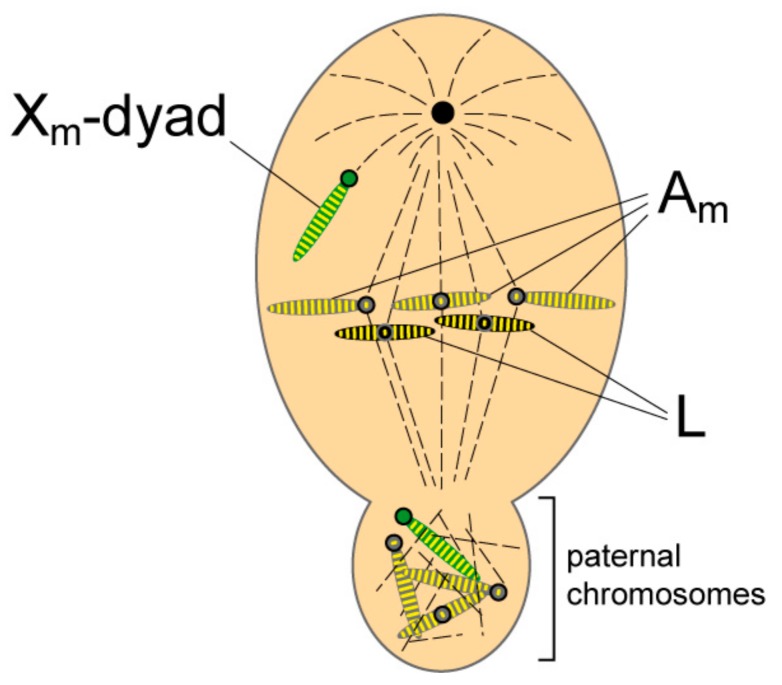
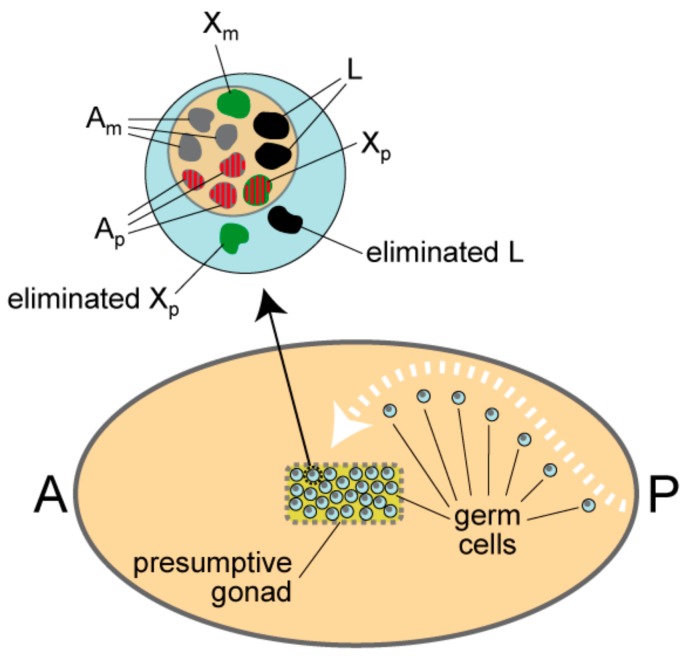
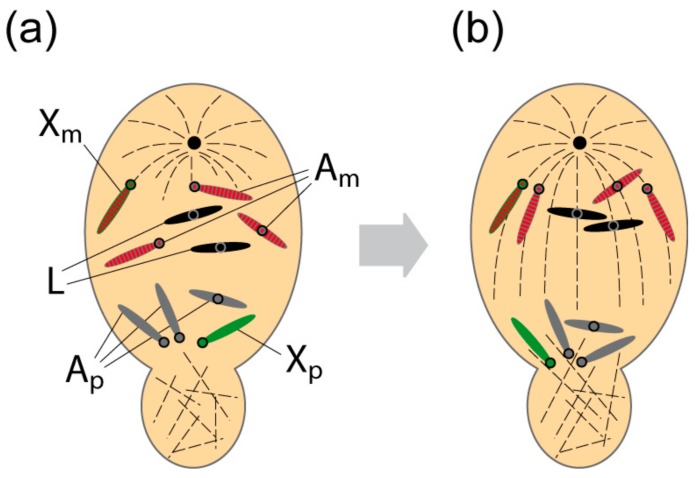
The retention of supernumerary chromosomes in the germ-line of is part of a highly-intricate pattern of chromosome behaviours that have fascinated cytogeneticists for over 80 years. Germ-line limited (termed L or "limited") chromosomes are cytologically heterochromatic and late-replicating, with more recent studies confirming they possess epigenetic hallmarks characteristic of constitutive heterochromatin. Little is known about their genetic constitution although they have been found to undergo cycles of condensation and de-condensation at different stages of development. Unlike most supernumeraries, the L chromosomes in are thought to be indispensable, although in two closely related species and the L chromosomes, have been lost during evolution. Here, we review what we know about L chromosomes in . We end by discussing how study of the L chromosome condensation cycle has provided insight into the site and timing of both the erasure of parental "imprints" and also the placement of a putative "imprint" that might be carried by the sperm into the egg.
在[物种名称]种系中多余染色体的保留是一种高度复杂的染色体行为模式的一部分,这种模式已经吸引细胞遗传学家长达80多年。种系受限(称为L或“受限”)染色体在细胞学上是异染色质且复制较晚,最近的研究证实它们具有组成型异染色质的表观遗传特征。尽管已发现它们在发育的不同阶段经历凝聚和解凝聚循环,但对其遗传组成了解甚少。与大多数多余染色体不同,[物种名称]中的L染色体被认为是不可或缺的,尽管在两个密切相关的物种[物种名称1]和[物种名称2]中,L染色体在进化过程中已经丢失。在这里,我们回顾我们对[物种名称]中L染色体的了解。最后,我们讨论了对L染色体凝聚循环的研究如何为亲代“印记”消除的位点和时间以及精子可能携带的假定“印记”在卵子中的定位提供了见解。