Laboratoire d'Immunologie, Hôpital Cochin, Paris, France.
INSERM U1016, Institut Cochin, Paris, France.
Front Immunol. 2018 Aug 16;9:1896. doi: 10.3389/fimmu.2018.01896. eCollection 2018.
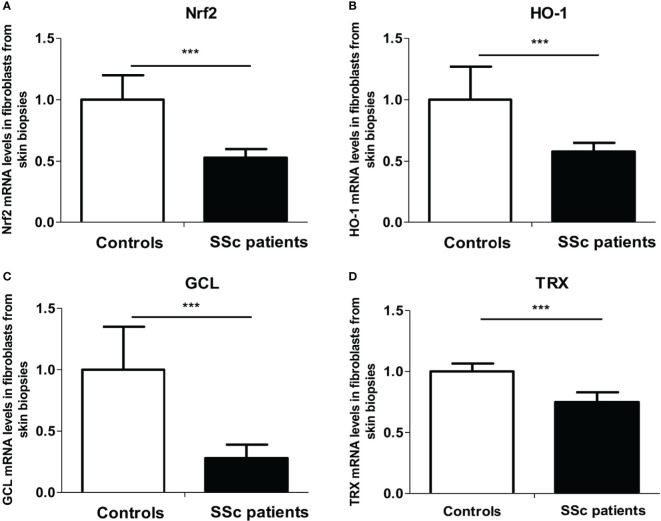
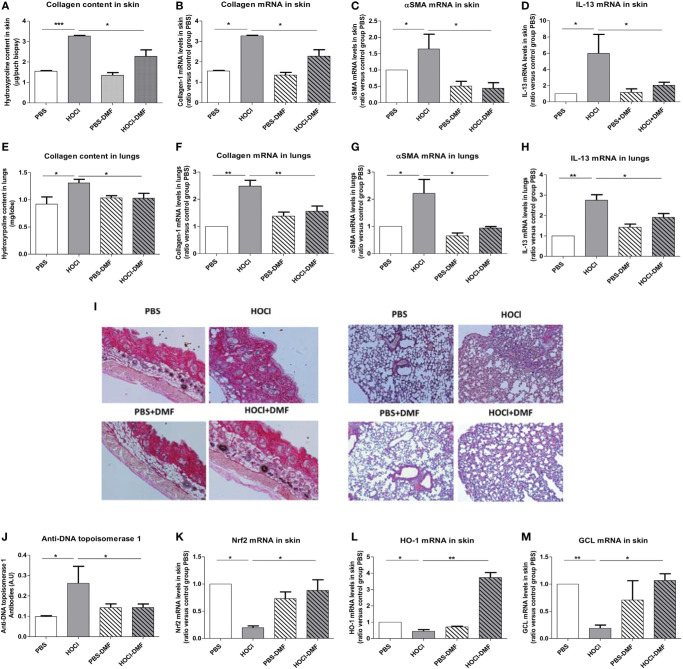
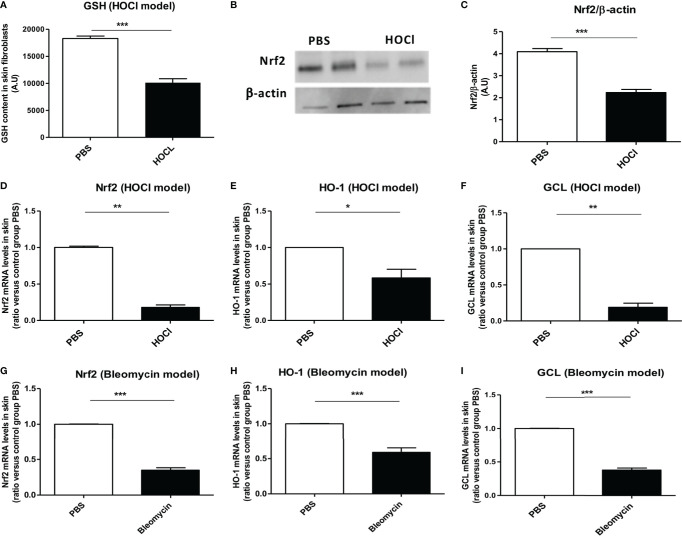
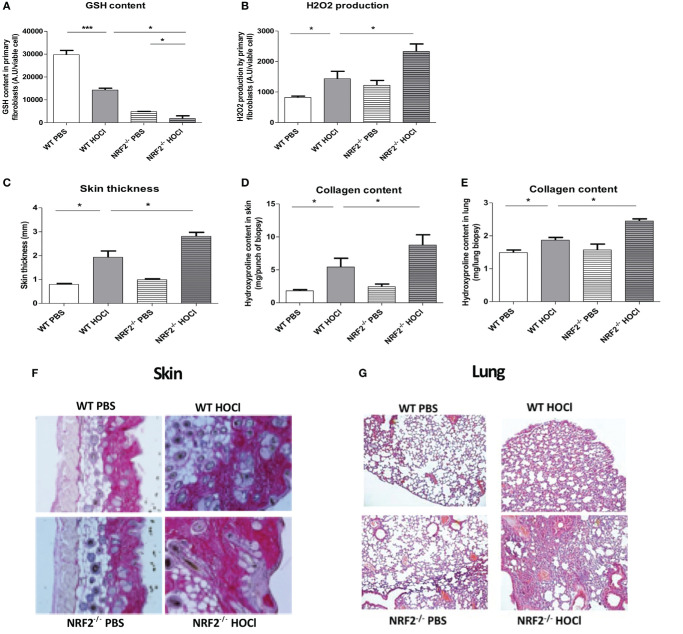
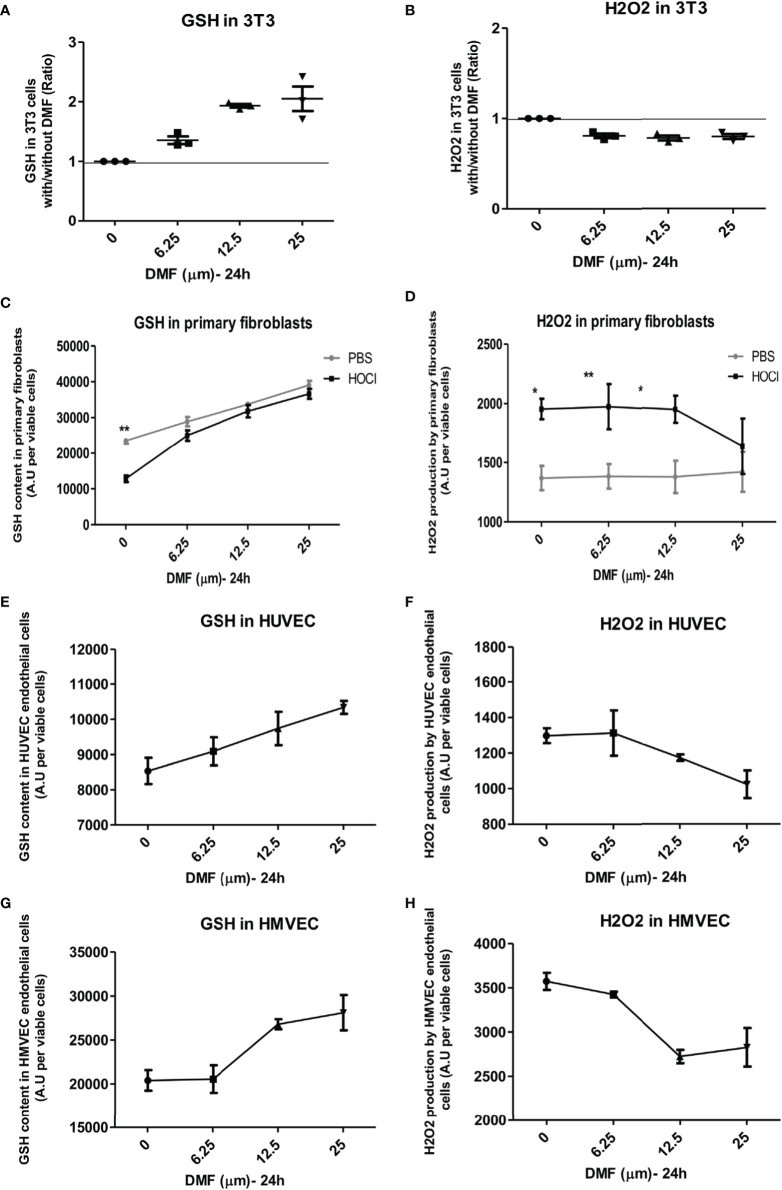
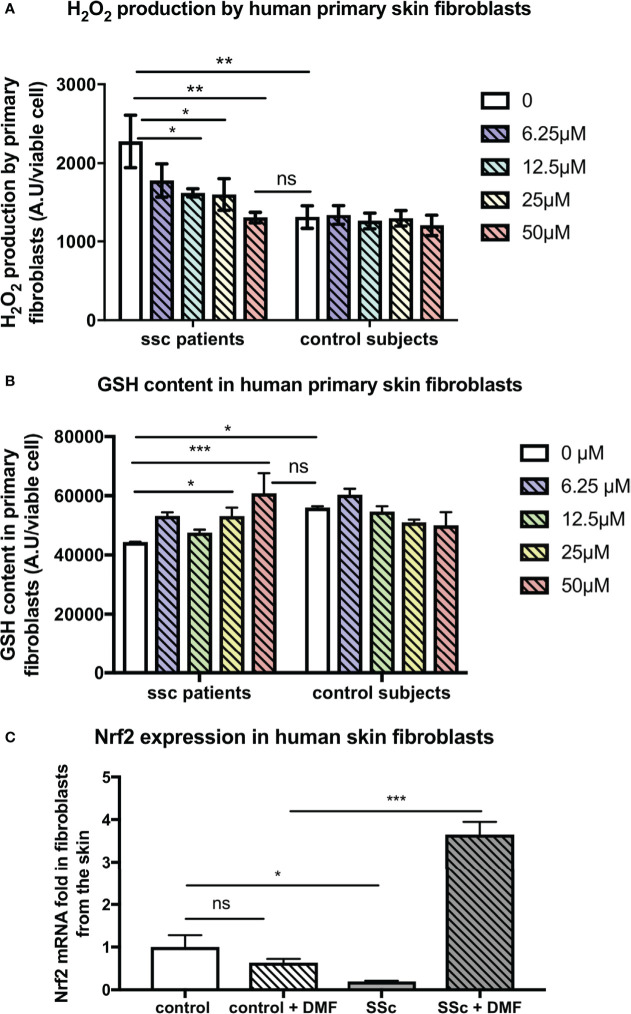
Systemic sclerosis (SSc) is an autoimmune disease with fibrosis of the skin and internal organs and vascular alterations. Dysregulations in the oxidant/antioxidant balance are known to be a major factor in the pathogenesis of the disease. Indeed, reactive oxygen species (ROS) trigger neoepitopes leading to a breach of immune tolerance and autoimmune responses, activate fibroblasts to proliferate and to produce excess of type I collagen. ROS also alter endothelial cells leading to vascular dysfunction. Glutathione (GSH) is the most potent antioxidant system in eukaryotic cells. Numerous studies have reported a defect in GSH in SSc animal models and humans, but the origin of this defect remains unknown. The transcription factor NRF2 is a key player in the antioxidant defense, as it can induce the transcription of antioxidant and cytoprotective genes, including GSH, through its interaction with the antioxidant response elements. In this work, we investigated whether NRF2 could be implicated in the pathogenesis of SSc, and if this pathway could represent a new therapeutic target in this orphan disease with no curative medicine. Skin biopsies from 11 patients and 10 controls were harvested, and skin fibroblasts were extracted. Experimental SSc was induced both in BALB/c and in mice by daily intradermal injections of hypochloric acid. In addition, diseased BALB/c mice were treated with an agonist, dimethyl fumarate, or placebo. A drop in and target genes mRNA levels was observed in skin fibroblasts of SSc patients compared to controls. Moreover, the pathway is also downregulated in skins and lungs of SSc mice. In addition, we observed that mice have a more severe form of SSc with increased fibrosis and inflammation compared to wild-type SSc mice. Diseased mice treated with the agonist dimethyl fumarate (DMF) exhibited reduced fibrosis and immune activation compared to untreated mice. The treatment of skin fibroblasts from SSc mice with DMF restores GSH intracellular content, decreases ROS production and cell proliferation. These results suggest that the pathway is highly dysregulated in human and SSc mice with deleterious consequences on fibrosis and inflammation and that Nrf2 modulation represents a therapeutic target in SSc.
系统性硬化症(SSc)是一种自身免疫性疾病,其特征为皮肤和内脏器官纤维化以及血管改变。氧化应激/抗氧化平衡失调被认为是疾病发病机制中的一个主要因素。事实上,活性氧(ROS)触发新表位,导致免疫耐受破坏和自身免疫反应,激活成纤维细胞增殖并产生过量的 I 型胶原。ROS 还改变内皮细胞,导致血管功能障碍。谷胱甘肽(GSH)是真核细胞中最有效的抗氧化系统。许多研究报告称,SSc 动物模型和人类的 GSH 存在缺陷,但这种缺陷的起源仍不清楚。转录因子 NRF2 是抗氧化防御的关键因子,因为它可以通过与抗氧化反应元件相互作用,诱导抗氧化和细胞保护基因(包括 GSH)的转录。在这项工作中,我们研究了 NRF2 是否可能与 SSc 的发病机制有关,如果这条途径可以成为这种没有治愈药物的孤儿病的新治疗靶点。采集了 11 名患者和 10 名对照者的皮肤活检组织,并提取了皮肤成纤维细胞。通过每日皮内注射次氯酸诱导 BALB/c 和 小鼠产生实验性 SSc。此外,用 激动剂富马酸二甲酯或安慰剂治疗患病的 BALB/c 小鼠。与对照组相比,SSc 患者的皮肤成纤维细胞中观察到 和靶基因 mRNA 水平下降。此外,SSc 小鼠的皮肤和肺部中也下调了 途径。此外,我们观察到与野生型 SSc 小鼠相比, 小鼠的 SSc 更严重,纤维化和炎症增加。与未治疗的小鼠相比,用 激动剂富马酸二甲酯(DMF)治疗的患病小鼠表现出纤维化和免疫激活减少。DMF 处理 SSc 小鼠的皮肤成纤维细胞可恢复细胞内 GSH 含量,减少 ROS 产生和细胞增殖。这些结果表明, 途径在人类和 SSc 小鼠中高度失调,对纤维化和炎症有不良影响,Nrf2 调节可能是 SSc 的治疗靶点。