System Toxicology Research Center, Korea Institute of Toxicology, Daejeon, Republic of Korea.
Predictive Model Research Center, Korea Institute of Toxicology, Daejeon, Republic of Korea.
PLoS One. 2018 Sep 4;13(9):e0203543. doi: 10.1371/journal.pone.0203543. eCollection 2018.
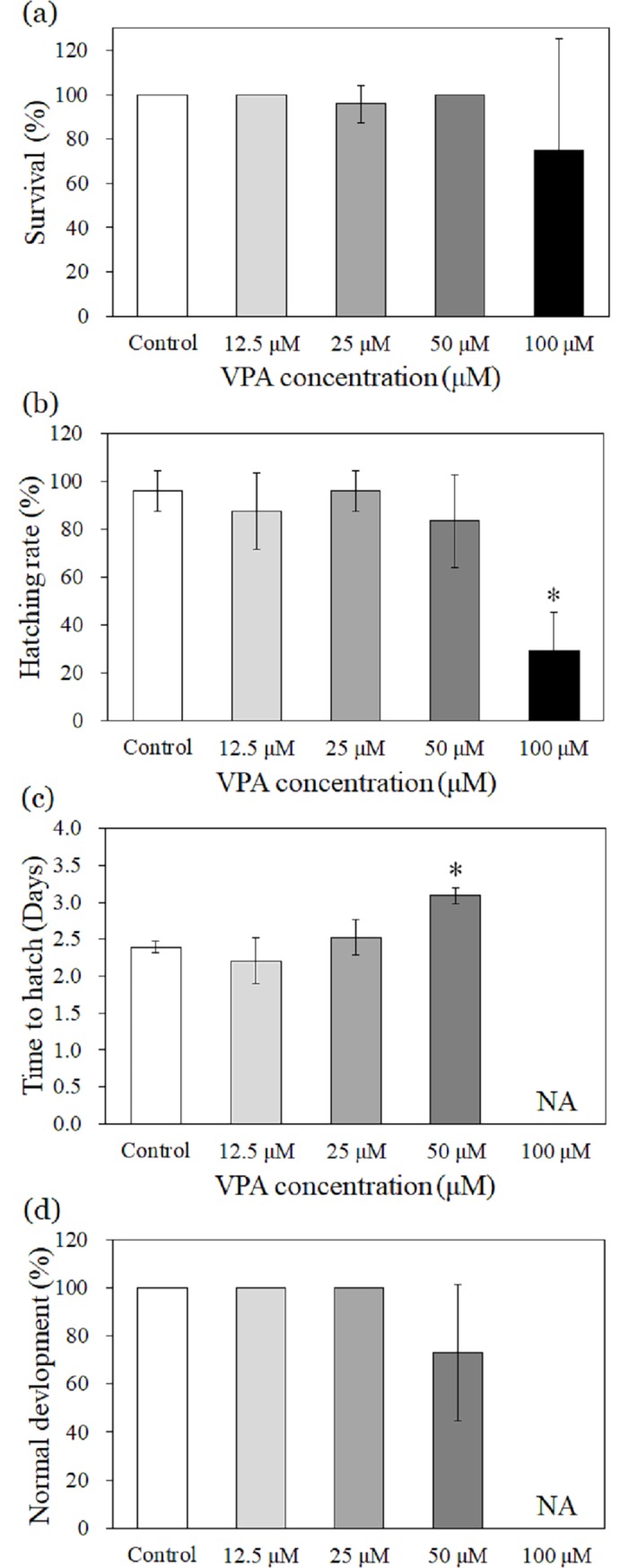
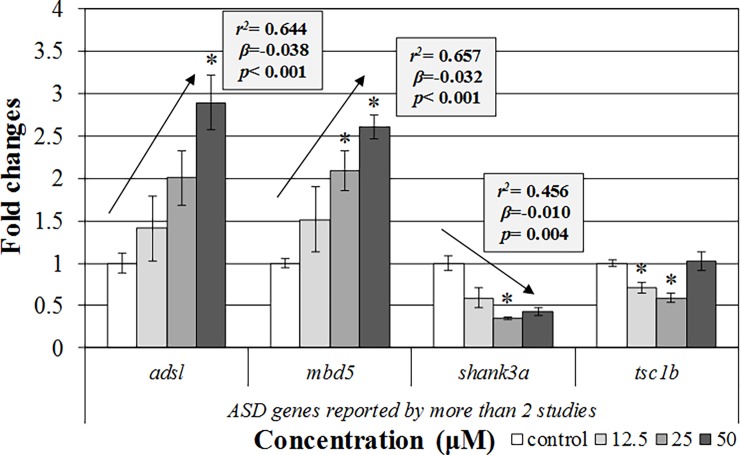
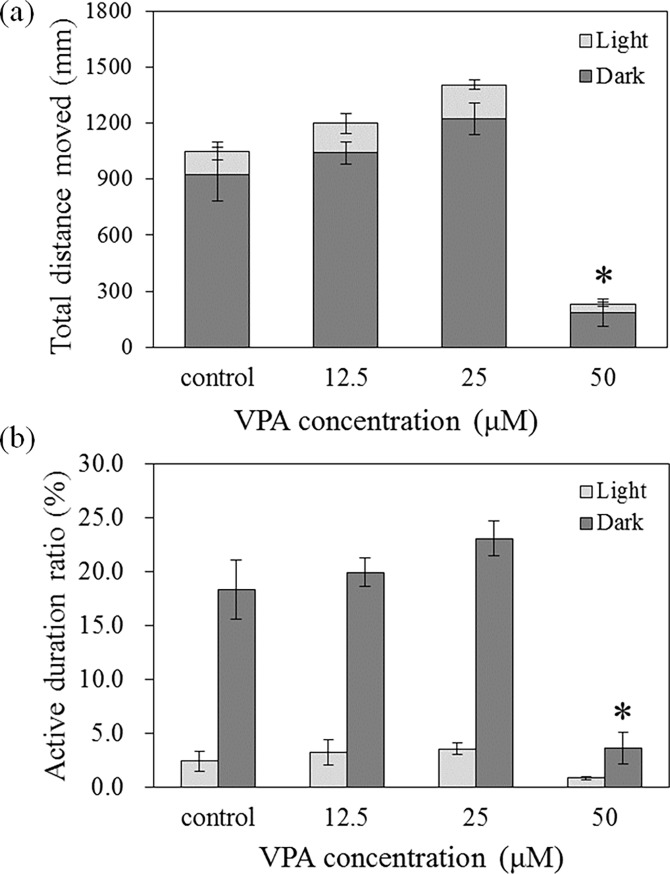
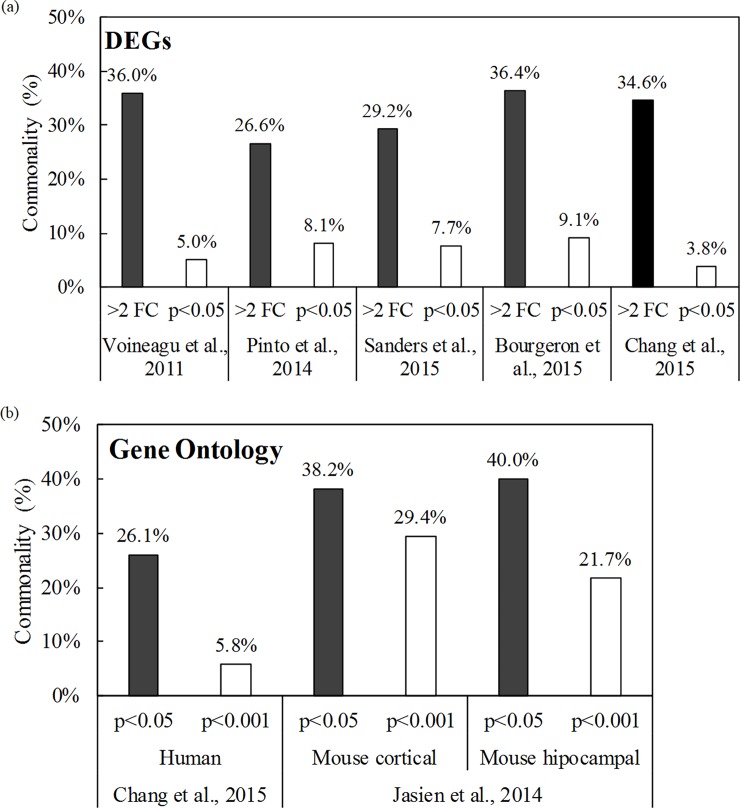
Autism spectrum disorder (ASD) is a serious neurodevelopmental disorder characterized by impaired or abnormal social interaction and communication and by restricted and repetitive behaviour. ASD is highly prevalent in Asia, Europe, and the United States, and the frequency of ASD is growing each year. Recent epidemiological studies have indicated that ASD may be caused or triggered by exposure to chemicals in the environment, such as those in the air or water. Thus, toxicological studies are needed to examine chemicals that might be implicated. However, the experimental efficiency of existing experimental models is limited, and many models represent challenges in terms of animal welfare. Thus, alternative ASD animal models are necessary. To address this, we examined the efficacy of the zebrafish embryo/larva as an alternative model of ASD. Specifically, we exposed zebrafish to valproic acid (0, 12.5, 25, 50, or 100 μM), which is a chemical known to induce autism-like effects. We then analysed subsequent developmental, behavioural, and transcriptomic changes. We found that 100 μM and 50 μM valproic acid decreased the hatching rate and locomotor activity of zebrafish embryos/larvae. Transcriptomic analysis revealed significant alterations in a number of genes associated with autism, such as adsl, mbd5, shank3, and tsc1b. Additionally, we found changes in gene ontology that were also reported in previous studies. Our findings indicate that zebrafish embryos/larvae and humans with ASD might have common physiological pathways, indicating that this animal model may represent an alternative tool for examining the causes of and potential treatments for this illness.
自闭症谱系障碍(ASD)是一种严重的神经发育障碍,其特征是社交互动和沟通受损或异常,以及受限和重复的行为。ASD 在亚洲、欧洲和美国的发病率很高,并且每年都在增加。最近的流行病学研究表明,ASD 可能是由环境中的化学物质引起或触发的,例如空气中或水中的化学物质。因此,需要进行毒理学研究来检查可能涉及的化学物质。然而,现有实验模型的实验效率有限,许多模型在动物福利方面存在挑战。因此,需要替代的 ASD 动物模型。为了解决这个问题,我们研究了斑马鱼胚胎/幼虫作为 ASD 替代模型的功效。具体来说,我们将斑马鱼暴露于丙戊酸(0、12.5、25、50 或 100μM)中,丙戊酸是一种已知会引起自闭症样效应的化学物质。然后,我们分析了随后的发育、行为和转录组变化。我们发现 100μM 和 50μM 丙戊酸降低了斑马鱼胚胎/幼虫的孵化率和运动活性。转录组分析显示,与自闭症相关的许多基因发生了显著改变,如 adsl、mbd5、shank3 和 tsc1b。此外,我们发现基因本体论的变化也与以前的研究报道一致。我们的研究结果表明,斑马鱼胚胎/幼虫和患有 ASD 的人类可能具有共同的生理途径,这表明这种动物模型可能代表了研究这种疾病病因和潜在治疗方法的替代工具。