Department of Stress Medicine, Faculty of Psychology and Mental Health, Second Military Medical University, Shanghai, 200433, People's Republic of China.
Hainan Branch of Chinese PLA General Hospital, Sanya, 572013, People's Republic of China.
J Neuroinflammation. 2018 Sep 4;15(1):252. doi: 10.1186/s12974-018-1296-0.
Depression is one of the most common mental disorders characterized mainly by low mood and loss of interest or pleasure. About a third of patients with depression do not respond to classic antidepressant treatments. Recent evidence suggests that Mrp8/14 (myeloid-related protein 8/14) plays a crucial role in cognitive dysfunction and neuroinflammatory diseases, yet its role in mood regulation remains largely uninvestigated. In the present work, we explored the potential role of Mrp8/14 in the progression of depression.
After 4 weeks of chronic unpredictable mild stress (CUMS), depressive-like symptoms and Mrp8/14 were determined. To verify the effects of Mrp8/14 on depressive-like behaviors, the inhibitor TAK-242 and recombinant Mrp8/14 were used. Furthermore, the molecular mechanisms in Mrp8/14-induced behavioral and biological changes were examined in vivo and ex vivo.
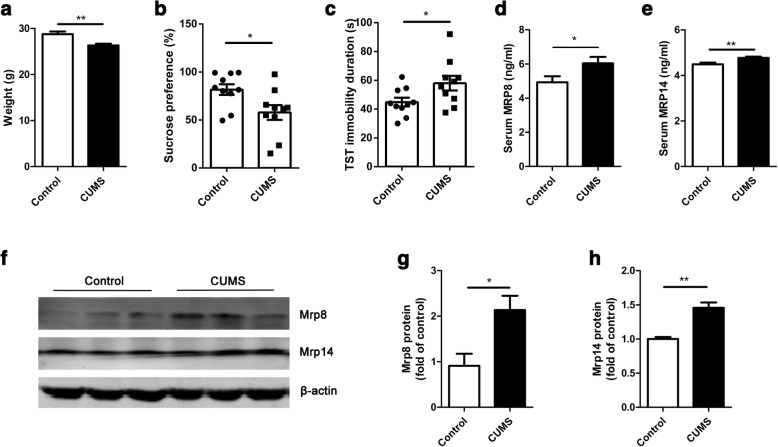
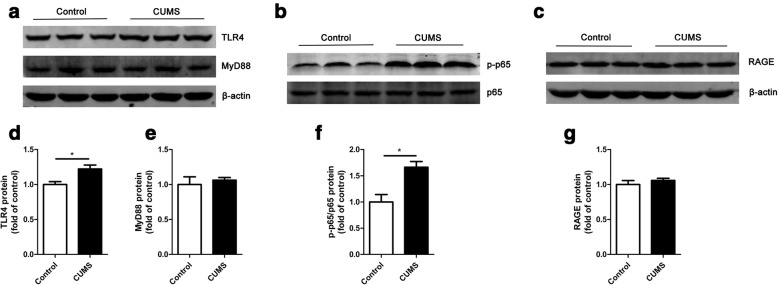
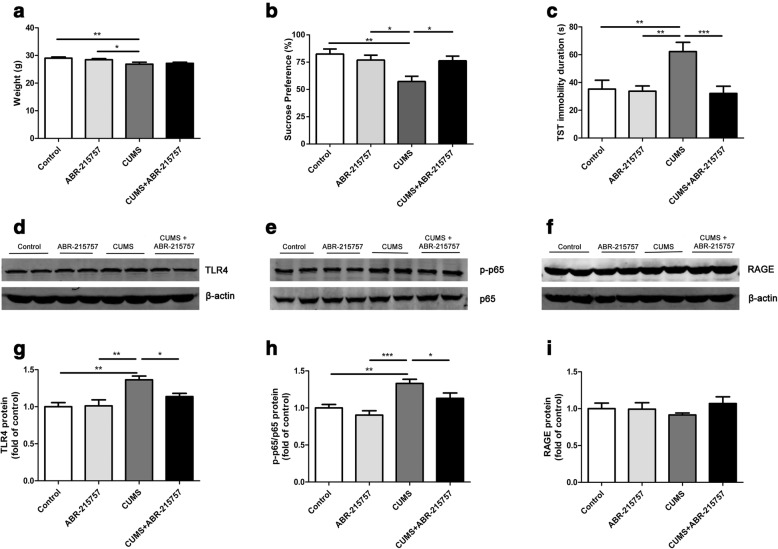
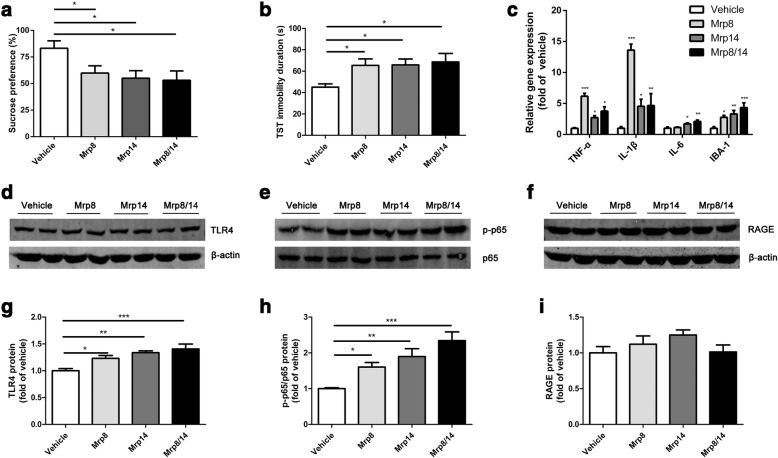
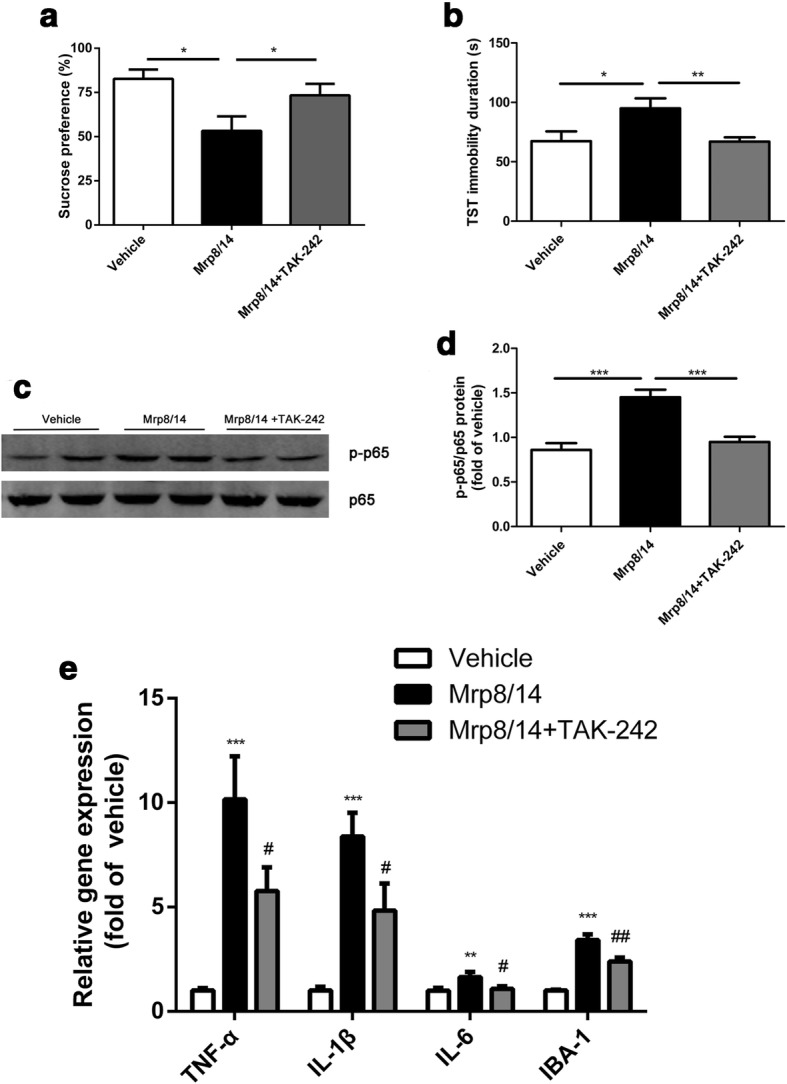
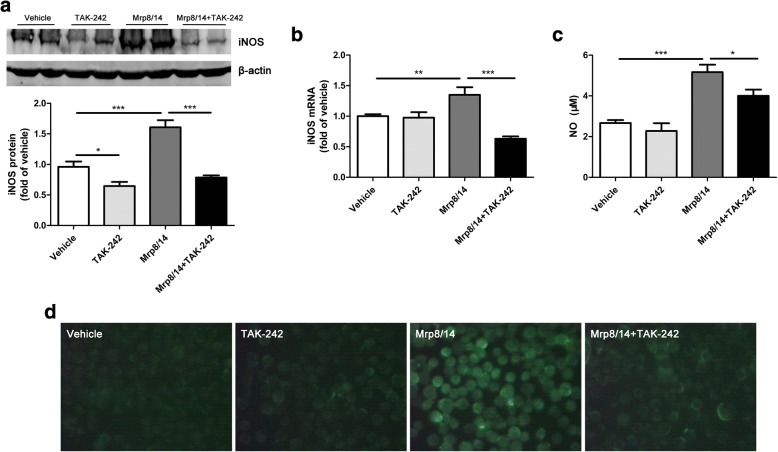
Four-week CUMS contributed to the development of depressive symptoms. Mrp8 and Mrp14 were upregulated in the hippocampus and serum after exposure to CUMS. Pharmacological inhibition of Mrp14 attenuated CUMS-induced TLR4/NF-κB signaling activation and depressive-like behaviors. Furthermore, central administration of recombinant Mrp8, Mrp14, and Mrp8/14 resulted in neuroinflammation and depressive-like behaviors. Mrp8/14-provoked proinflammatory effects and depressive-like behaviors were improved by pretreatment with a TLR4 inhibitor. Moreover, pharmacological inhibition of TLR4 reduced the release of nitric oxide and reactive oxygen species in Mrp8/14-activated BV2 microglia.
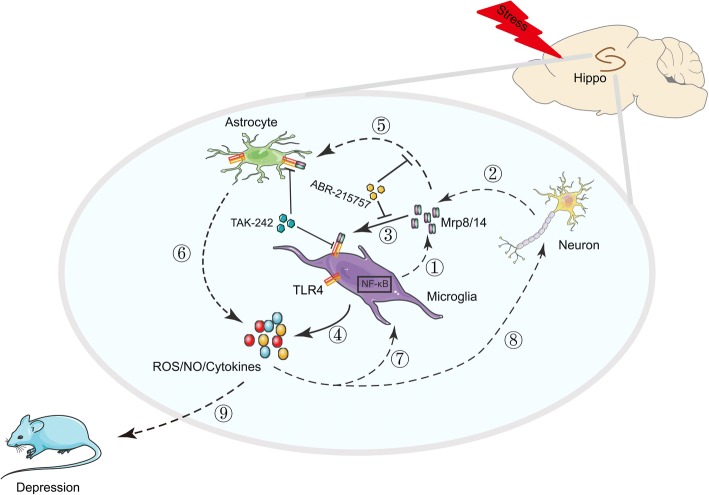
These data suggest that the hippocampal Mrp8/14-TLR4-mediated neuroinflammation contributes to the development of depressive-like behaviors. Targeting the Mrp8/14 may be a novel promising antidepressant approach.
抑郁症是最常见的精神障碍之一,主要表现为情绪低落和兴趣或快感丧失。约三分之一的抑郁症患者对经典的抗抑郁治疗无反应。最近的证据表明,Mrp8/14(髓系相关蛋白 8/14)在认知功能障碍和神经炎症性疾病中发挥着关键作用,但它在情绪调节中的作用仍在很大程度上未被研究。在本研究中,我们探讨了 Mrp8/14 在抑郁症进展中的潜在作用。
经过 4 周的慢性不可预测性轻度应激(CUMS)后,确定了抑郁样症状和 Mrp8/14。为了验证 Mrp8/14 对抑郁样行为的影响,使用了抑制剂 TAK-242 和重组 Mrp8/14。此外,还在体内和体外研究了 Mrp8/14 诱导的行为和生物学变化的分子机制。
4 周 CUMS 导致了抑郁症状的发展。CUMS 暴露后,海马体和血清中的 Mrp8 和 Mrp14 上调。Mrp14 的药理学抑制减弱了 CUMS 诱导的 TLR4/NF-κB 信号激活和抑郁样行为。此外,中枢给予重组 Mrp8、Mrp14 和 Mrp8/14 导致神经炎症和抑郁样行为。用 TLR4 抑制剂预处理可改善 Mrp8/14 引起的促炎作用和抑郁样行为。此外,TLR4 的药理学抑制降低了 Mrp8/14 激活的 BV2 小胶质细胞中一氧化氮和活性氧的释放。
这些数据表明,海马体 Mrp8/14-TLR4 介导的神经炎症导致了抑郁样行为的发展。靶向 Mrp8/14 可能是一种有前途的新型抗抑郁方法。