Li Yehua, Liu Yuan, Liu Bofeng, Wang Jilian, Wei Siting, Qi Zhen, Wang Shan, Fu Wei, Chen Ye-Guang
1The State Key Laboratory of Membrane Biology, Tsinghua-Peking Center for Life Sciences, School of Life Sciences, Tsinghua University, Beijing, 100084 China.
2Tsinghua-Peking Center for Life Sciences, School of Life Sciences, Tsinghua University, Beijing, 100084 China.
Cell Discov. 2018 Sep 4;4:49. doi: 10.1038/s41421-018-0051-0. eCollection 2018.
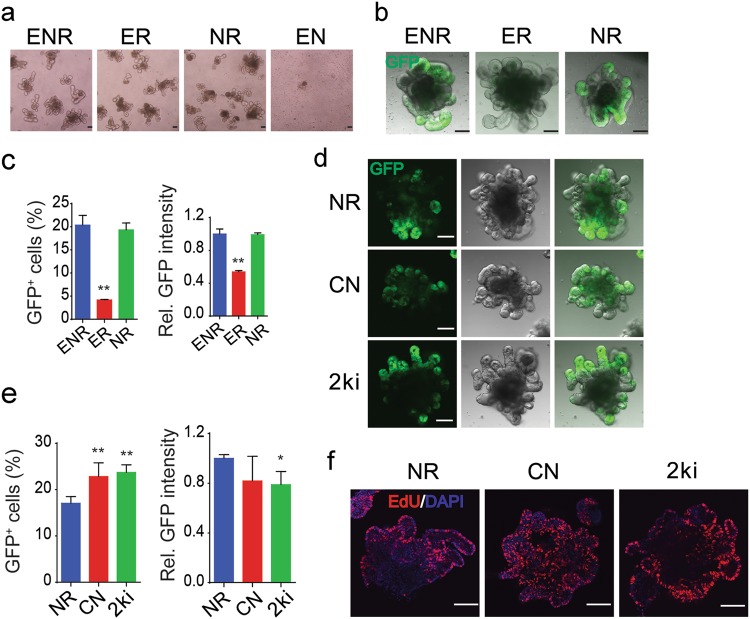
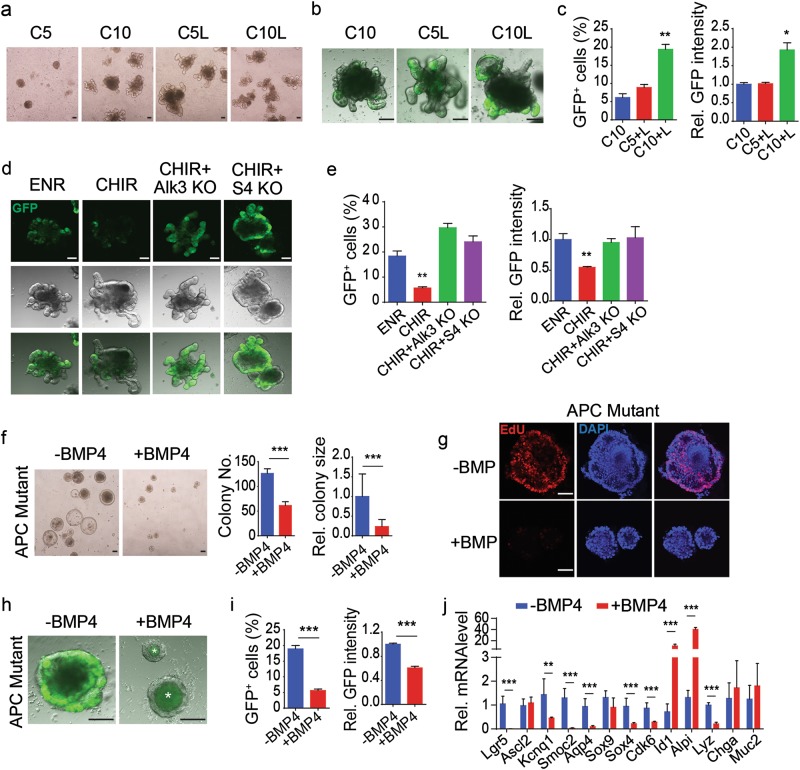
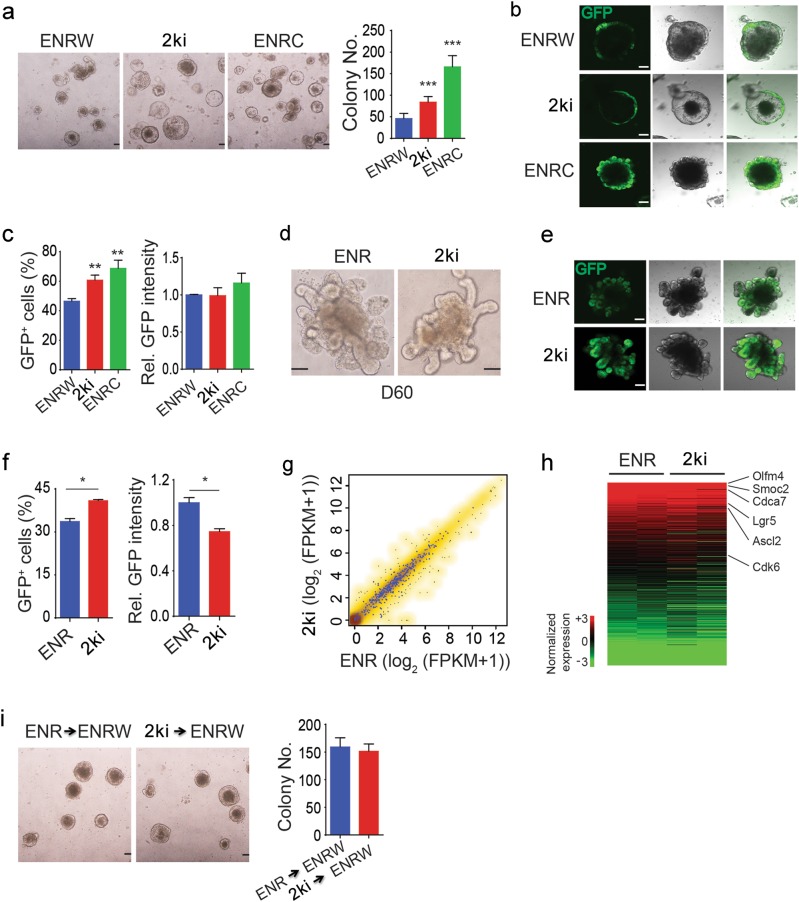
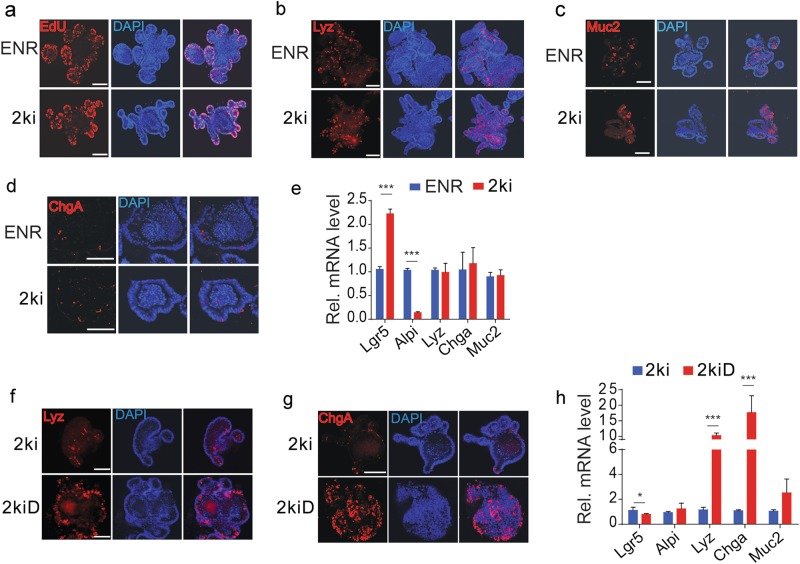
Lgr5 intestinal stem cells (ISCs) drive the fast renewal of intestinal epithelium. Several signaling pathways have been shown to regulate ISC fates. However, it is unclear what are the essential signals to sustain the ISC self-renewal. Here we show that coordination between Wnt and BMP signaling activity is necessary and sufficient to maintain Lgr5 ISCs self-renewal. The key function of R-spondin1 is to achieve a high activity of Wnt signaling in the organoid culture. Using the GSK3 inhibitor CHIR-99021 and the BMP type I receptor inhibitor LDN-193189, we can maintain Lgr5 ISCs without growth factors in vitro. Our results define the basic signaling pathways sustaining Lgr5 ISCs and set up a convenient and economical culture system for their in vitro expansion. This work also set up an example for growth factor-free culture of other adult stem cells.
Lgr5肠道干细胞(ISC)驱动肠道上皮的快速更新。已有多种信号通路被证明可调节ISC的命运。然而,维持ISC自我更新的关键信号尚不清楚。在此我们表明,Wnt和BMP信号活性之间的协调对于维持Lgr5 ISC的自我更新是必要且充分的。R-spondin1的关键功能是在类器官培养中实现Wnt信号的高活性。使用GSK3抑制剂CHIR-99021和BMP I型受体抑制剂LDN-193189,我们可以在无生长因子的体外条件下维持Lgr5 ISC。我们的结果确定了维持Lgr5 ISC的基本信号通路,并建立了一种方便且经济的体外扩增培养系统。这项工作也为其他成体干细胞的无生长因子培养树立了范例。