Elsen Gina E, Bedogni Francesco, Hodge Rebecca D, Bammler Theo K, MacDonald James W, Lindtner Susan, Rubenstein John L R, Hevner Robert F
Center for Integrative Brain Research, Seattle Children's Research Institute, Seattle, WA, United States.
Department of Environmental and Occupational Health Sciences, School of Public Health, University of Washington, Seattle, WA, United States.
Front Neurosci. 2018 Aug 22;12:571. doi: 10.3389/fnins.2018.00571. eCollection 2018.
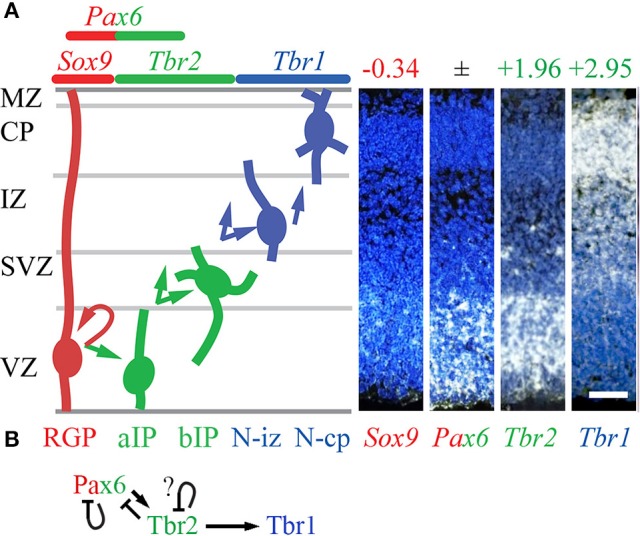
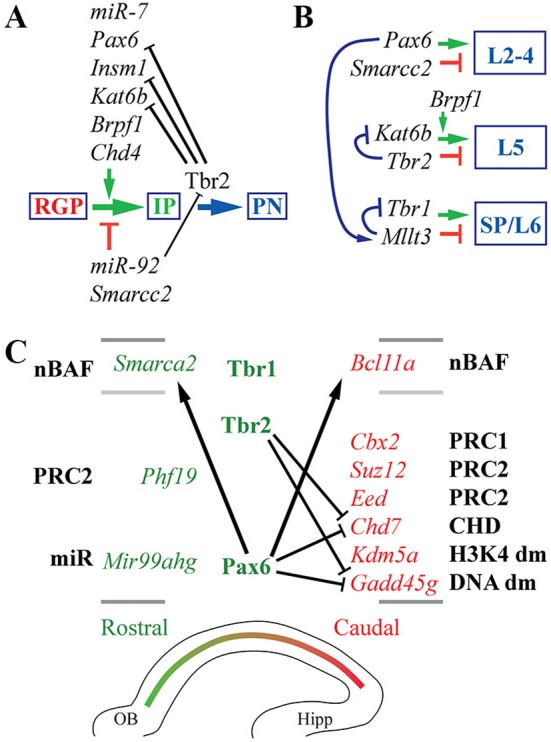
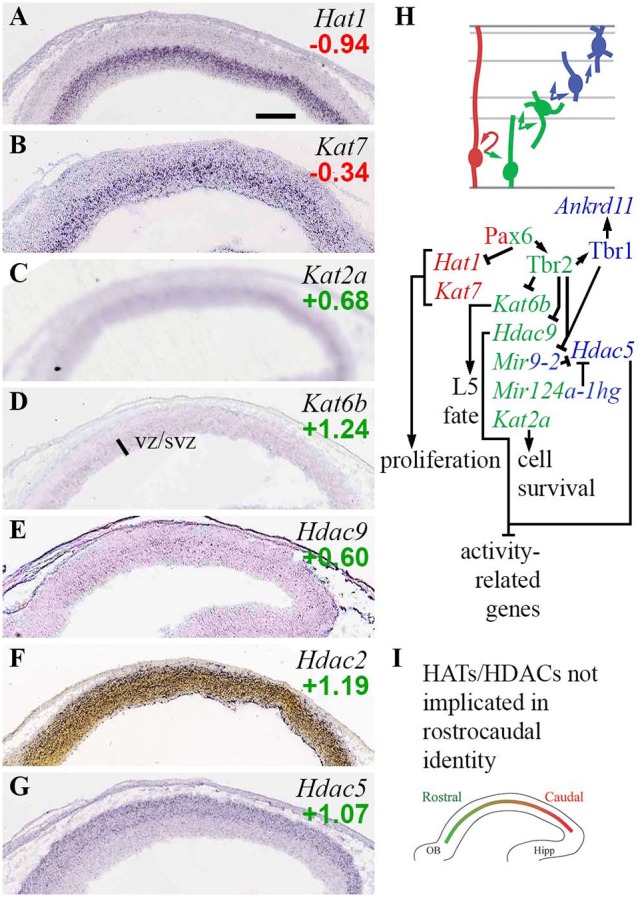
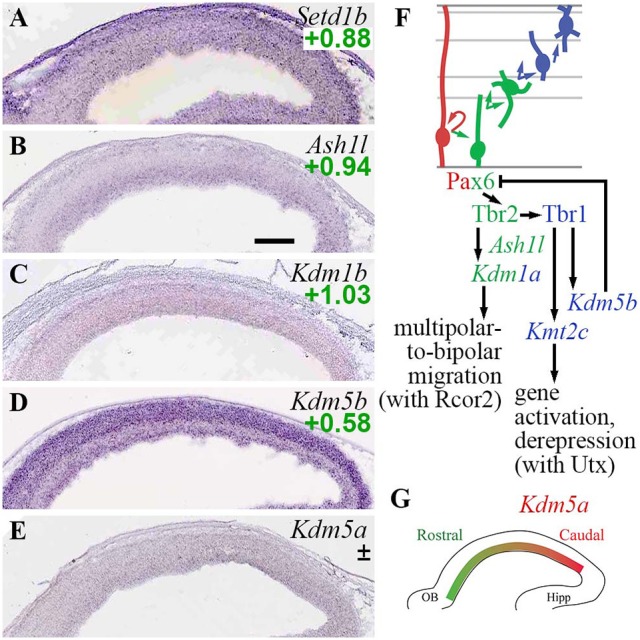
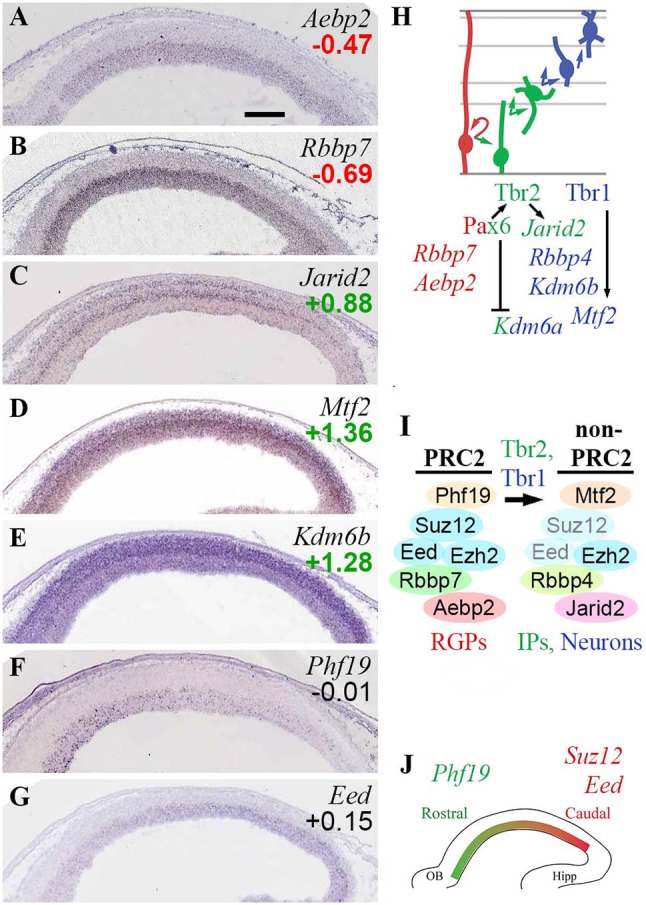
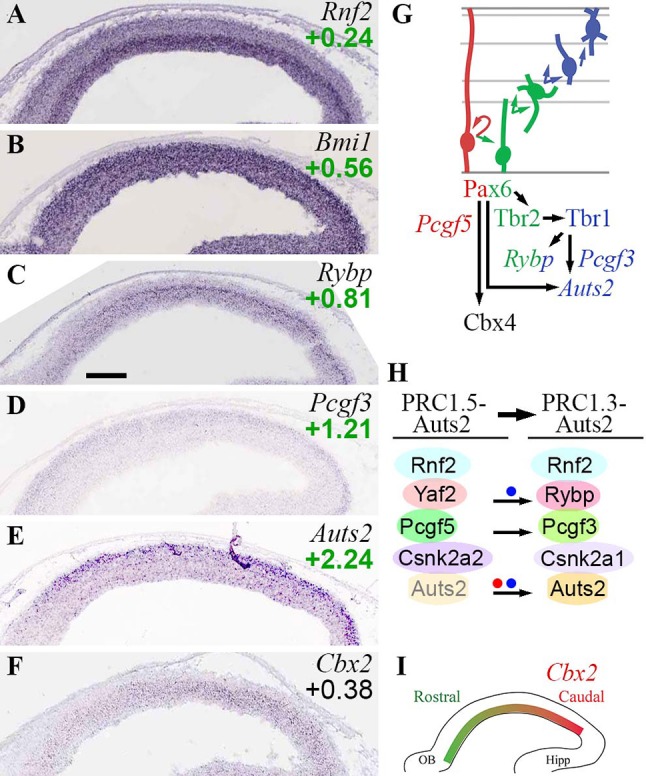
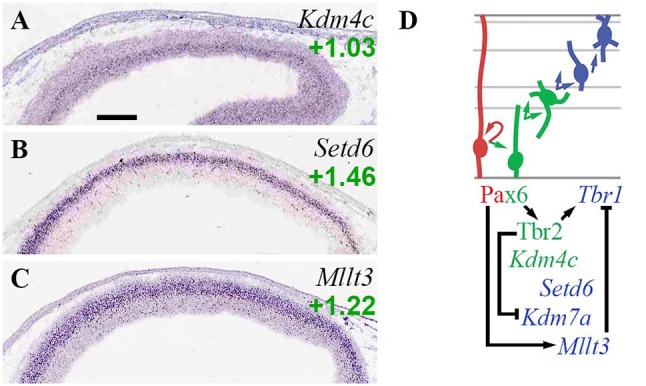
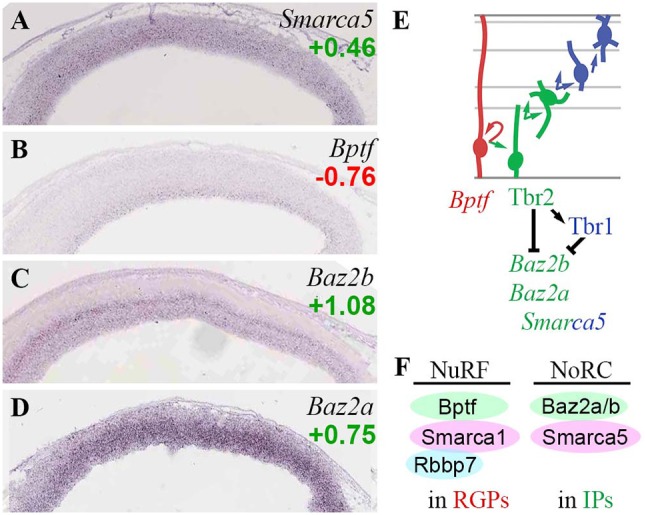
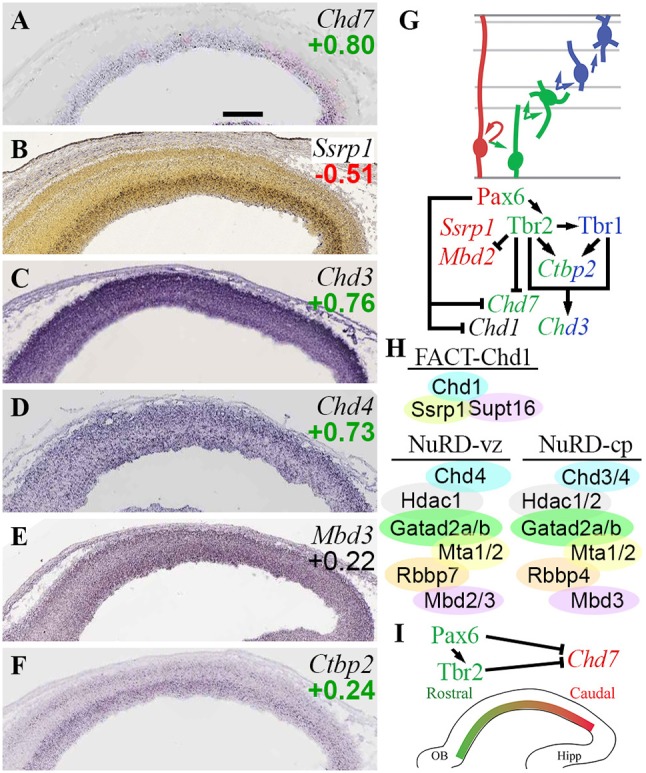
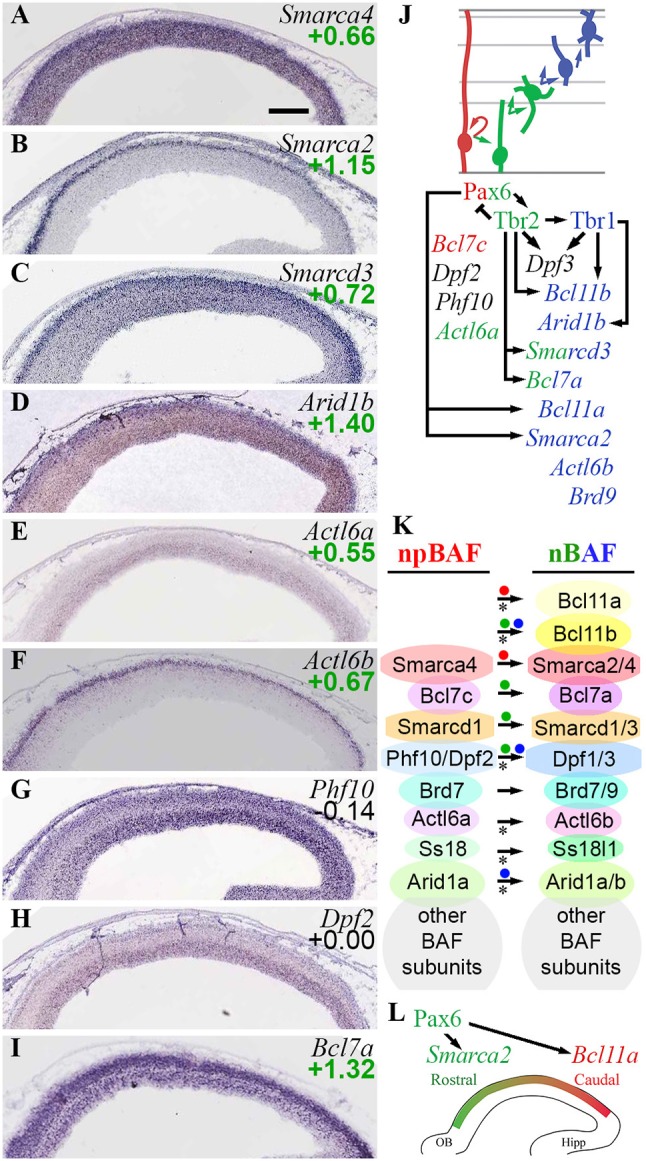
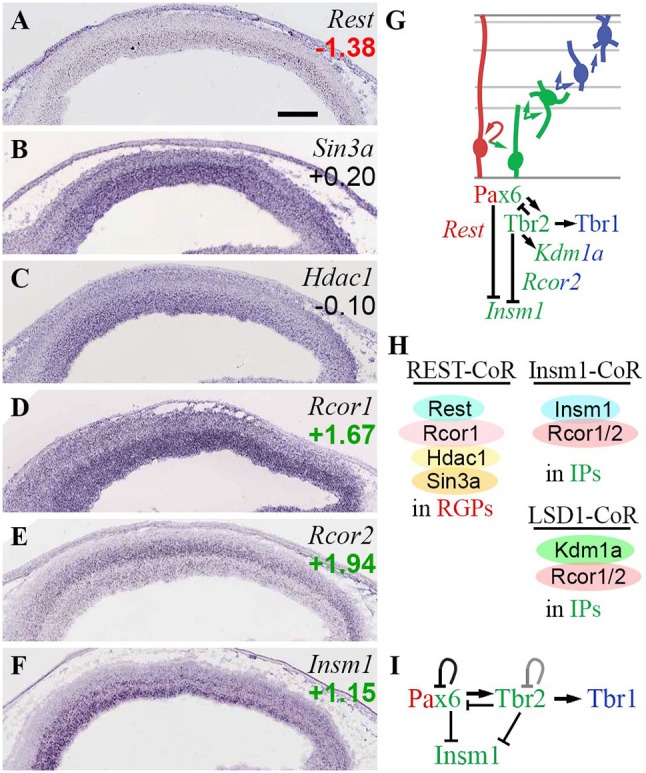
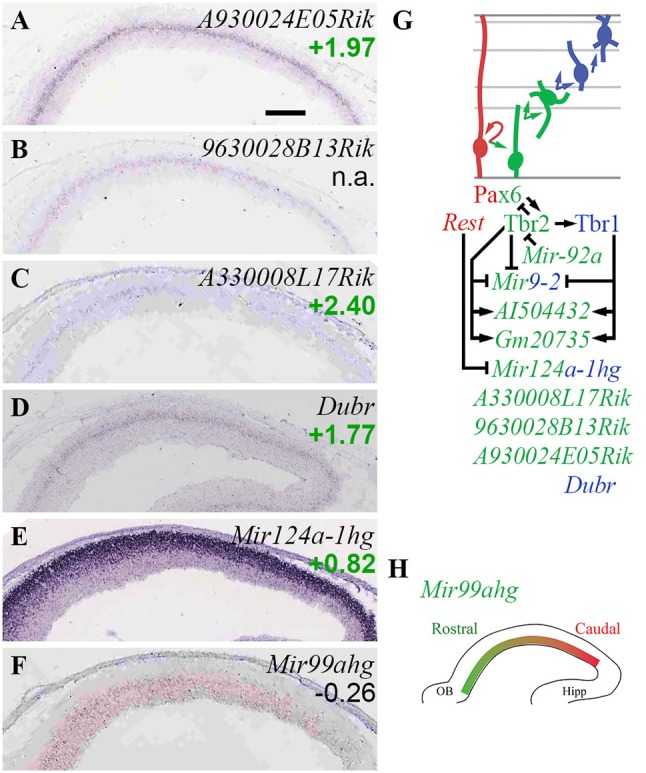
Epigenetic factors (EFs) regulate multiple aspects of cerebral cortex development, including proliferation, differentiation, laminar fate, and regional identity. The same neurodevelopmental processes are also regulated by transcription factors (TFs), notably the Pax6→ Tbr2→ Tbr1 cascade expressed sequentially in radial glial progenitors (RGPs), intermediate progenitors, and postmitotic projection neurons, respectively. Here, we studied the EF landscape and its regulation in embryonic mouse neocortex. Microarray and hybridization assays revealed that many EF genes are expressed in specific cortical cell types, such as intermediate progenitors, or in rostrocaudal gradients. Furthermore, many EF genes are directly bound and transcriptionally regulated by Pax6, Tbr2, or Tbr1, as determined by chromatin immunoprecipitation-sequencing and gene expression analysis of TF mutant cortices. Our analysis demonstrated that Pax6, Tbr2, and Tbr1 form a direct feedforward genetic cascade, with direct feedback repression. Results also revealed that each TF regulates multiple EF genes that control DNA methylation, histone marks, chromatin remodeling, and non-coding RNA. For example, Tbr1 activates and to promote the formation of non-canonical Polycomb repressive complex 1 (PRC1). Also, Pax6, Tbr2, and Tbr1 collectively drive massive changes in the subunit isoform composition of BAF chromatin remodeling complexes during differentiation: for example, a novel switch from (Baf40c) to (Baf40a), the latter directly activated by Tbr2. Of 11 subunits predominantly in neuronal BAF, 7 were transcriptionally activated by Pax6, Tbr2, or Tbr1. Using EFs, Pax6→ Tbr2→ Tbr1 effect persistent changes of gene expression in cell lineages, to propagate features such as regional and laminar identity from progenitors to neurons.
表观遗传因子(EFs)调节大脑皮层发育的多个方面,包括增殖、分化、层命运和区域特性。相同的神经发育过程也受到转录因子(TFs)的调节,特别是在放射状胶质祖细胞(RGPs)、中间祖细胞和有丝分裂后投射神经元中依次表达的Pax6→Tbr2→Tbr1级联。在这里,我们研究了胚胎小鼠新皮层中的EF格局及其调控。微阵列和杂交分析表明,许多EF基因在特定的皮层细胞类型中表达,如中间祖细胞,或呈头尾梯度表达。此外,通过染色质免疫沉淀测序和TF突变皮层的基因表达分析确定,许多EF基因直接与Pax6、Tbr2或Tbr1结合并受到其转录调控。我们的分析表明,Pax6、Tbr2和Tbr1形成了一个直接的前馈遗传级联,并伴有直接的反馈抑制。结果还表明,每个TF调节多个控制DNA甲基化、组蛋白标记、染色质重塑和非编码RNA的EF基因。例如,Tbr1激活和以促进非经典多梳抑制复合物1(PRC1)的形成。此外,Pax6、Tbr2和Tbr1在分化过程中共同驱动BAF染色质重塑复合物亚基异构体组成的大量变化:例如,从(Baf40c)到(Baf40a)的新型转换,后者由Tbr2直接激活。在主要存在于神经元BAF中的11个亚基中,7个被Pax6、Tbr2或Tbr1转录激活。利用EFs,Pax6→Tbr2→Tbr1在细胞谱系中引起基因表达的持续变化,以将区域和层特性等特征从祖细胞传递给神经元。