Ding Yan, Liu Pan, Chen Zhi-Lin, Zhang Shao-Jun, Wang You-Qin, Cai Xin, Luo Lei, Zhou Xuan, Zhao Lei
Department of Infectious Diseases and Immunology, Wuhan Children's Hospital, Tongji Medical College, Huazhong University of Science and Technology, Wuhan, China.
School of Clinical Medicine, Hubei University of Chinese Medicine, Wuhan, China.
Front Pharmacol. 2018 Aug 22;9:962. doi: 10.3389/fphar.2018.00962. eCollection 2018.
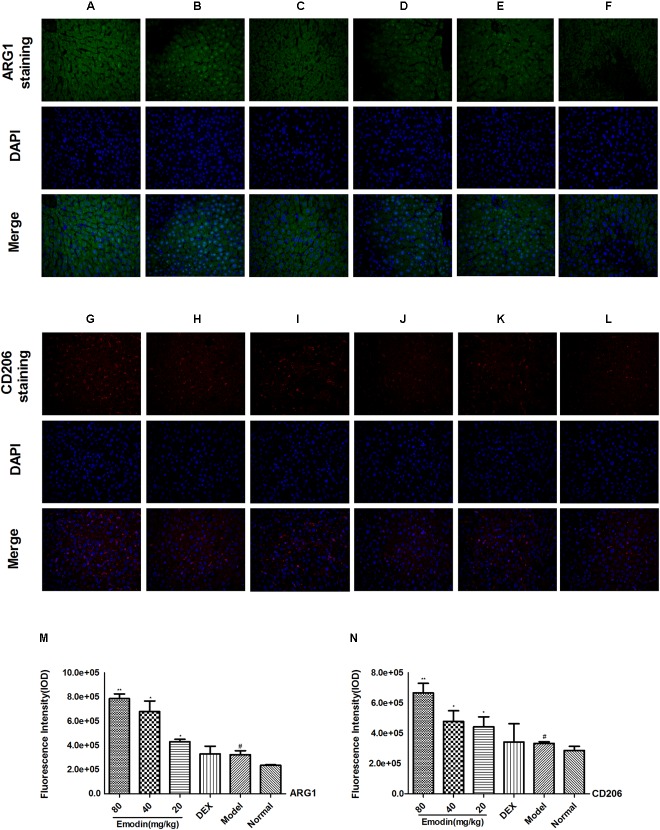
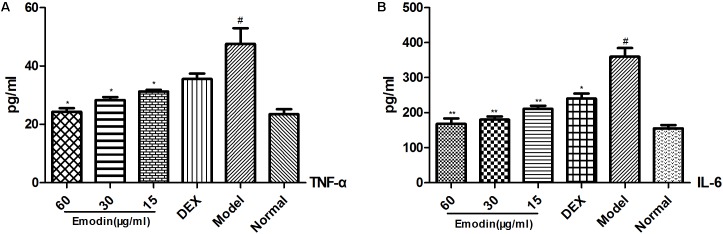
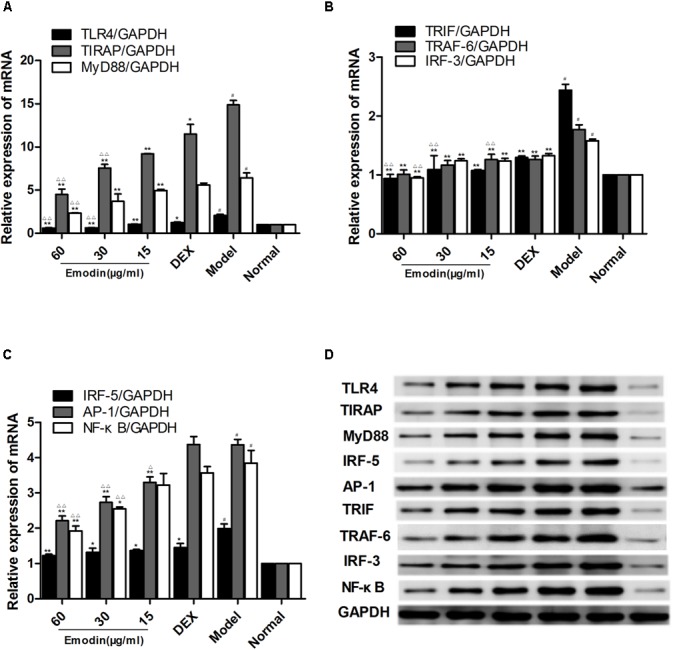
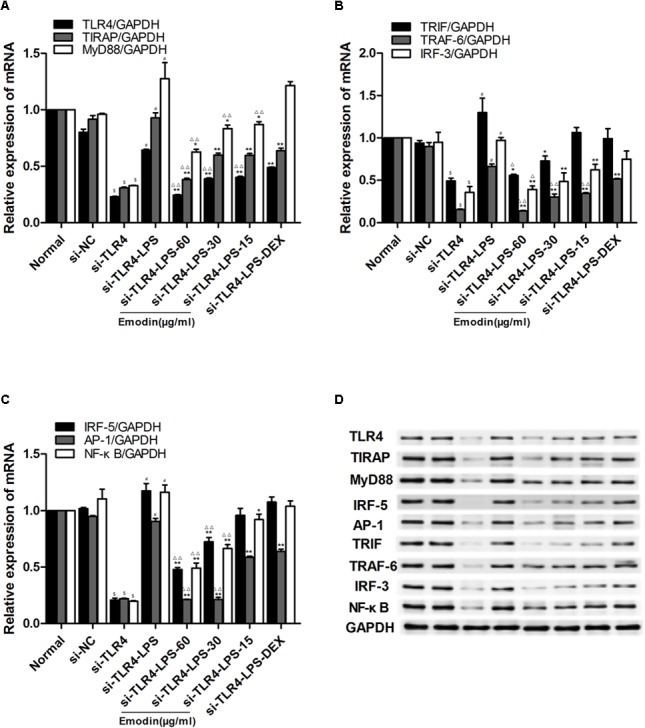
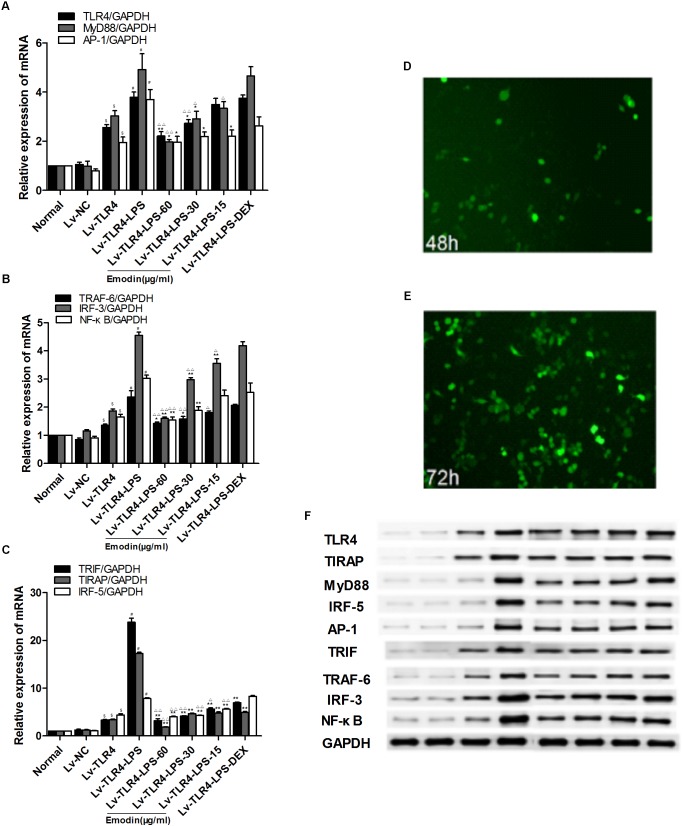
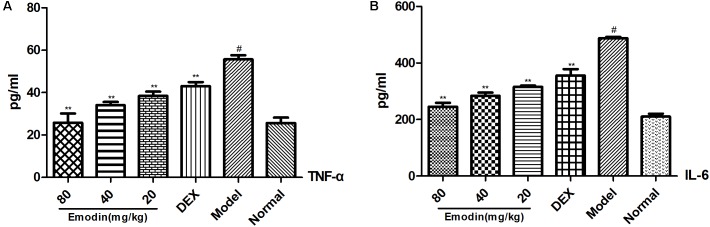
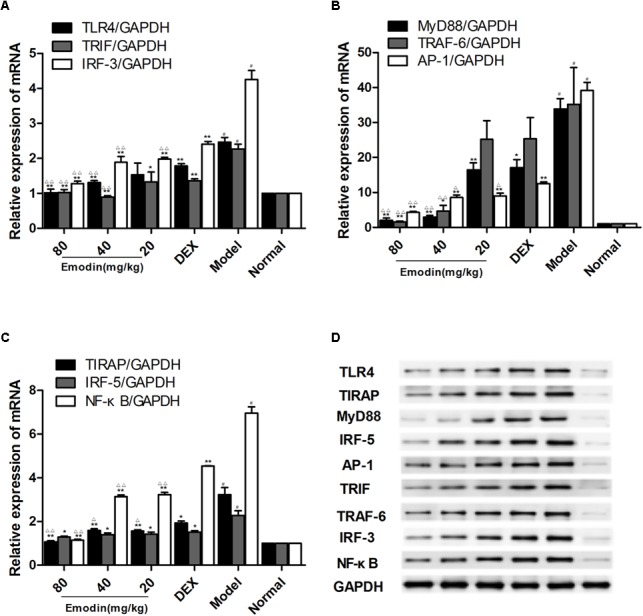
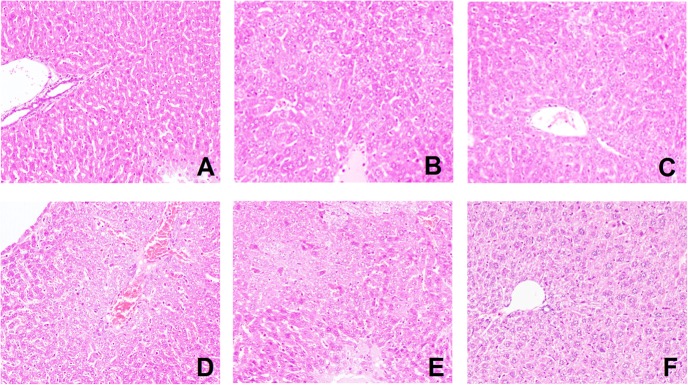
Emodin is an anthraquinone with potential anti-inflammatory properties. However, the possible molecular mechanisms and protective effects of emodin are not clear. The objective of this study was to investigate the possible molecular mechanisms and protective effects of emodin on lipopolysaccharide (LPS)-induced acute liver injury (ALI) via the Toll-like receptor 4 (TLR4) signaling pathway in the Raw264.7 cell line and in Balb/c mice. This study established an inflammatory cellular model and induced an ALI animal model. TLR4 was overexpressed by lentivirus and downregulated by small interfering RNA (siRNA) technology. The mRNA and protein levels of TLR4 and downstream molecules were detected in cells and liver tissue. The tumor necrosis factor-α (TNF-α) and interleukin (IL)-6 levels in supernatant and serum were determined by ELISA. The distribution and expression of mannose receptor C type 1 (CD206) and arginase 1 (ARG1) in the liver were tested by immunofluorescence. Mouse liver function and histopathological observations were assessed. Administration of emodin reduced the protein and/or mRNA levels of TLR4 and its downstream molecules following LPS challenge in Raw264.7 cells and in an animal model. Additionally, emodin suppressed the expression of TNF-α and IL-6 in cell culture supernatant and serum. The inhibitory effect of emodin was also confirmed in RAW264.7 cells, in which TLR4 was overexpressed or knocked down. Additionally, ARG1 and CD206 were elevated in the emodin groups. Emodin also decreased serum ALT and AST levels and alleviated the liver histopathological damage induced by LPS. Emodin showed excellent hepatoprotective effects against LPS-induced ALI, possibly by inhibiting TLR4 signaling pathways.
大黄素是一种具有潜在抗炎特性的蒽醌类化合物。然而,大黄素可能的分子机制和保护作用尚不清楚。本研究的目的是通过Raw264.7细胞系和Balb/c小鼠中的Toll样受体4(TLR4)信号通路,研究大黄素对脂多糖(LPS)诱导的急性肝损伤(ALI)的可能分子机制和保护作用。本研究建立了炎症细胞模型并诱导了ALI动物模型。通过慢病毒使TLR4过表达,并通过小干扰RNA(siRNA)技术使其下调。检测细胞和肝组织中TLR4及其下游分子的mRNA和蛋白水平。通过酶联免疫吸附测定法(ELISA)测定上清液和血清中的肿瘤坏死因子-α(TNF-α)和白细胞介素(IL)-6水平。通过免疫荧光检测肝脏中甘露糖受体C1型(CD206)和精氨酸酶1(ARG1)的分布和表达。评估小鼠肝功能和组织病理学观察结果。在Raw264.7细胞和动物模型中,给予大黄素可降低LPS刺激后TLR4及其下游分子的蛋白和/或mRNA水平。此外,大黄素抑制细胞培养上清液和血清中TNF-α和IL-6的表达。在TLR4过表达或敲低的RAW264.7细胞中也证实了大黄素的抑制作用。此外,大黄素组中ARG1和CD206升高。大黄素还降低了血清谷丙转氨酶(ALT)和谷草转氨酶(AST)水平,并减轻了LPS诱导的肝脏组织病理学损伤。大黄素对LPS诱导的ALI显示出优异的肝保护作用,可能是通过抑制TLR4信号通路实现的。