Durymanov Mikhail, Reineke Joshua
Department of Pharmaceutical Sciences, College of Pharmacy and Allied Health Professions, South Dakota State University, Brookings, SD, United States.
Front Pharmacol. 2018 Aug 21;9:971. doi: 10.3389/fphar.2018.00971. eCollection 2018.
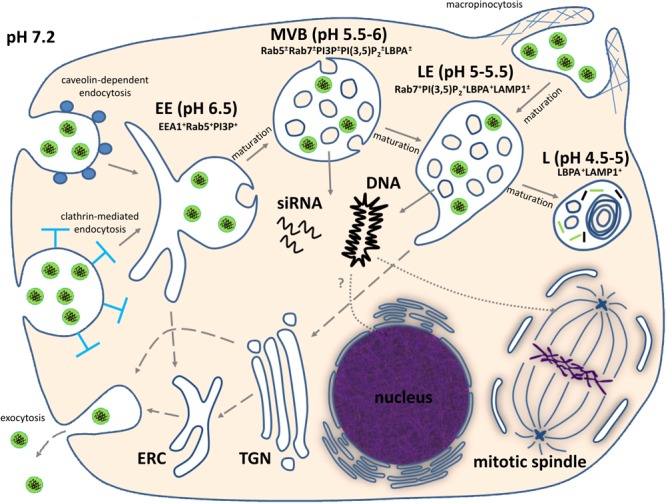
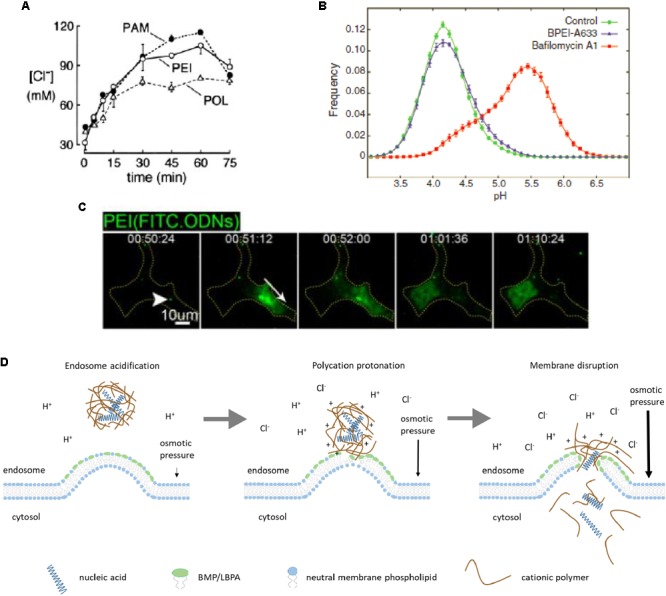
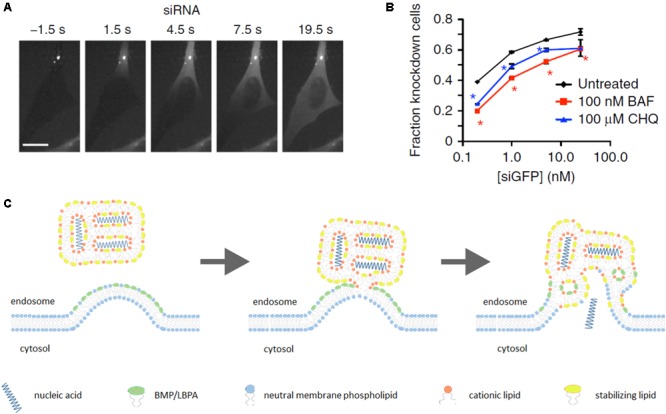
Delivery of genes, including plasmid DNAs, short interfering RNAs (siRNAs), and messenger RNAs (mRNAs), using artificial non-viral nanotherapeutics is a promising approach in cancer gene therapy. However, multiple physiological barriers upon systemic administration remain a key challenge in clinical translation of anti-cancer gene therapeutics. Besides extracellular barriers including sequestration of gene delivery nanoparticles from the bloodstream by resident organ-specific macrophages, and their poor extravasation and tissue penetration in tumors, overcoming intracellular barriers is also necessary for successful delivery of nucleic acids. Whereas for RNA delivery the endosomal barrier holds a key importance, transfer of DNA cargo additionally requires translocation into the nucleus. Better understanding of crossing membrane barriers by nucleic acid nanoformulations is essential to the improvement of current non-viral carriers. This review aims to summarize relevant literature on intracellular trafficking of non-viral nanoparticles and determine key factors toward surmounting intracellular barriers. Moreover, recent data allowed us to propose new interpretations of current hypotheses of endosomal escape mechanisms of nucleic acid nanoformulations.
使用人工非病毒纳米疗法递送包括质粒DNA、小干扰RNA(siRNA)和信使RNA(mRNA)在内的基因,是癌症基因治疗中一种很有前景的方法。然而,全身给药时的多种生理屏障仍然是抗癌基因治疗临床转化中的关键挑战。除了细胞外屏障,包括驻留的器官特异性巨噬细胞从血液中隔离基因递送纳米颗粒,以及它们在肿瘤中的低渗出率和组织穿透性外,克服细胞内屏障对于核酸的成功递送也是必要的。对于RNA递送,内体屏障至关重要,而DNA货物的转运还需要转运到细胞核中。更好地理解核酸纳米制剂跨越膜屏障的过程对于改进当前的非病毒载体至关重要。本综述旨在总结关于非病毒纳米颗粒细胞内运输的相关文献,并确定克服细胞内屏障的关键因素。此外,最近的数据使我们能够对核酸纳米制剂内体逃逸机制的当前假设提出新的解释。