Laboratory of Experimental Immunology, IDI-IRCCS, 00167 Rome, Italy.
Pathology Unit, IDI-IRCCS, 00167 Rome, Italy.
Int J Mol Sci. 2018 Sep 6;19(9):2652. doi: 10.3390/ijms19092652.
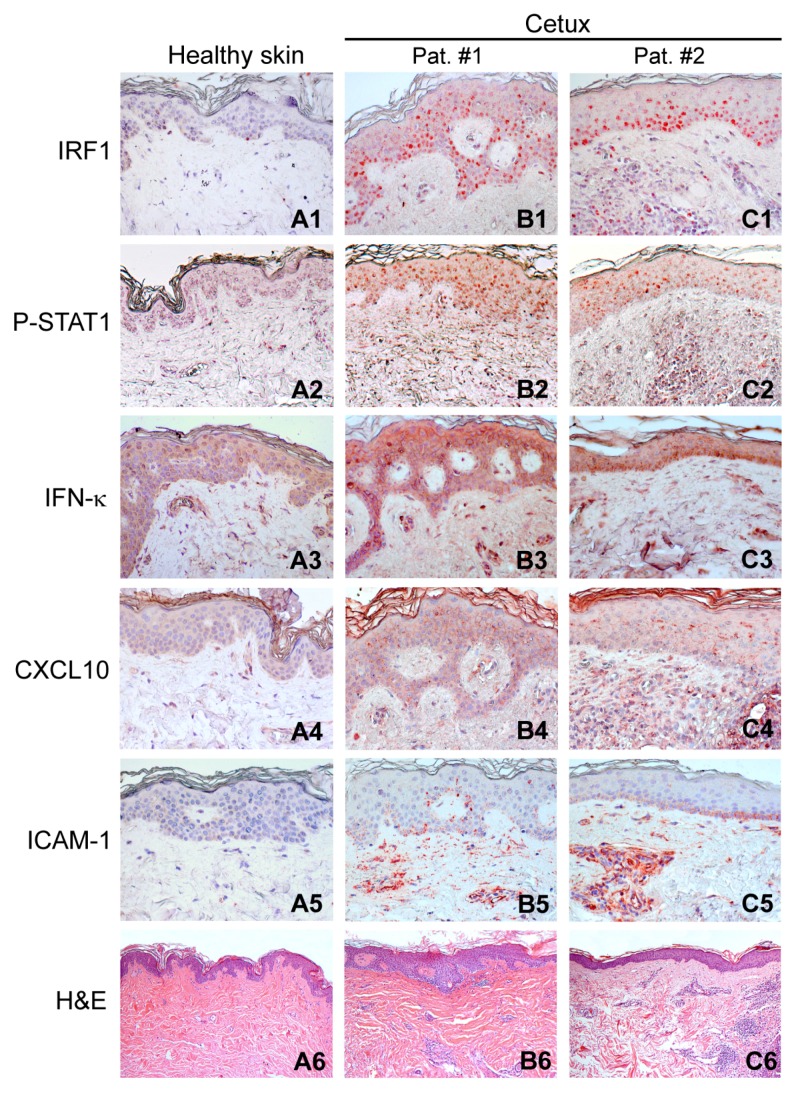
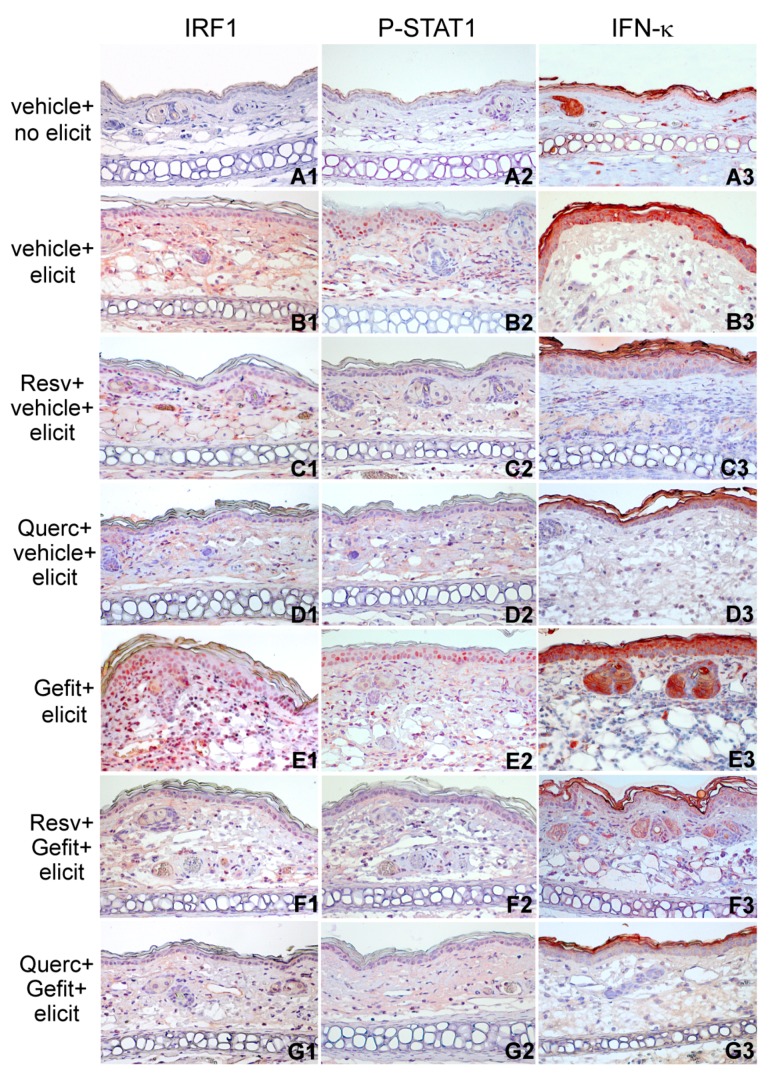
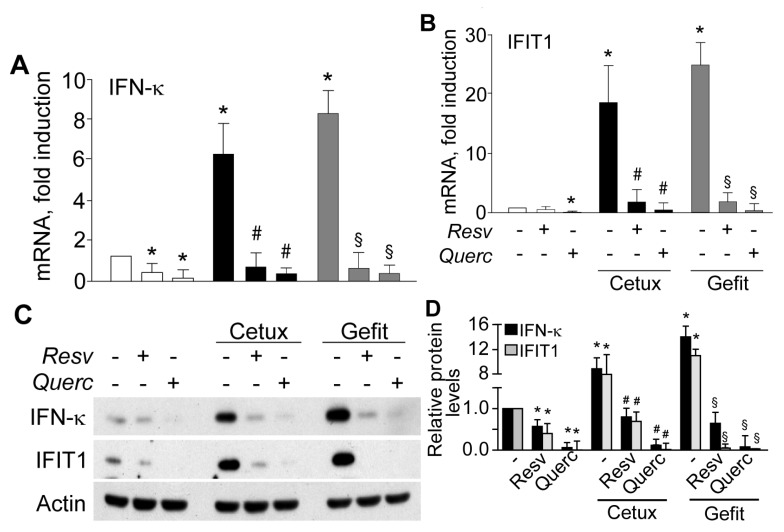
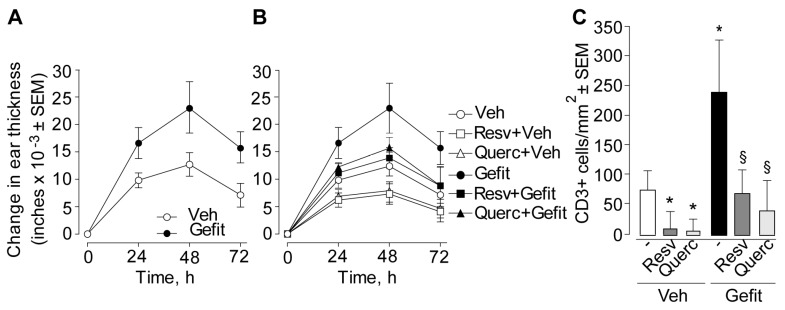
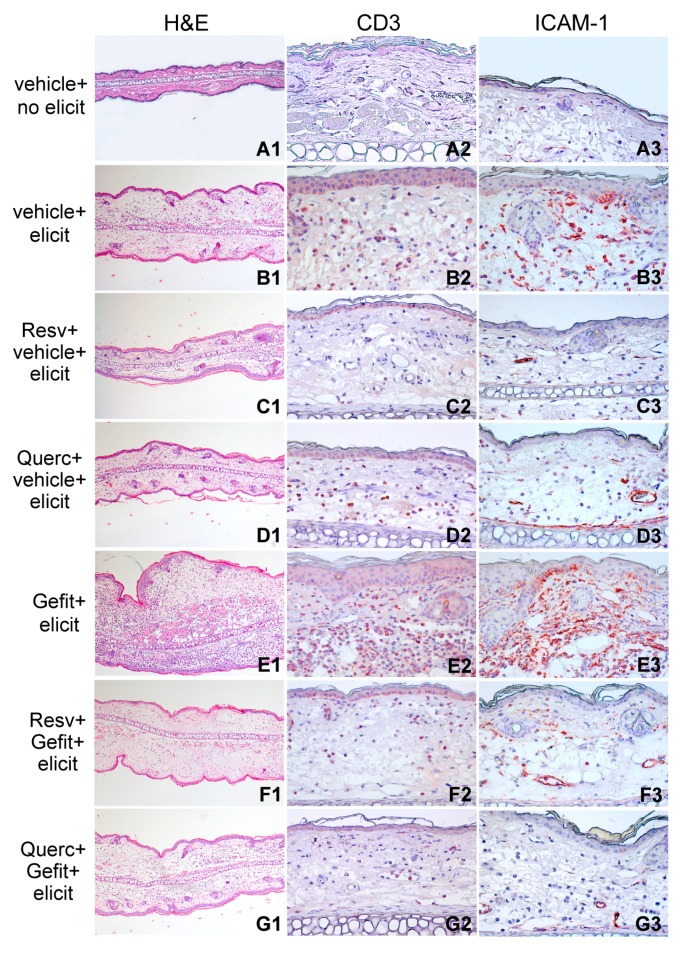
Human keratinocytes were recently shown to respond to anti-EGFR (epidermal growth factor receptor) drugs with activation of an interferon-κ-driven autocrine loop, leading to enhanced expression of innate antiviral effectors and of the pro-inflammatory chemokines CXCL10 (C-X-C motif chemokine 10) and CCL2 (C-C motif ligand 2). Here we showed active type I interferon signaling in the skin lesions of cancer patients undergoing treatment with the anti-EGFR drug cetuximab. Strong nuclear positivity for Interferon Regulatory Factor 1 and phosphorylated Signal Transducer and Activator of Transcription 1, enhanced interferon-κ expression and CXCL10 was associated to the epidermal compartment. Notably, 50 micromolar resveratrol and quercetin fully suppressed the low constitutive levels of type I interferon signaling and prevented its activation by the anti-EGFR cetuximab or gefitinib in cultured keratinocytes. In sensitized mice undergoing DNFB (2,4-dinitro-1-fluorobenzene)-induced contact hypersensitivity, local administration of gefitinib prior to elicitation further amplified hapten-induced type I interferon activation, tissue edema, and infiltration by T cells, whereas resveratrol or quercetin suppressed this inflammatory cascade. Overall, these data suggest that topical application of resveratrol or quercetin could be potentially effective in preventing pathological conditions due to overactivation of type I IFN (interferon)-driven circuits in the skin, including the inflammatory manifestations of anti-EGFR drug-induced skin-targeted toxicity.
最近有研究表明,人类角质形成细胞对 EGFR(表皮生长因子受体)拮抗剂药物的反应会激活一种干扰素 κ 驱动的自分泌环,导致先天抗病毒效应物和促炎趋化因子 CXCL10(C-X-C 基序趋化因子 10)和 CCL2(C-C 基序配体 2)的表达增强。在这里,我们在接受 EGFR 拮抗剂西妥昔单抗治疗的癌症患者的皮肤损伤中显示出活跃的 I 型干扰素信号。干扰素调节因子 1 和磷酸化信号转导和转录激活因子 1 的强核阳性、干扰素 κ 表达和 CXCL10 的增强与表皮区室相关。值得注意的是,50 微摩尔白藜芦醇和槲皮素完全抑制了 I 型干扰素信号的低组成型水平,并防止其被 EGFR 拮抗剂西妥昔单抗或吉非替尼在培养的角质形成细胞中激活。在接受 DNFB(2,4-二硝基-1-氟苯)诱导的接触性超敏反应的致敏小鼠中,在引发前局部给予吉非替尼进一步放大了半抗原诱导的 I 型干扰素激活、组织水肿和 T 细胞浸润,而白藜芦醇或槲皮素则抑制了这种炎症级联反应。总的来说,这些数据表明,局部应用白藜芦醇或槲皮素可能对预防由于 I 型 IFN(干扰素)驱动的皮肤回路过度激活引起的病理状况有效,包括 EGFR 拮抗剂药物引起的皮肤靶向毒性的炎症表现。