Máthis Kristián, Köver Michal, Stráská Jitka, Trojanová Zuzanka, Džugan Ján, Halmešová Kristýna
Department of Physics of Materials, Faculty of Mathematics and Physics, Charles University, Ke Karlovu 5, 121 16 Praha 2, Czech Republic.
Nuclear Physics Institute of the CAS, 250 68 Řež, Czech Republic.
Materials (Basel). 2018 Sep 7;11(9):1644. doi: 10.3390/ma11091644.
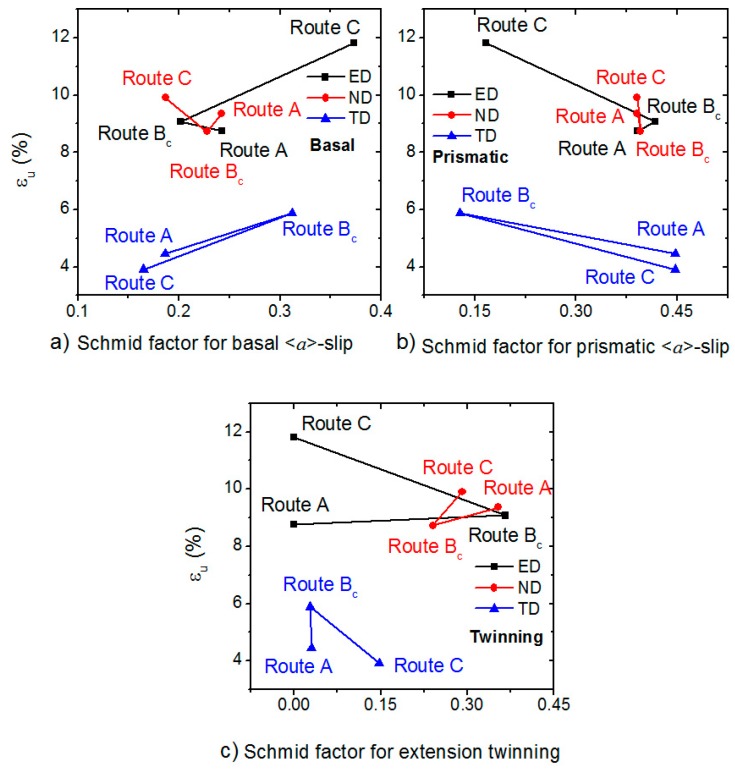
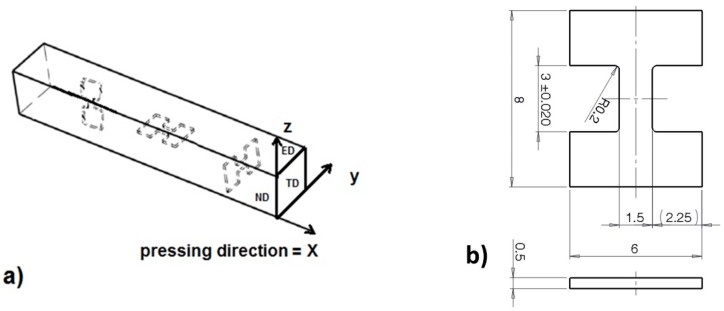
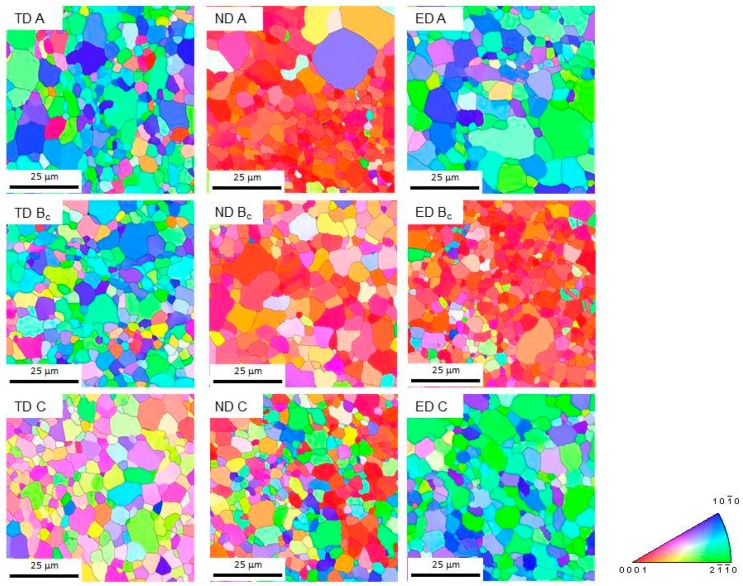
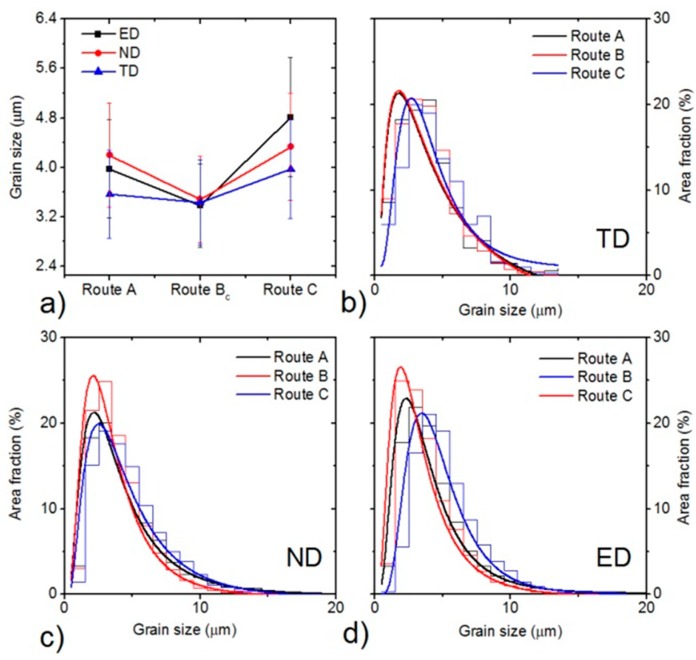
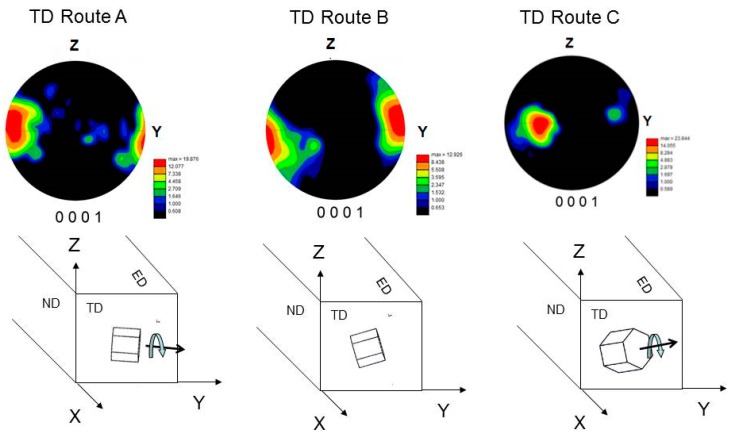
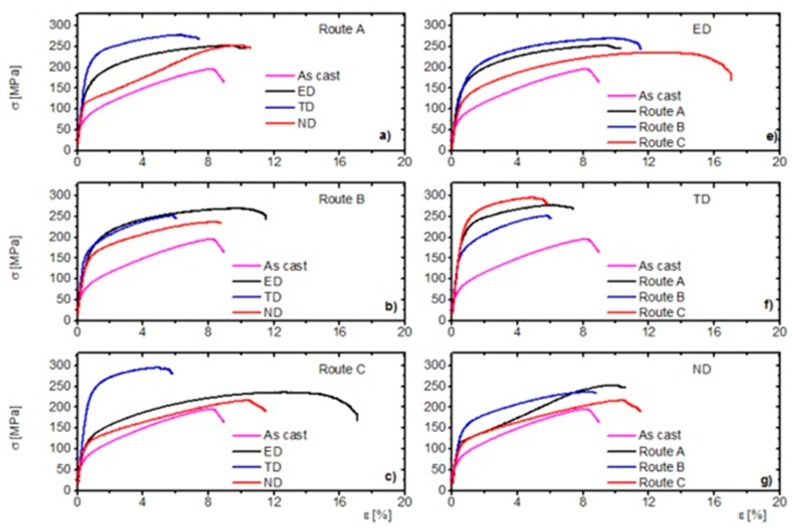
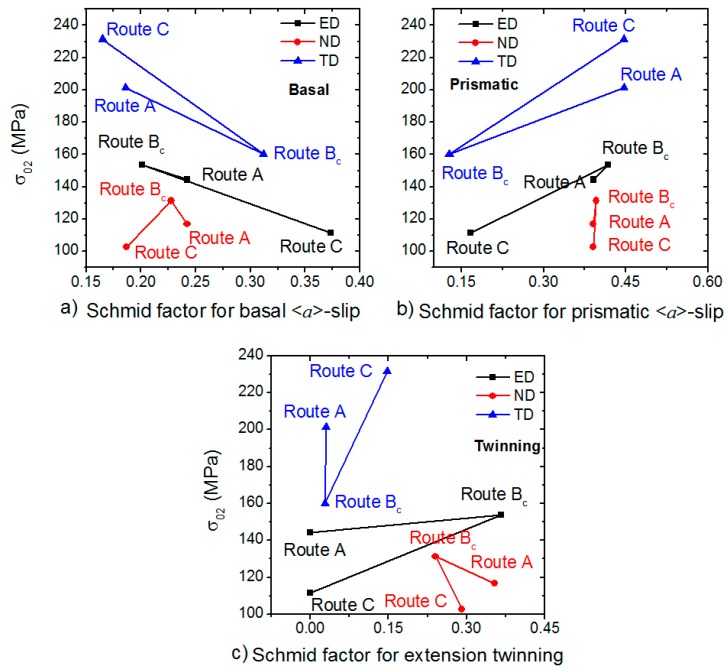
Commercially available AZ31 magnesium alloy was four times extruded in an equal rectangular channel using three different routes (A, B, and C). Micro tensile deformation tests were performed at room temperature with the aim to reveal any plastic anisotropy developed during the extrusion. Samples for micro tensile experiments were cut from extruded billets in different orientations with respect to the pressing direction. Information about the microstructure of samples was obtained using the electron back-scatter diffraction (EBSD) technique. Deformation characteristics (yield stress, ultimate tensile stress and uniform elongation) exhibited significant anisotropy as a consequence of different orientations between the stress direction and texture and thus different deformation mechanisms.
市售的AZ31镁合金在一个等矩形通道中采用三种不同路径(A、B和C)进行了四次挤压。在室温下进行了微拉伸变形试验,目的是揭示挤压过程中产生的任何塑性各向异性。用于微拉伸实验的样品是从挤压坯料上沿相对于压制方向的不同取向切割下来的。使用电子背散射衍射(EBSD)技术获得了样品微观结构的信息。由于应力方向与织构之间的不同取向以及由此产生的不同变形机制,变形特性(屈服应力、极限拉伸应力和均匀伸长率)表现出显著的各向异性。