Division of Hematology, Department of Medicine, University of Colorado School of Medicine, Aurora, CO, 80045, USA.
Department of Biochemistry and Molecular Genetics, University of Colorado Denver, Aurora, CO, 80045, USA.
Nat Commun. 2018 Sep 12;9(1):3694. doi: 10.1038/s41467-018-05984-x.
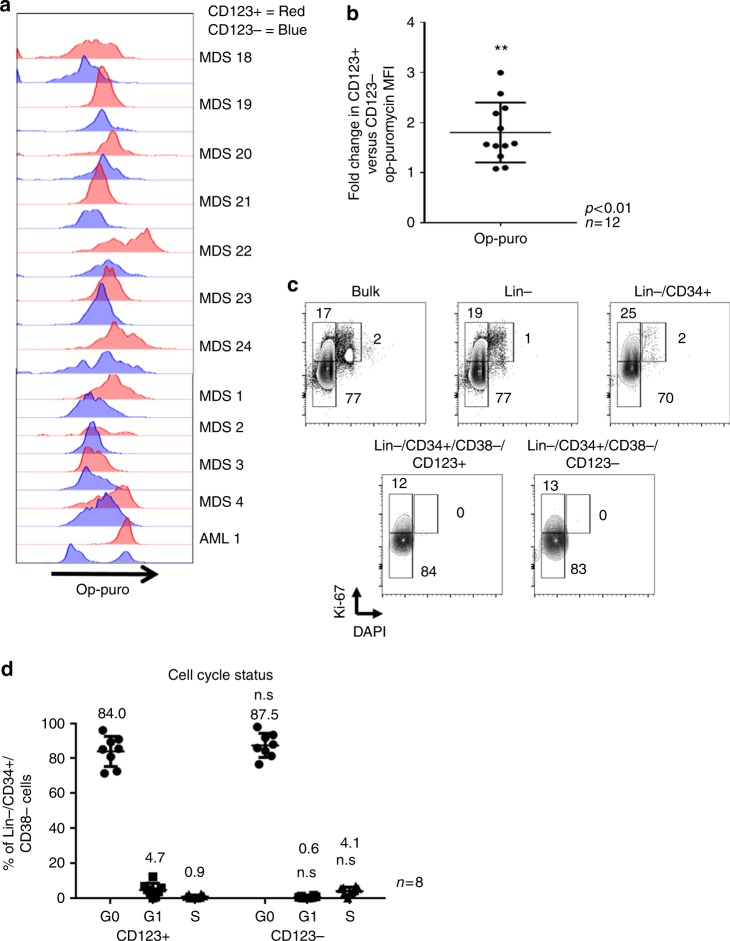
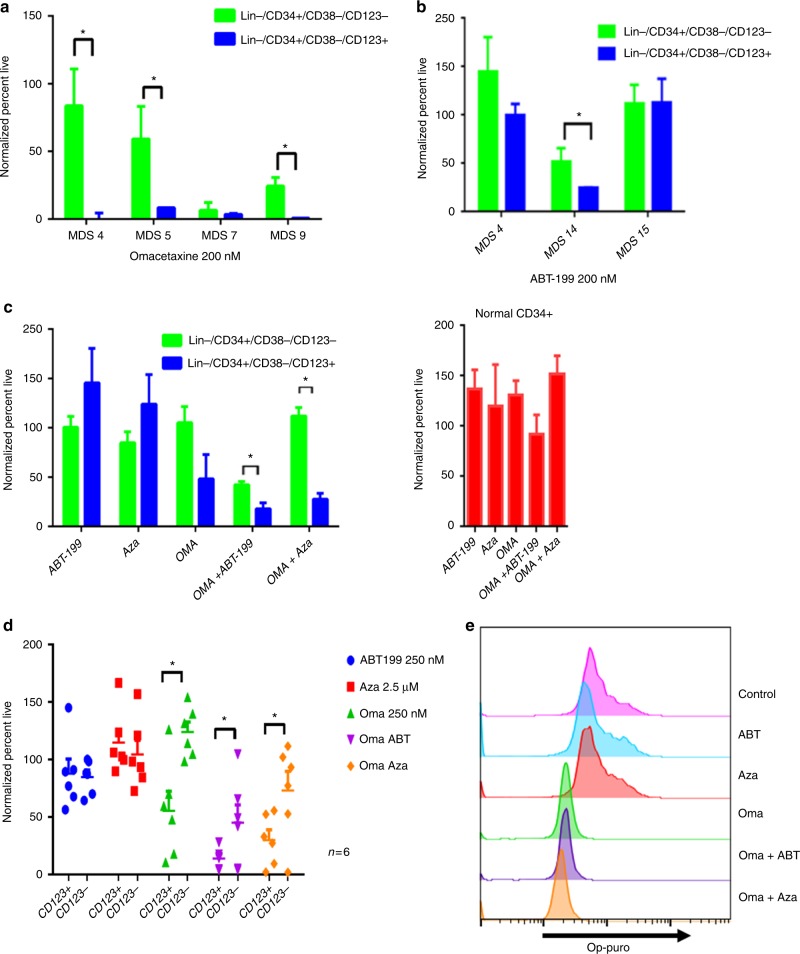
Myelodysplastic syndrome (MDS) is a chronic hematologic disorder that frequently evolves to more aggressive stages and in some cases leads to acute myeloid leukemia (AML). MDS arises from mutations in hematopoietic stem cells (HSCs). Thus, to define optimal therapies, it is essential to understand molecular events driving HSC pathogenesis. In this study, we report that during evolution of MDS, malignant HSCs activate distinct cellular programs that render such cells susceptible to therapeutic intervention. Specifically, metabolic analyses of the MDS stem cell compartment show a profound activation of protein synthesis machinery and increased oxidative phosphorylation. Pharmacological targeting of protein synthesis and oxidative phosphorylation demonstrated potent and selective eradication of MDS stem cells in primary human patient specimens. Taken together, our findings indicate that MDS stem cells are reliant on specific metabolic events and that such properties can be targeted prior to the onset of clinically significant AML, during antecedent MDS.
骨髓增生异常综合征(MDS)是一种慢性血液疾病,常发展为更具侵袭性的阶段,在某些情况下导致急性髓系白血病(AML)。MDS 源于造血干细胞(HSCs)的突变。因此,为了确定最佳治疗方法,了解驱动 HSC 发病机制的分子事件至关重要。在这项研究中,我们报告说,在 MDS 的发展过程中,恶性 HSCs 激活了不同的细胞程序,使这些细胞容易受到治疗干预。具体来说,对 MDS 干细胞区室的代谢分析显示蛋白质合成机制的深度激活和氧化磷酸化增加。蛋白质合成和氧化磷酸化的药理学靶向在原发性人类患者标本中显示出对 MDS 干细胞的有效和选择性清除。总之,我们的研究结果表明,MDS 干细胞依赖于特定的代谢事件,并且可以在临床上显著的 AML 发生之前,在 MDS 前期针对这些特性进行靶向治疗。