Department of Pathology and Tumor Biology, Kyoto University, Kyoto, Japan.
Department of Hematology and Oncology, Kyoto University, Kyoto, Japan.
Leukemia. 2019 Mar;33(3):612-624. doi: 10.1038/s41375-018-0253-3. Epub 2018 Sep 12.
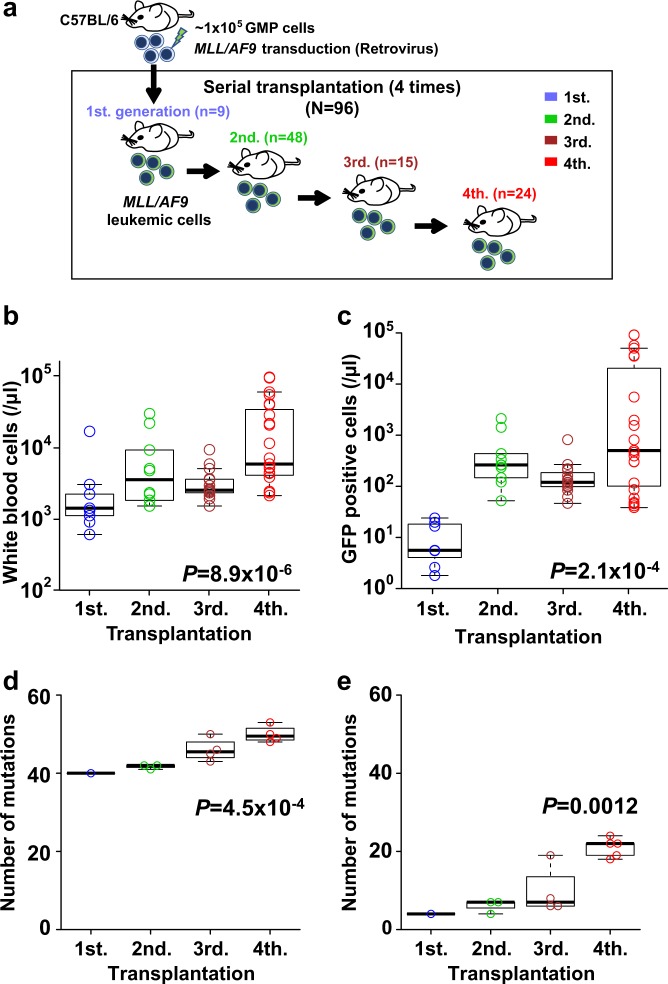
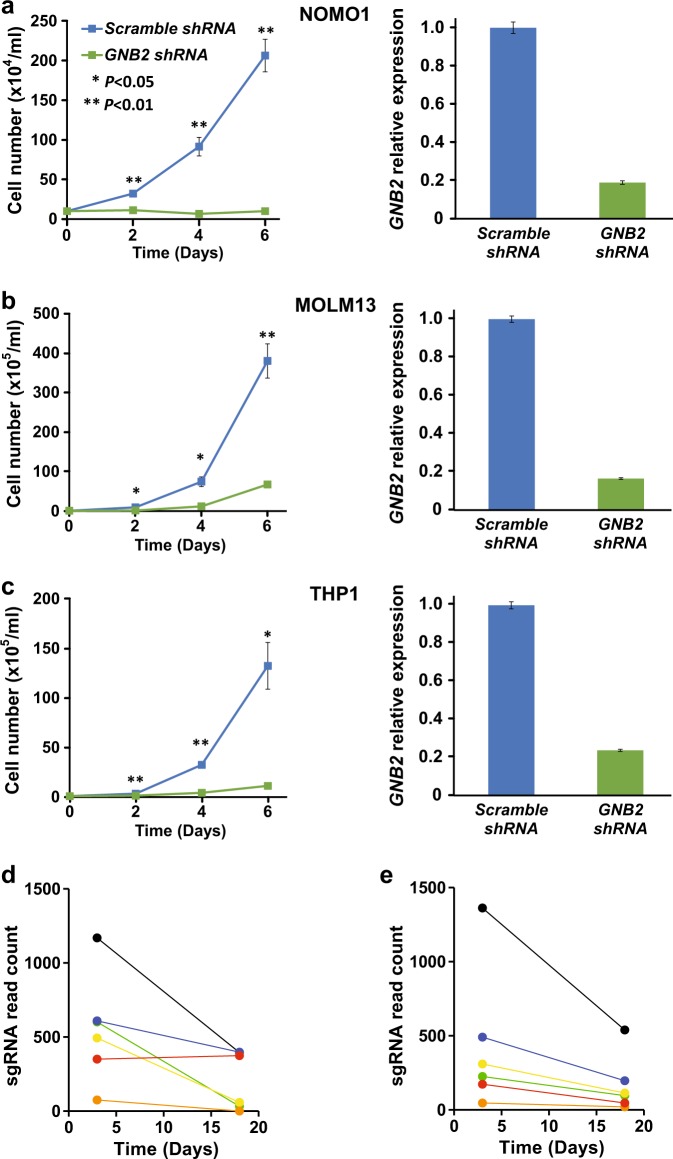
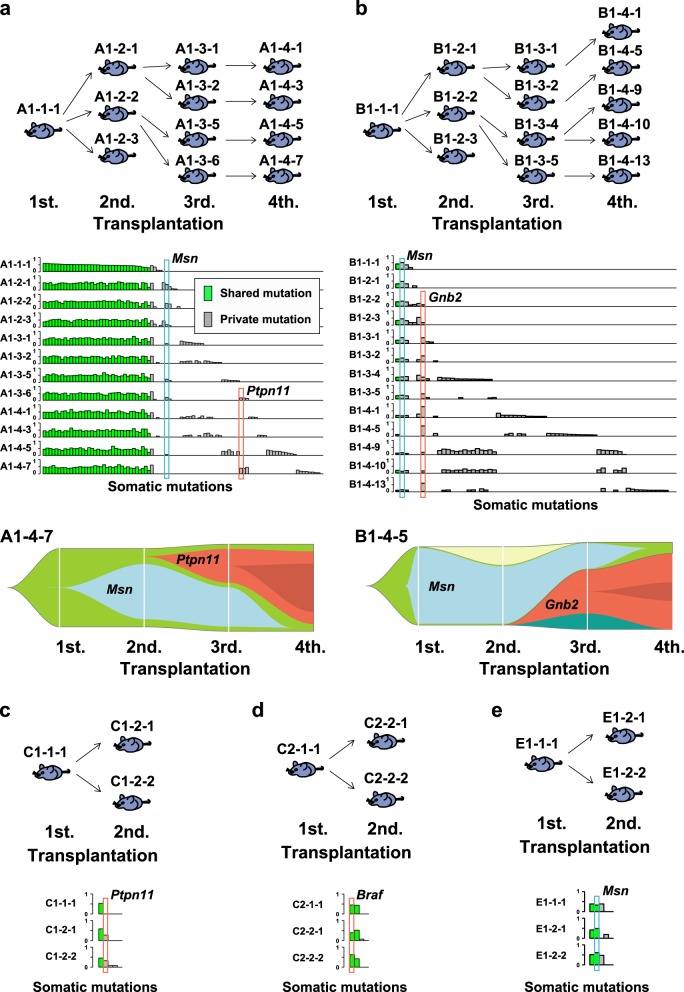
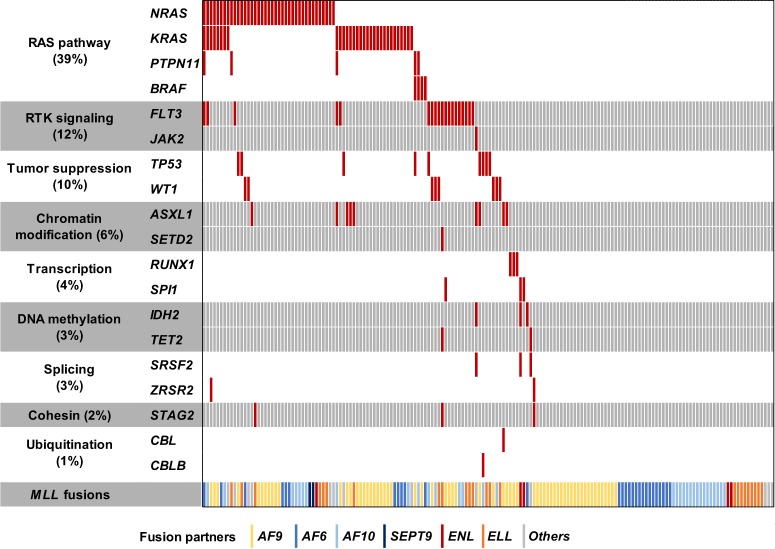
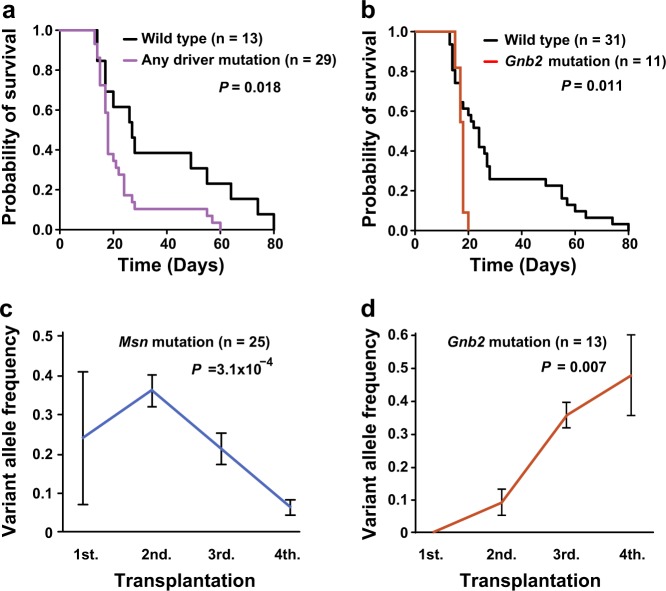
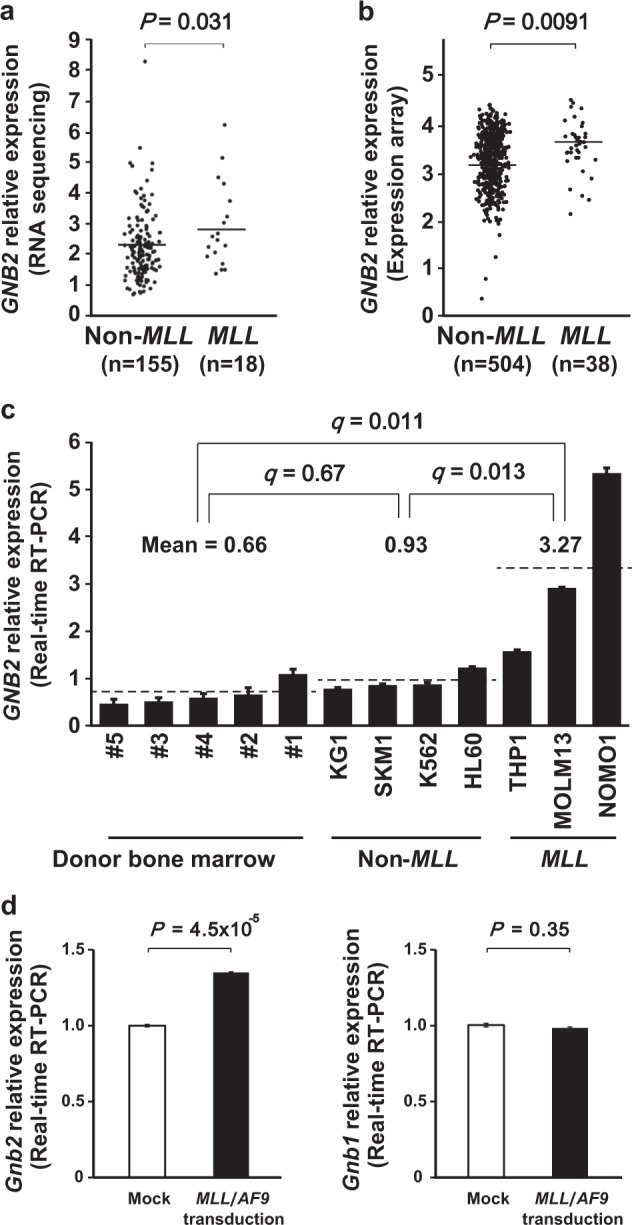
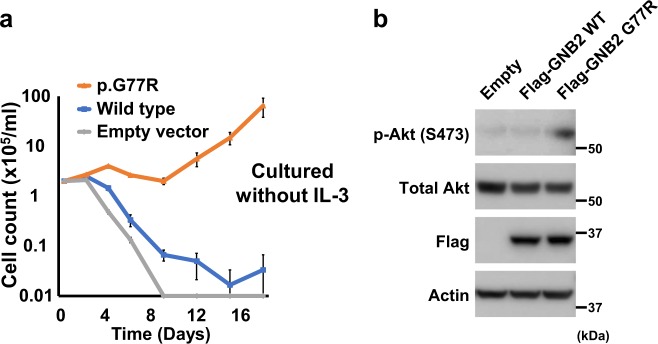
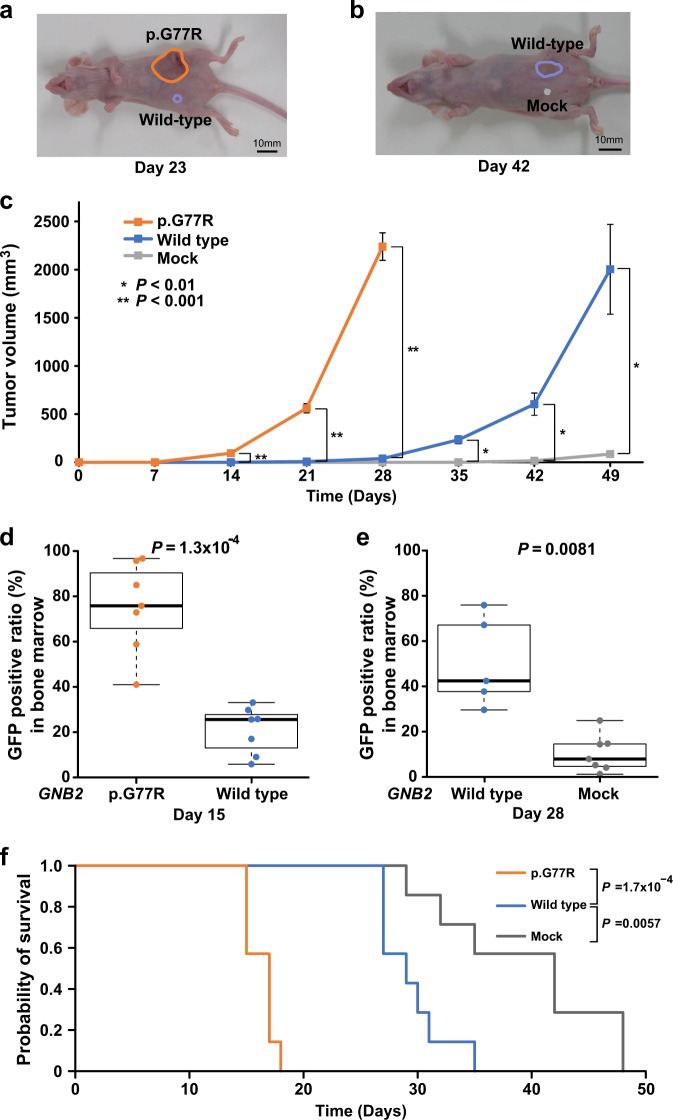
Leukemic relapse is frequently accompanied by progressively aggressive clinical course. To understand the molecular mechanism of leukemic relapse, MLL/AF9-transformed mouse leukemia cells were serially transplanted in C57BL/6 mice (N = 96) by mimicking repeated recurrences, where mutations were monitored by exome sequencing (N = 42). The onset of leukemia was progressively promoted with advanced transplants, during which increasing numbers of somatic mutations were acquired (P < 0.005). Among these, mutations in Ptpn11 (p.G60R) and Braf (p.V637E) corresponded to those identified in human MLL-AML, while recurrent mutations affecting Msn (p.R295C) were observed only in mouse but not in human MLL-AML. Another mutated gene of interest was Gnb2 which was reported to be recurrently mutated in various hematological neoplasms. Gnb2 mutations (p.G77R) were significantly increased in clone size (P = 0.007) and associated with earlier leukemia onset (P = 0.011). GNB2 transcripts were significantly upregulated in human MLL-AML compared to MLL-negative AML (P < 0.05), which was supported by significantly increased Gnb2 transcript induced by MLL/AF9 overexpression (P < 0.001). In in vivo model, both mutation and overexpression of GNB2 caused leukemogenesis, and downregulation of GNB2 expression reduced proliferative potential and survival benefit, suggesting a driver role of GNB2. In conclusion, alterations of driver genes over time may play an important role in the progression of MLL-AML.
白血病复发通常伴随着进行性侵袭性临床病程。为了了解白血病复发的分子机制,通过模拟反复复发,将 MLL/AF9 转化的小鼠白血病细胞连续移植到 C57BL/6 小鼠中(N=96),通过外显子组测序监测突变(N=42)。随着移植的进展,白血病的发病逐渐得到促进,在此期间获得了越来越多的体细胞突变(P<0.005)。其中,Ptpn11(p.G60R)和 Braf(p.V637E)的突变与人类 MLL-AML 中鉴定的突变相对应,而仅在小鼠而非人类 MLL-AML 中观察到影响 Msn(p.R295C)的反复突变。另一个感兴趣的突变基因是 Gnb2,它被报道在各种血液恶性肿瘤中反复突变。Gnb2 突变(p.G77R)在克隆大小上显著增加(P=0.007),并与白血病发病较早相关(P=0.011)。与 MLL 阴性 AML 相比,GNB2 转录物在人类 MLL-AML 中显著上调(P<0.05),这得到了 MLL/AF9 过表达显著增加 Gnb2 转录本的支持(P<0.001)。在体内模型中,GNB2 的突变和过表达都导致了白血病的发生,下调 GNB2 的表达降低了增殖潜能和生存获益,表明 GNB2 具有驱动作用。总之,随着时间的推移,驱动基因的改变可能在 MLL-AML 的进展中发挥重要作用。