Minervini Fabio, Dinardo Francesca R, Celano Giuseppe, De Angelis Maria, Gobbetti Marco
Department of Soil, Plant and Food Sciences, Università degli Studi di Bari Aldo Moro, Bari, Italy.
Faculty of Science and Technology, Free University of Bozen, Bolzano, Italy.
Front Microbiol. 2018 Aug 27;9:1984. doi: 10.3389/fmicb.2018.01984. eCollection 2018.
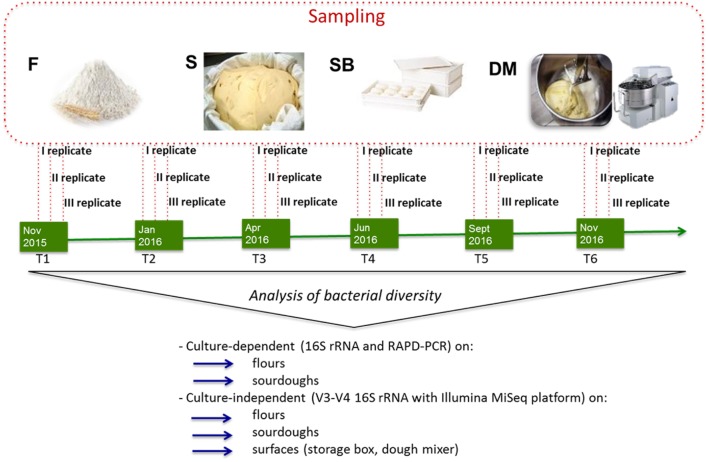
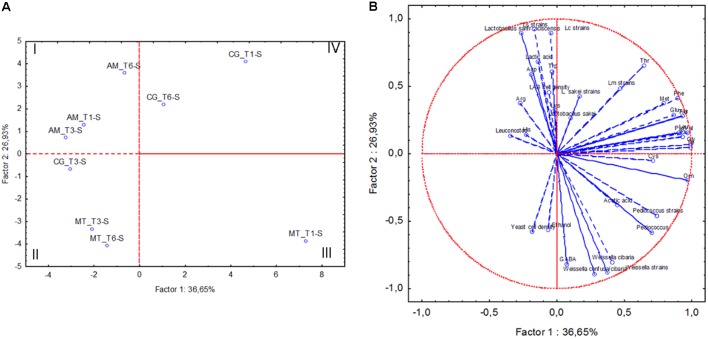
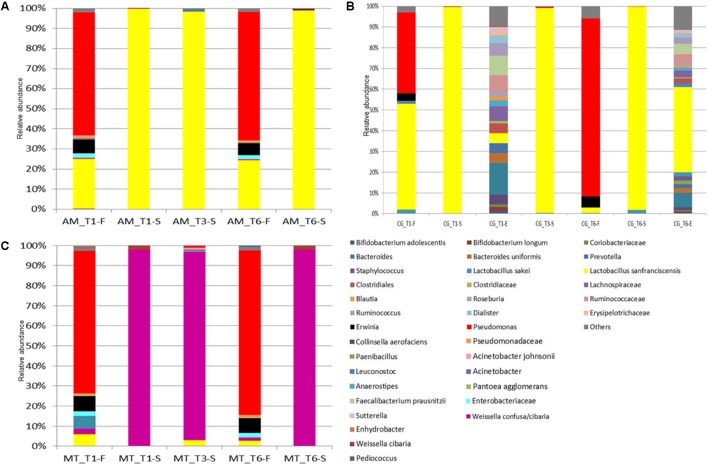
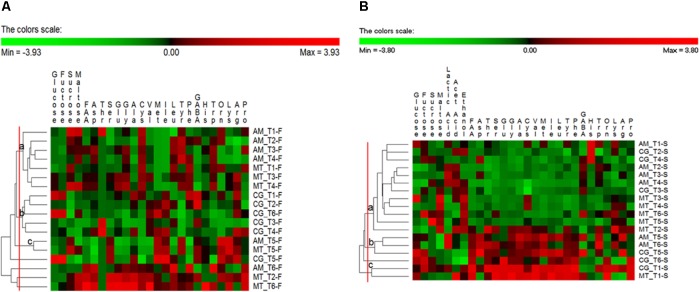
This study aimed to: (i) assess at what extent traditional, daily propagated, sourdough can be considered a stable microbial ecosystem; (ii) ascertain the drivers of stability/variability. For this purpose, samples of sourdough, flour and environment were collected over 1 year from three different bakeries located in Altamura, Castellana Grotte, and Matera. Culture-dependent and -independent analyses were carried out on all the samples. In addition, sourdough and flour were subjected to biochemical characterization. In all the sourdoughs sampled at the same bakery, cell density of lactic acid bacteria fluctuated of one-two log cycles. However, 16S metagenetic analysis showed that sourdough bacterial microbiota was remarkably stable, in terms of species. Yet, some differences were found during time at intra-specific level. Indeed, bacterial strains succeeded in a 1-year lapse of time or even in 6-months, such as in the case of strains isolated from Altamura sourdough samples. Residual carbohydrates, lactic acid, ethanol and free amino acids varied in the same sourdough collected at different sampling times. These variations could be attributed to combination of various factors, such as fermentation temperature and strain succession. In addition, concentration of flour nutrients varied over 1 year and, in some cases, in a shorter time lapse. This may have favored certain strains over others. For this reason and also because of its inherent contamination by lactic acid bacteria, we found flour as the major driver of strains succession.
(i)评估传统的、日常发酵的酸面团在多大程度上可被视为一个稳定的微生物生态系统;(ii)确定稳定性/变异性的驱动因素。为此,在1年的时间里,从位于阿尔塔穆拉、卡斯特拉纳格罗特和马泰拉的三家不同面包店采集了酸面团、面粉和环境样本。对所有样本进行了基于培养和非培养的分析。此外,对酸面团和面粉进行了生化特性分析。在同一家面包店采集的所有酸面团中,乳酸菌的细胞密度波动了一到两个对数周期。然而,16S宏基因组分析表明,就物种而言,酸面团细菌微生物群非常稳定。然而,在种内水平上,随着时间的推移发现了一些差异。事实上,细菌菌株在1年甚至6个月的时间里发生了更替,例如从阿尔塔穆拉酸面团样本中分离出的菌株。在不同采样时间采集的同一份酸面团中,残余碳水化合物、乳酸、乙醇和游离氨基酸有所不同。这些变化可能归因于各种因素的组合,如发酵温度和菌株更替。此外,面粉营养成分的浓度在1年甚至更短的时间内有所变化。这可能使某些菌株比其他菌株更具优势。出于这个原因,也因为其固有地被乳酸菌污染,我们发现面粉是菌株更替的主要驱动因素。