Xie Lei, Wang Jingyi, Huang Jun, Cui Xin, Wang Xiaogang, Liu Qingxia, Zhang Hao, Liu Qi, Zeng Hongbo
Department of Chemical and Materials Engineering, University of Alberta, Edmonton, AB, Canada.
College of Material Science and Engineering, Heavy Machinery Engineering Research Center of Education Ministry, Taiyuan University of Science and Technology, Taiyuan, China.
Front Chem. 2018 Aug 20;6:361. doi: 10.3389/fchem.2018.00361. eCollection 2018.
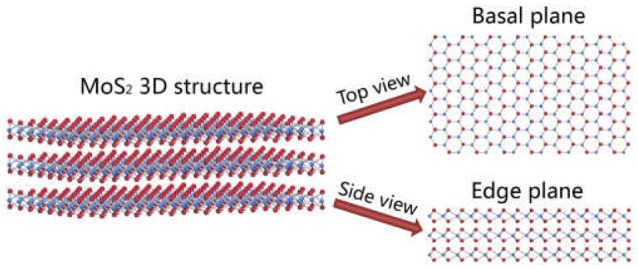
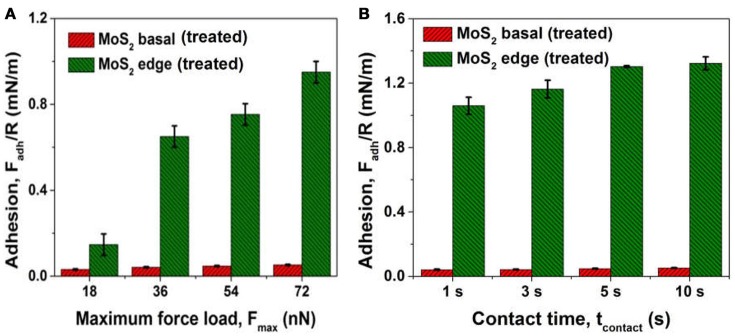
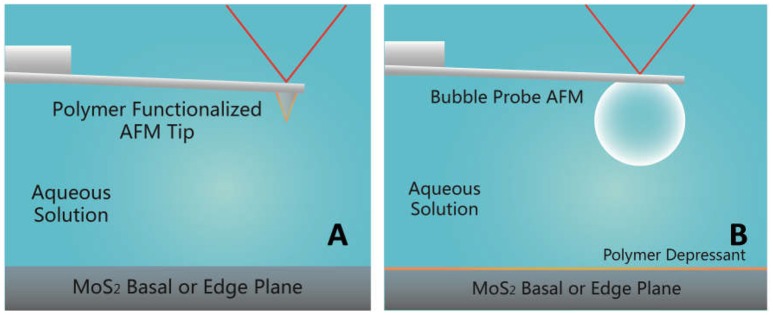
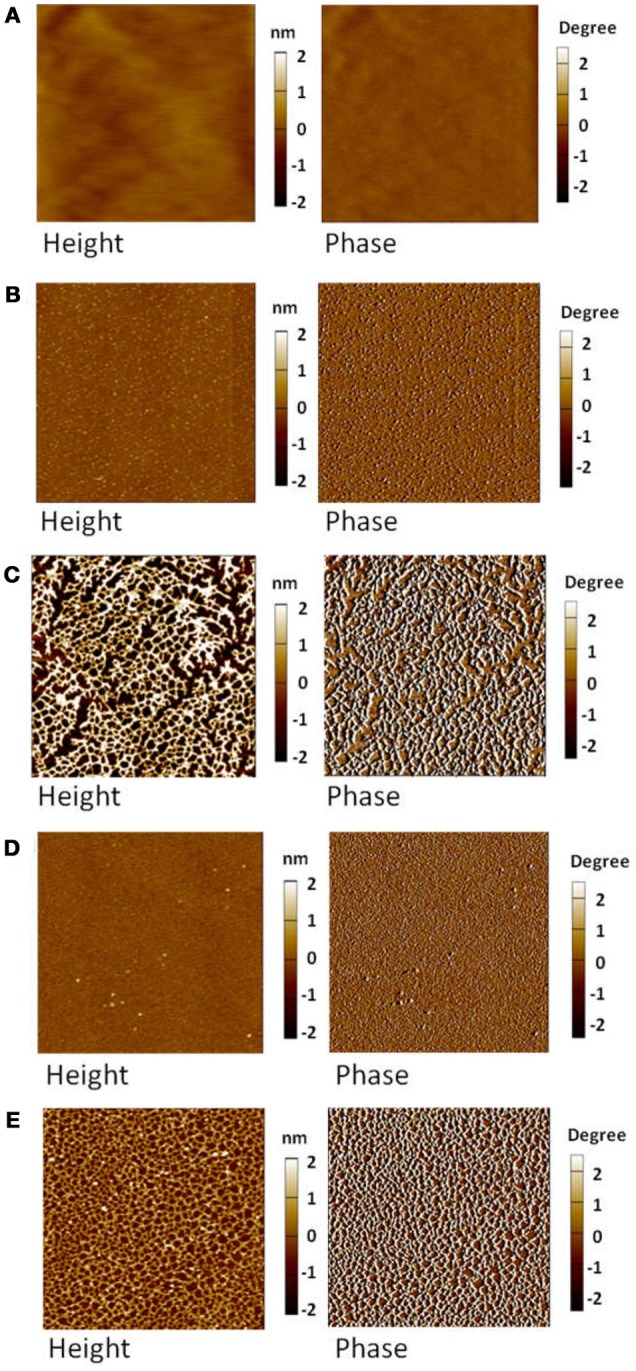
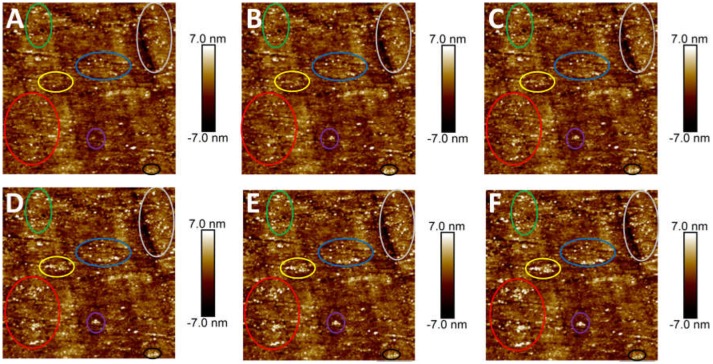
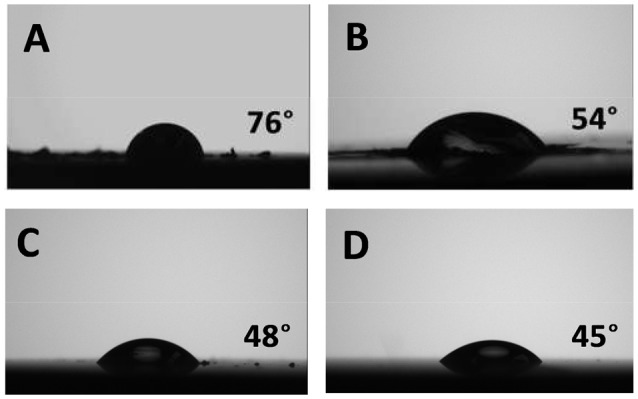
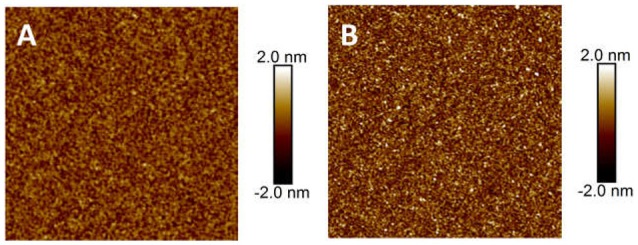
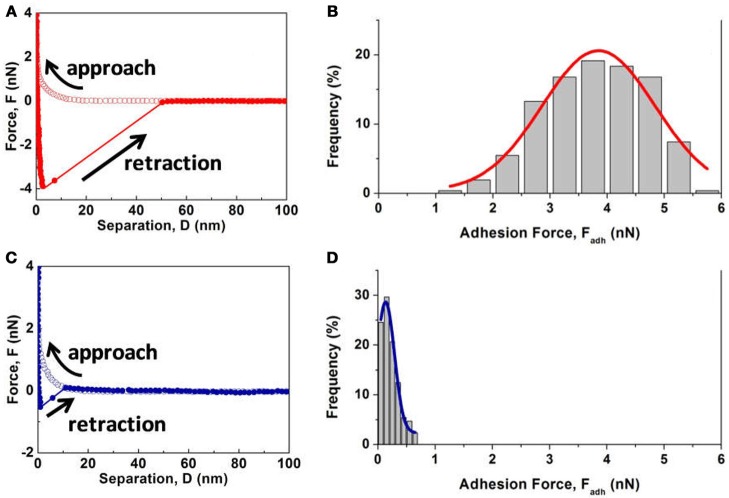
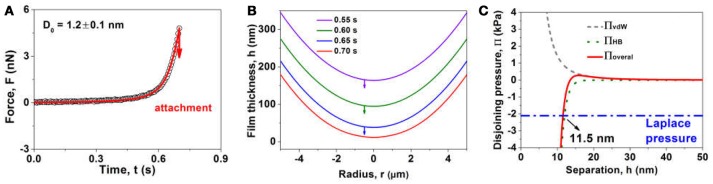
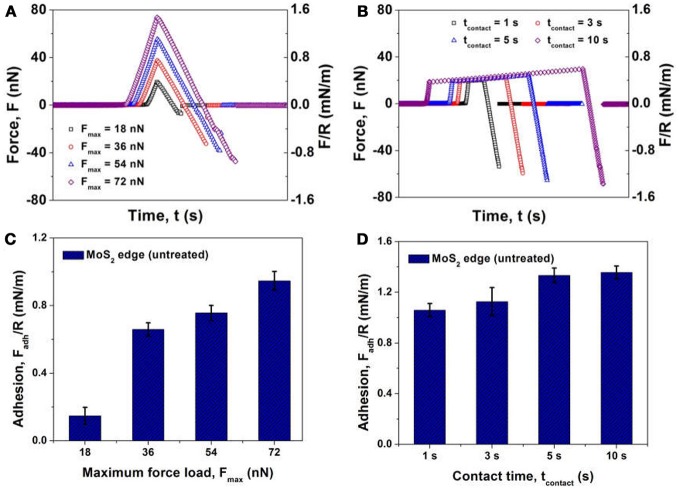
The anisotropic surface characteristics and interaction mechanisms of molybdenite (MoS) basal and edge planes have attracted much research interest in many interfacial processes such as froth flotation. In this work, the adsorption of a polymer depressant [i.e., carboxymethyl cellulose (CMC)] on both MoS basal and edge surfaces as well as their interaction mechanisms with air bubbles have been characterized by atomic force microscope (AFM) imaging and quantitative force measurements. AFM imaging showed that the polymer coverage on the basal plane increased with elevating polymer concentration, with the formation of a compact polymer layer at 100 ppm CMC; however, the polymer adsorption was much weaker on the edge plane. The anisotropy in polymer adsorption on MoS basal and edge surfaces coincided with water contact angle results. Direct force measurements using CMC functionalized AFM tips revealed that the adhesion on the basal plane was about an order of magnitude higher than that on the edge plane, supporting the anisotropic CMC adsorption behaviors. Such adhesion difference could be attributed to their difference in surface hydrophobicity and surface charge, with weakened hydrophobic attraction and strengthened electrostatic repulsion between the polymers and edge plane. Force measurements using a bubble probe AFM showed that air bubble could attach to the basal plane during approach, which could be effectively inhibited after polymer adsorption. The edge surface, due to the negligible polymer adsorption, showed similar interaction behaviors with air bubbles before and after polymer treatment. This work provides useful information on the adsorption of polymers on MoS basal/edge surfaces as well as their interaction mechanism with air bubbles at the nanoscale, with implications for the design and development of effective polymer additives to mediate the bubble attachment on solid particles with anisotropic surface properties in mineral flotation and other engineering processes.
辉钼矿(MoS)基面和边缘面的各向异性表面特性及相互作用机制在许多界面过程(如泡沫浮选)中引起了广泛的研究兴趣。在本工作中,通过原子力显微镜(AFM)成像和定量力测量,对聚合物抑制剂[即羧甲基纤维素(CMC)]在MoS基面和边缘面上的吸附及其与气泡的相互作用机制进行了表征。AFM成像表明,随着聚合物浓度的升高,基面上的聚合物覆盖率增加,在100 ppm CMC时形成致密的聚合物层;然而,聚合物在边缘面上的吸附要弱得多。MoS基面和边缘面上聚合物吸附的各向异性与水接触角结果一致。使用CMC功能化AFM探针进行的直接力测量表明,基面上的粘附力比边缘面上的粘附力高约一个数量级,这支持了CMC的各向异性吸附行为。这种粘附差异可归因于它们在表面疏水性和表面电荷上的差异,聚合物与边缘面之间的疏水吸引力减弱,静电排斥增强。使用气泡探针AFM进行的力测量表明,气泡在接近过程中可以附着在基面上,聚合物吸附后可以有效抑制这种附着。由于聚合物吸附可忽略不计,边缘面在聚合物处理前后与气泡的相互作用行为相似。这项工作提供了关于聚合物在MoS基面/边缘面上的吸附及其在纳米尺度上与气泡的相互作用机制的有用信息,对设计和开发有效的聚合物添加剂以介导气泡在矿物浮选和其他工程过程中具有各向异性表面性质的固体颗粒上的附着具有重要意义。