National Reference Laboratory for Meningococcal Infections, Centre for Epidemiology and Microbiology, National Institute of Public Health, Prague, Czech Republic.
PLoS One. 2018 Sep 13;13(9):e0199652. doi: 10.1371/journal.pone.0199652. eCollection 2018.
The study presents the analysis of whole genome sequence (WGS) data for Neisseria meningitidis serogroup W isolates recovered in the Czech Republic in 1984-2017 and their comparison with WGS data from other countries.
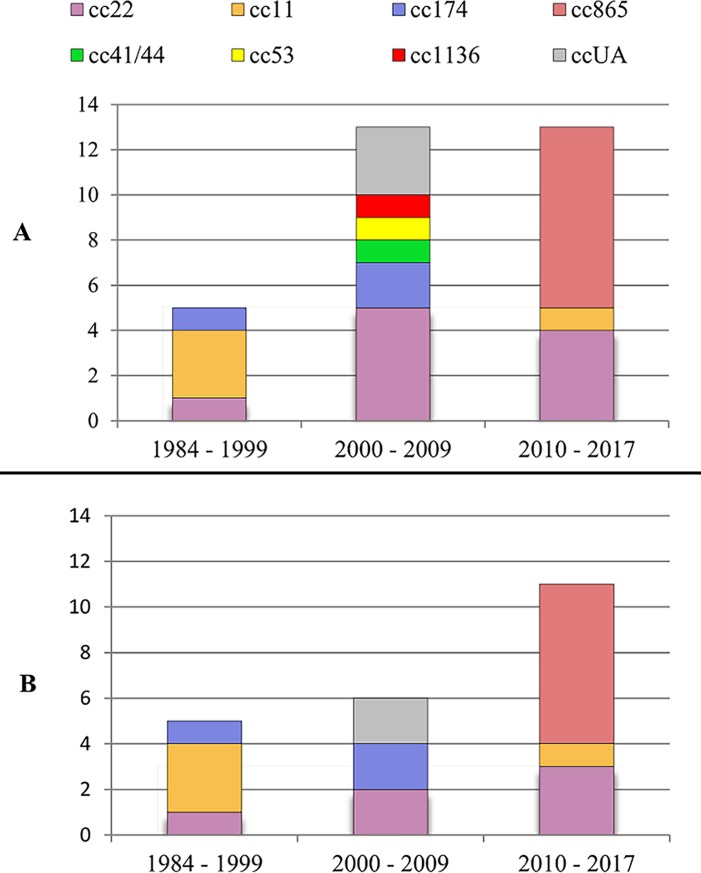
Thirty-one Czech N. meningitidis W isolates, 22 from invasive meningococcal disease (IMD) and nine from healthy carriers were analysed. The 33-year study period was divided into three periods: 1984-1999, 2000-2009, and 2010-2017.
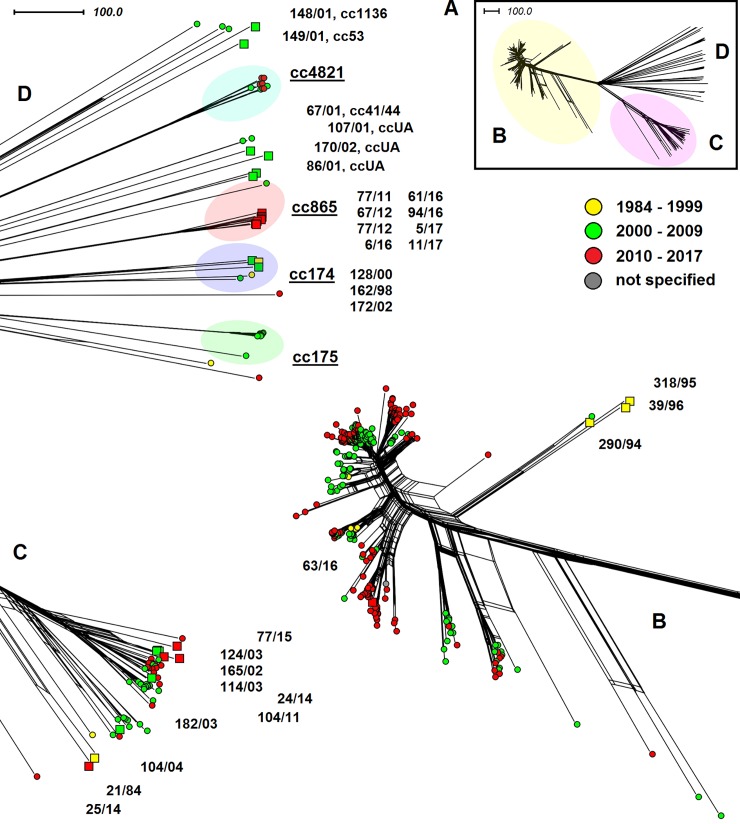
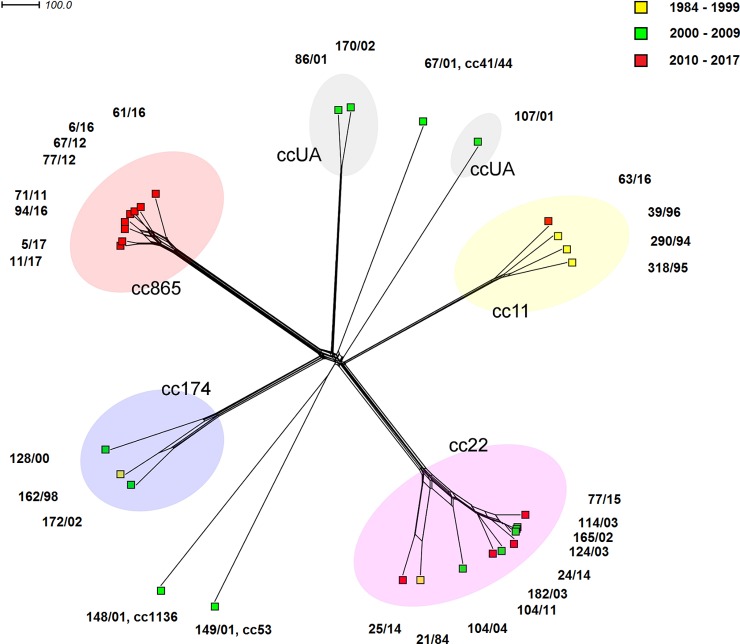
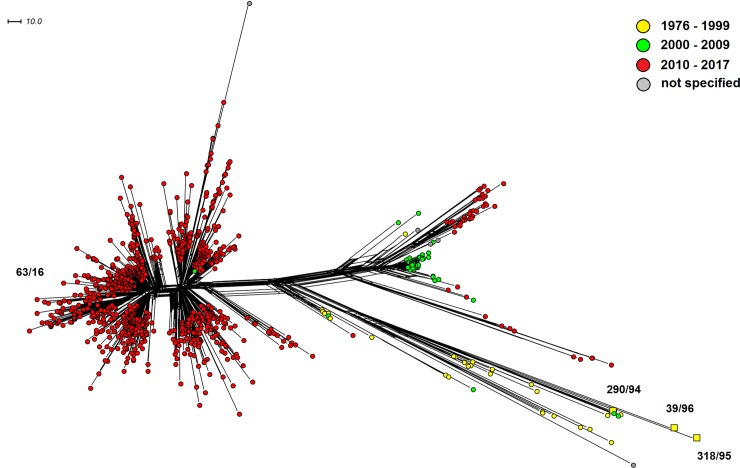
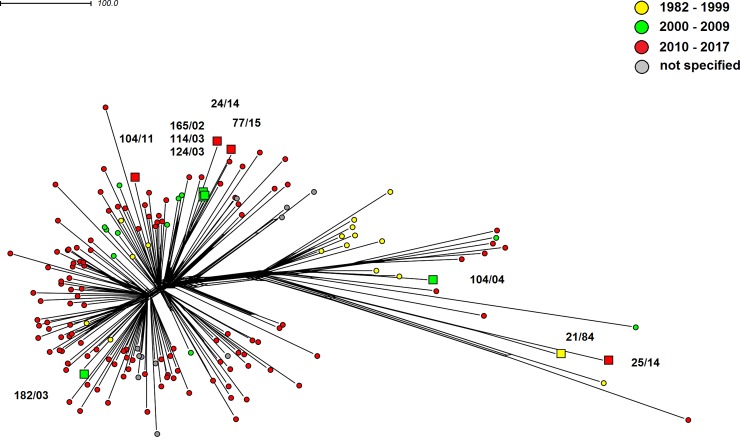
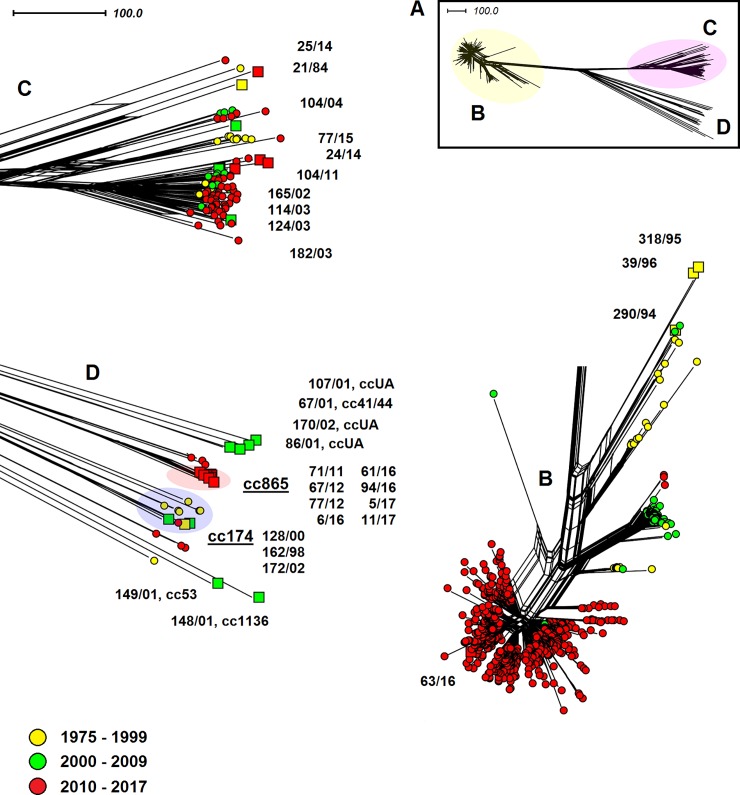
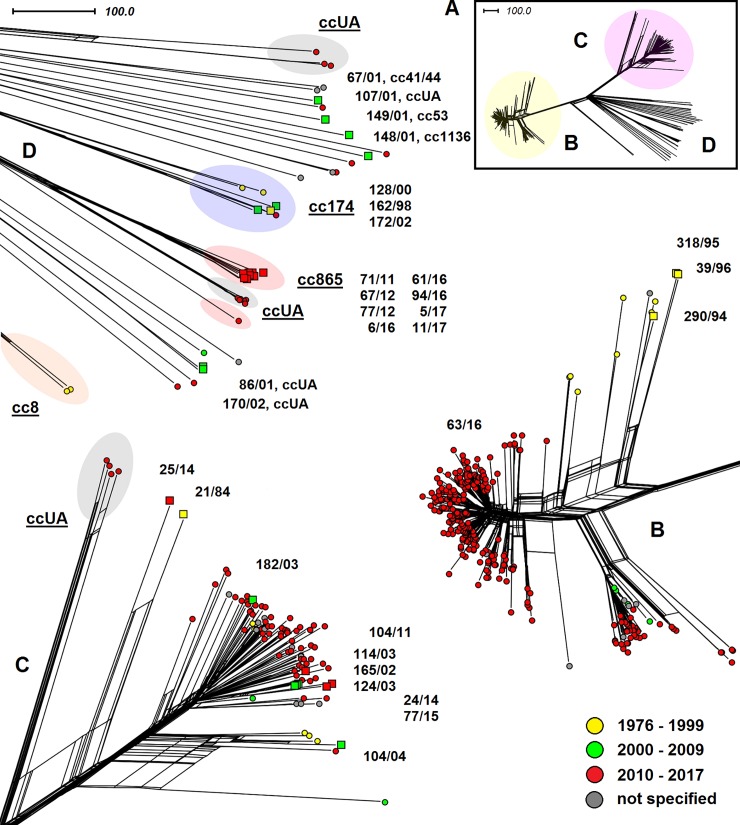
Most study isolates from IMD and healthy carriers were assigned to clonal complex cc22 (n = 10) in all study periods. The second leading clonal complex was cc865 (n = 8) presented by IMD (n = 7) and carriage (n = 1) isolates that emerged in the last study period, 2010-2017. The third clonal complex was cc11 (n = 4) including IMD isolates from the first (1984-1999) and third (2010-2017) study periods. The following clonal complex was cc174 (n = 3) presented by IMD isolates from the first two study periods, i.e. 1984-1999 and 2000-2009. One isolate of each cc41/44 and cc1136 originated from healthy carriers from the second study period, 2000-2009. The comparison of WGS data for N. meningitidis W isolates recovered in the Czech Republic in the study period 1984-2017 and for isolates from other countries recovered in the same period showed that clonal complex cc865, ST-3342 is unique to the Czech Republic since 2010. Moreover, the comparison shows that cc11 in the Czech Republic does not comprise novel hypervirulent lineages reported from both European and non-European countries. All 31 study isolates were assigned to Bexsero® Antigen Sequence Types (BAST), and seven of them were of newly described BASTs.
WGS analysis contributed considerably to a more detailed molecular characterization of N. meningitidis W isolates recovered in the Czech Republic over a 33-year period and allowed for a spatial and temporal comparison of these characteristics between isolates from the Czech Republic and other countries. The most interesting finding of this study is that eight of 31 Czech isolates of N. meningitidis W belong to clonal complex cc865, which is uncommon for serogroup W. In addition, the WGS data precised the base for the update of the recommendation for vaccination in the Czech Republic.
本研究分析了 1984 年至 2017 年在捷克共和国分离的脑膜炎奈瑟菌 W 群血清型的全基因组序列(WGS)数据,并将其与来自其他国家的 WGS 数据进行了比较。
分析了 31 株捷克脑膜炎奈瑟菌 W 分离株,其中 22 株来自侵袭性脑膜炎球菌病(IMD),9 株来自健康携带者。33 年的研究期间分为三个时期:1984-1999 年、2000-2009 年和 2010-2017 年。
所有来自 IMD 和健康携带者的研究分离株在所有研究期间均被归为克隆复合体 cc22(n = 10)。第二大克隆复合体是 cc865(n = 8),由 IMD(n = 7)和 2010-2017 年研究期间出现的携带分离株(n = 1)呈现。第三个克隆复合体是 cc11(n = 4),包括来自第一(1984-1999 年)和第三(2010-2017 年)研究期间的 IMD 分离株。以下克隆复合体是 cc174(n = 3),由来自前两个研究期间的 IMD 分离株呈现,即 1984-1999 年和 2000-2009 年。第二个研究期间,来自健康携带者的每个 cc41/44 和 cc1136 分离株均来自第二研究期间,即 2000-2009 年。对 1984-2017 年期间在捷克共和国分离的脑膜炎奈瑟菌 W 分离株的 WGS 数据与同期其他国家分离株的 WGS 数据进行比较表明,自 2010 年以来,克隆复合体 cc865、ST-3342 仅在捷克共和国存在。此外,比较表明,捷克的 cc11 不包括来自欧洲和非欧洲国家报道的新型高毒力谱系。所有 31 株研究分离株均被分配到 Bexsero®抗原序列类型(BAST),其中 7 株为新描述的 BAST。
WGS 分析对过去 33 年期间在捷克共和国分离的脑膜炎奈瑟菌 W 分离株的更详细的分子特征进行了重要贡献,并允许在捷克共和国和其他国家的分离株之间进行这些特征的时空比较。本研究的一个有趣发现是,31 株捷克脑膜炎奈瑟菌 W 分离株中有 8 株属于克隆复合体 cc865,这在血清型 W 中并不常见。此外,WGS 数据为更新捷克的疫苗接种建议提供了依据。