Institut Curie, PSL Research University, CNRS, UMR3348, F-91405, Orsay, France; University Paris Sud, Paris-Saclay University, CNRS, UMR3348, F-91405, Orsay, France.
Genome Damage and Stability Centre, School of Life Sciences, University of Sussex, Falmer, Sussex, BN1 9RQ, UK.
DNA Repair (Amst). 2018 Nov;71:135-147. doi: 10.1016/j.dnarep.2018.08.017. Epub 2018 Aug 25.
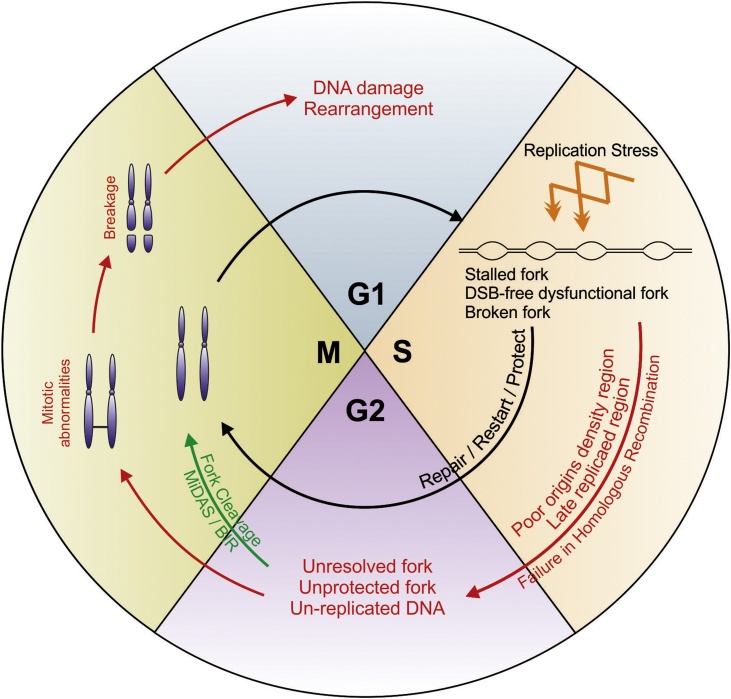
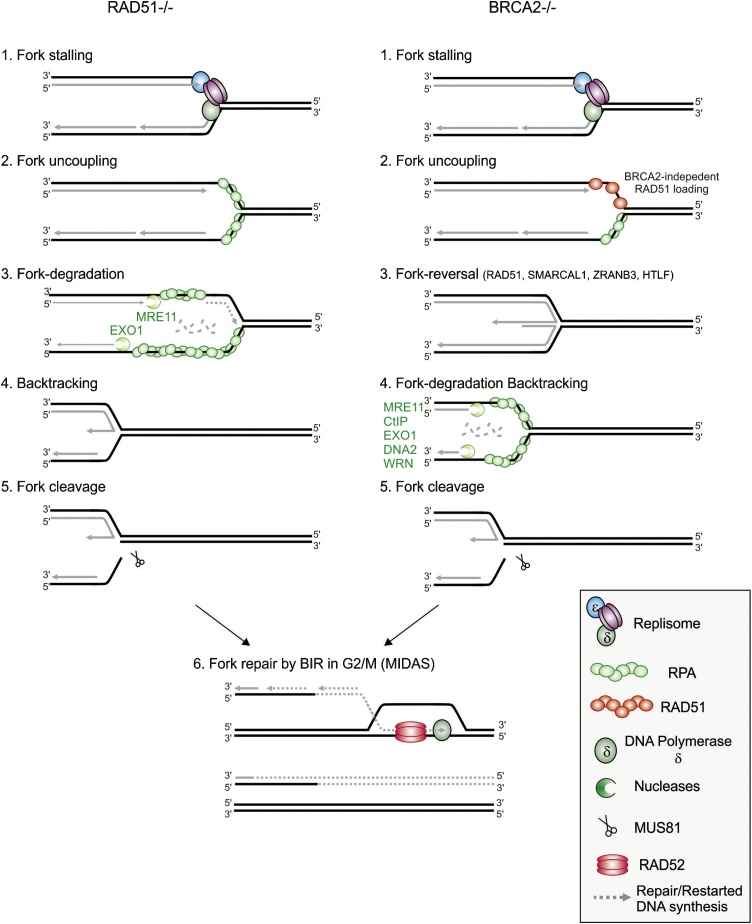
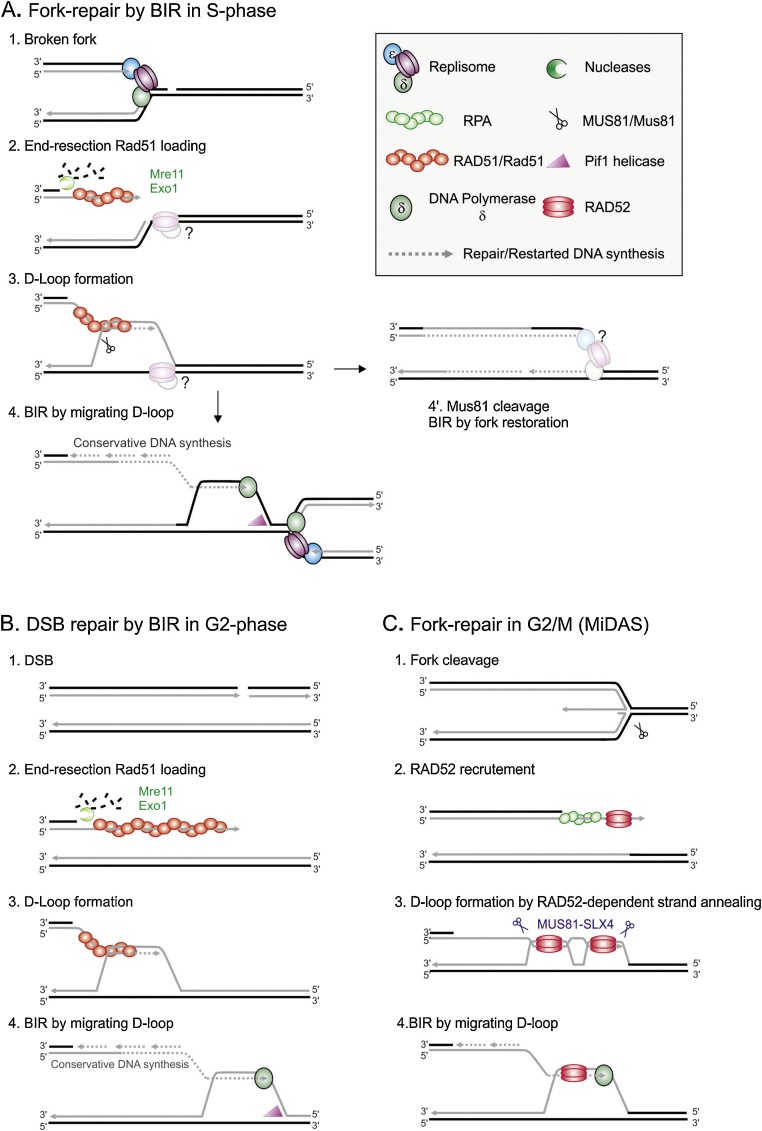
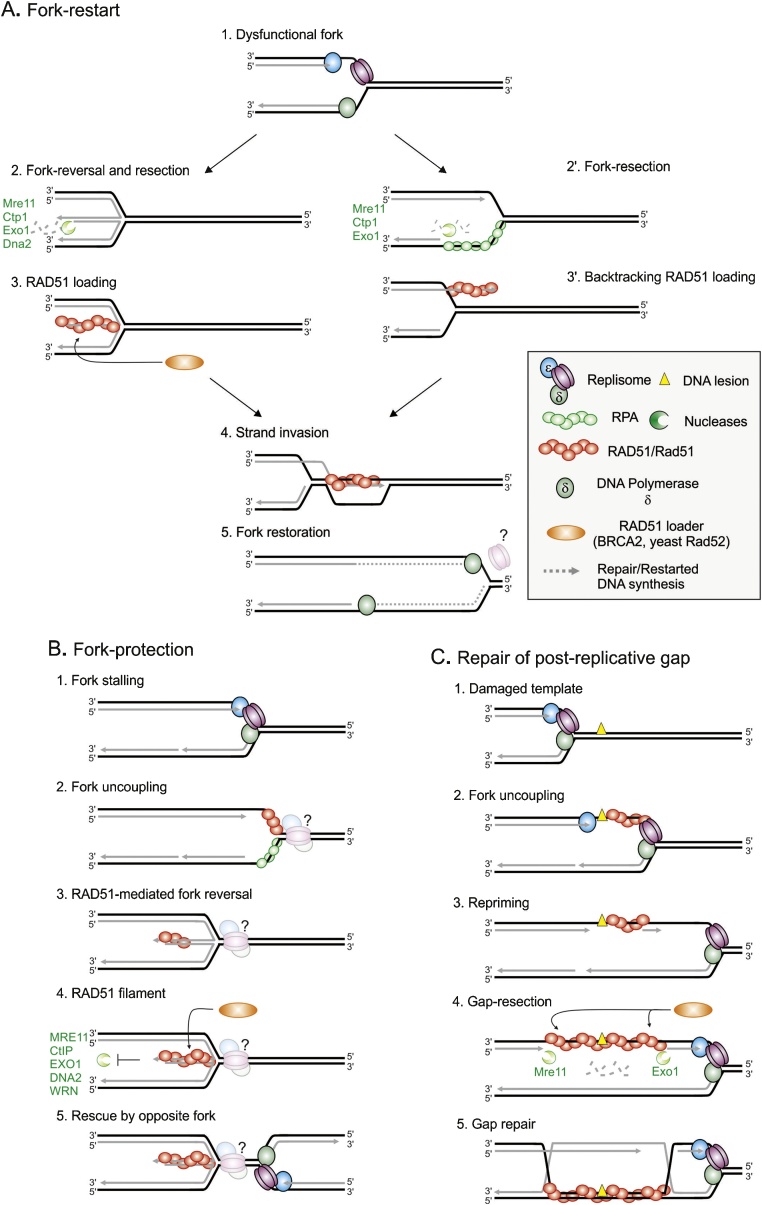
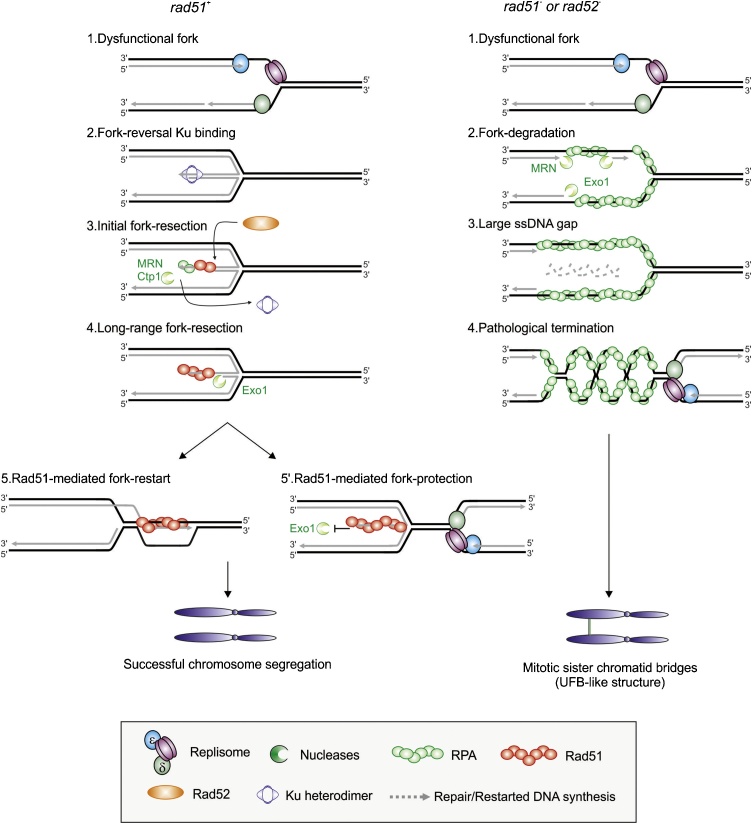
Flaws in the DNA replication process have emerged as a leading driver of genome instability in human diseases. Alteration to replication fork progression is a defining feature of replication stress and the consequent failure to maintain fork integrity and complete genome duplication within a single round of S-phase compromises genetic integrity. This includes increased mutation rates, small and large scale genomic rearrangement and deleterious consequences for the subsequent mitosis that result in the transmission of additional DNA damage to the daughter cells. Therefore, preserving fork integrity and replication competence is an important aspect of how cells respond to replication stress and avoid genetic change. Homologous recombination is a pivotal pathway in the maintenance of genome integrity in the face of replication stress. Here we review our recent understanding of the mechanisms by which homologous recombination acts to protect, restart and repair replication forks. We discuss the dynamics of these genetically distinct functions and their contribution to faithful mitoticsegregation.
DNA 复制过程中的缺陷已成为人类疾病中基因组不稳定的主要驱动因素。复制叉推进的改变是复制应激的一个决定性特征,其结果是无法维持叉的完整性,并在单个 S 期完成基因组的完整复制,从而损害了遗传完整性。这包括增加突变率、小范围和大范围的基因组重排,以及对随后有丝分裂的有害后果,导致额外的 DNA 损伤传递到子细胞。因此,保持叉的完整性和复制能力是细胞应对复制应激和避免遗传变化的一个重要方面。同源重组是应对复制应激时维持基因组完整性的关键途径。在这里,我们回顾了我们最近对同源重组如何发挥作用来保护、重新启动和修复复制叉的机制的理解。我们讨论了这些在遗传上不同的功能的动态及其对忠实的有丝分裂分离的贡献。