McPherson Malinda J, McDermott Josh H
Department of Brain and Cognitive Sciences, Massachusetts Institute of Technology, Cambridge, MA, USA.
Program in Speech and Hearing Bioscience and Technology, Harvard University, Cambridge, MA, USA.
Nat Hum Behav. 2018 Jan;2(1):52-66. doi: 10.1038/s41562-017-0261-8. Epub 2017 Dec 11.
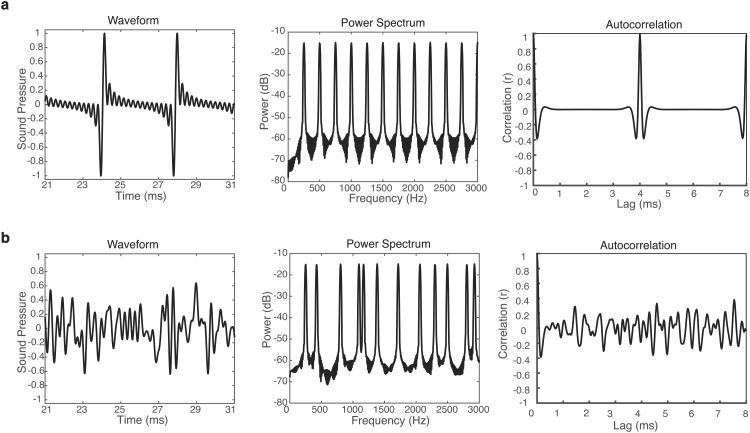
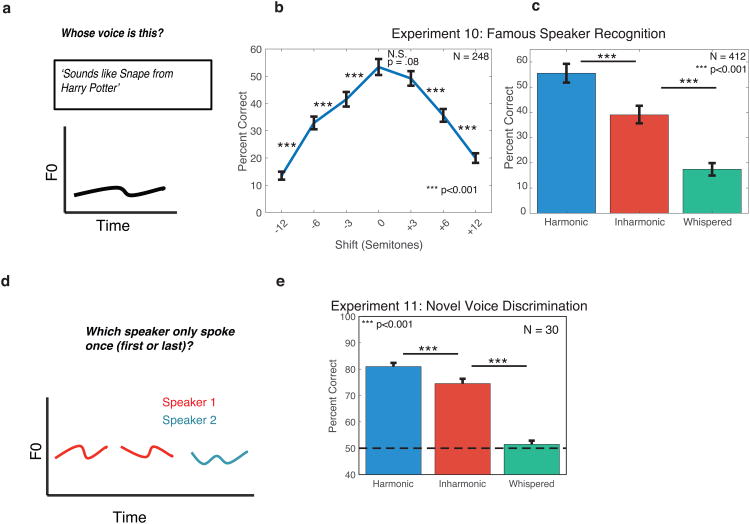
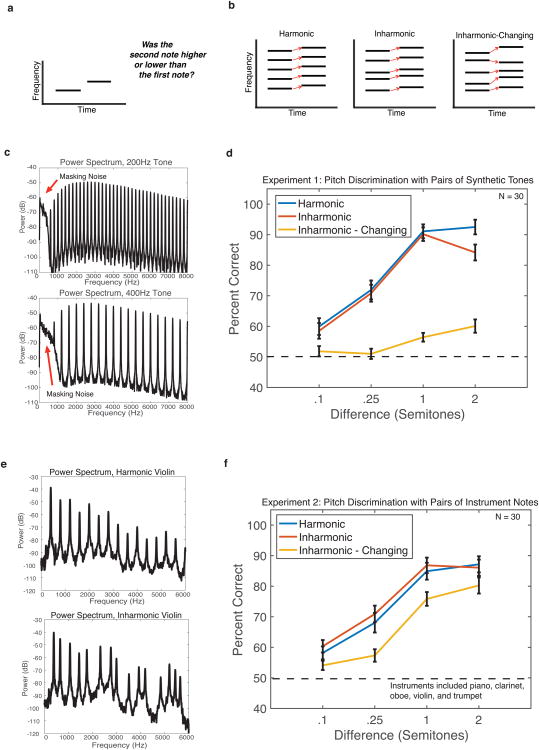
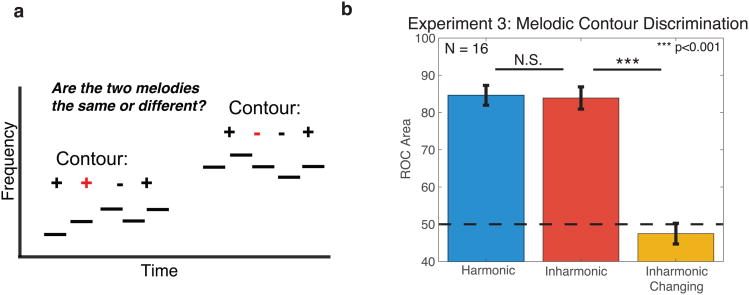
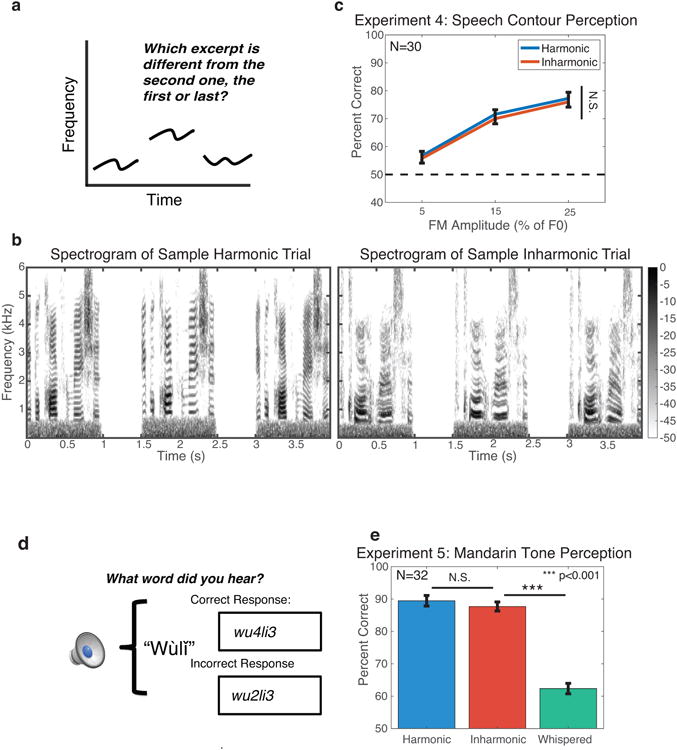
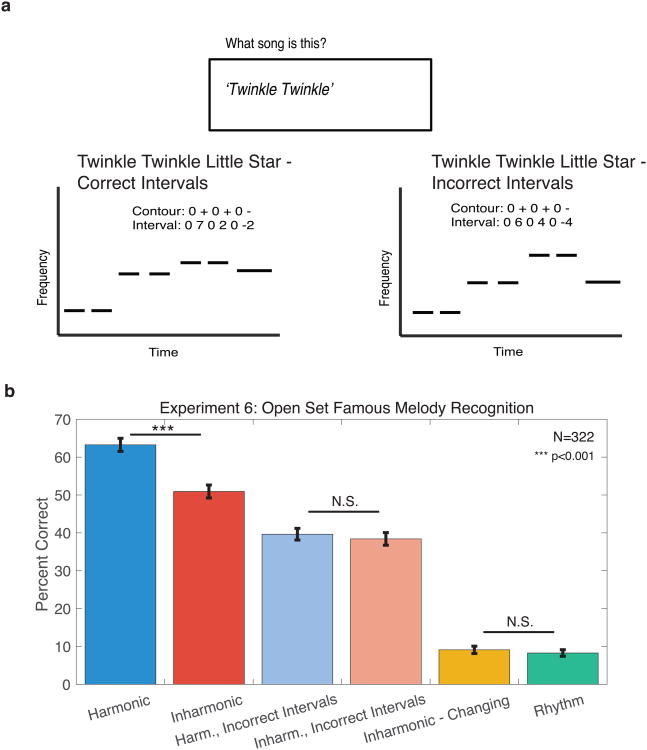
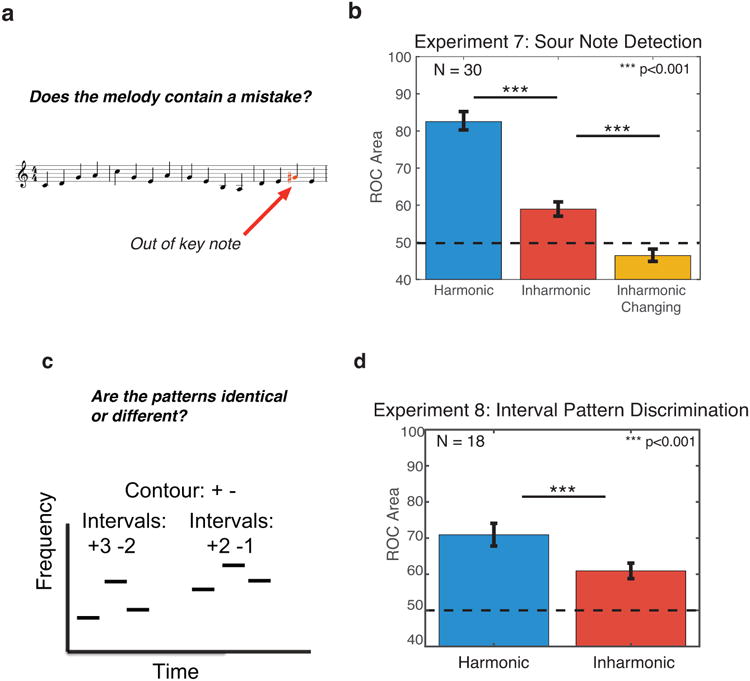
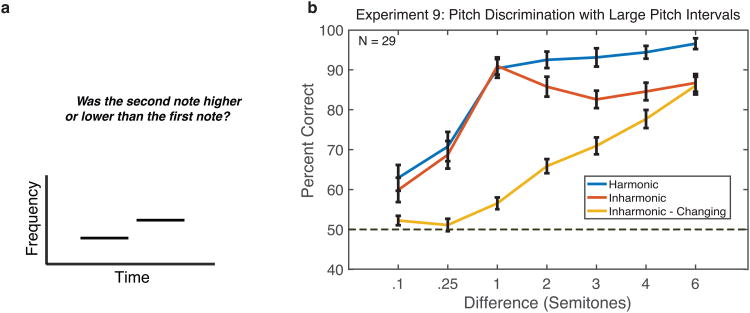
Pitch conveys critical information in speech, music, and other natural sounds, and is conventionally defined as the perceptual correlate of a sound's fundamental frequency (F0). Although pitch is widely assumed to be subserved by a single F0 estimation process, real-world pitch tasks vary enormously, raising the possibility of underlying mechanistic diversity. To probe pitch mechanisms we conducted a battery of pitch-related music and speech tasks using conventional harmonic sounds and inharmonic sounds whose frequencies lack a common F0. Some pitch-related abilities - those relying on musical interval or voice recognition - were strongly impaired by inharmonicity, suggesting a reliance on F0. However, other tasks, including those dependent on pitch contours in speech and music, were unaffected by inharmonicity, suggesting a mechanism that tracks the frequency spectrum rather than the F0. The results suggest that pitch perception is mediated by several different mechanisms, only some of which conform to traditional notions of pitch.
音高在语音、音乐及其他自然声音中传递关键信息,传统上被定义为声音基频(F0)的感知对应物。尽管人们普遍认为音高由单一的F0估计过程支撑,但现实世界中的音高任务差异极大,这增加了潜在机制多样性的可能性。为探究音高机制,我们使用传统谐波声音和频率缺乏共同F0的非谐波声音进行了一系列与音高相关的音乐和语音任务。一些与音高相关的能力——那些依赖于音乐音程或语音识别的能力——因非谐波性而严重受损,这表明依赖于F0。然而,其他任务,包括那些依赖于语音和音乐中音调轮廓的任务,不受非谐波性影响,这表明存在一种追踪频谱而非F0的机制。结果表明,音高感知由几种不同机制介导,其中只有一些符合传统的音高概念。