Department of Microbiology, University of Texas Southwestern Medical Center, Dallas, TX, USA.
Bioinformatics Core, McDermott Center, University of Texas Southwestern Medical Center, Dallas, TX, USA.
Nat Microbiol. 2018 Nov;3(11):1214-1223. doi: 10.1038/s41564-018-0244-1. Epub 2018 Sep 17.
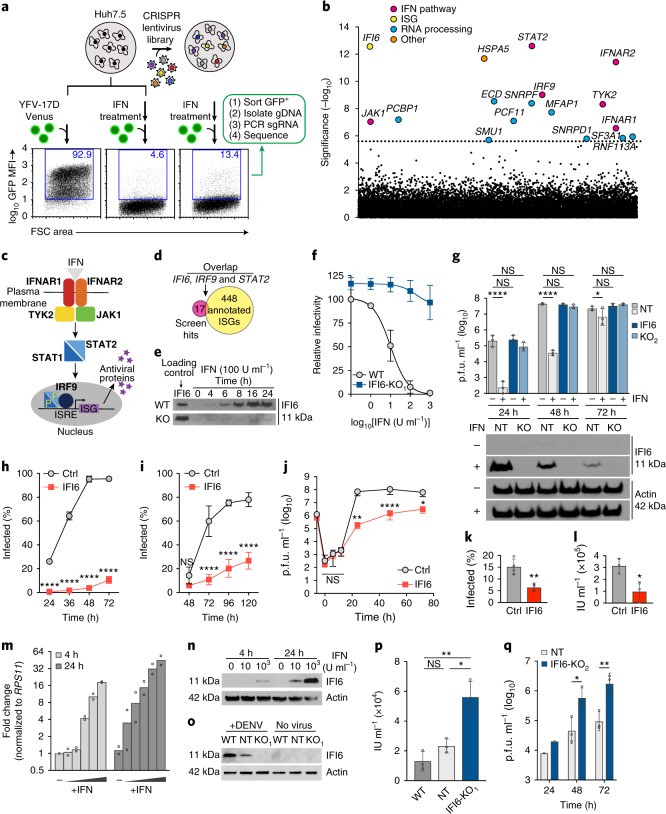
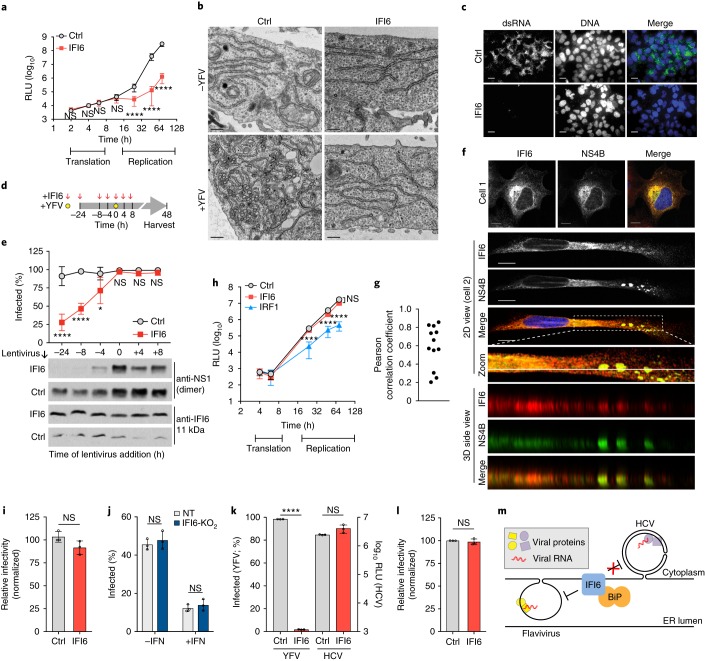
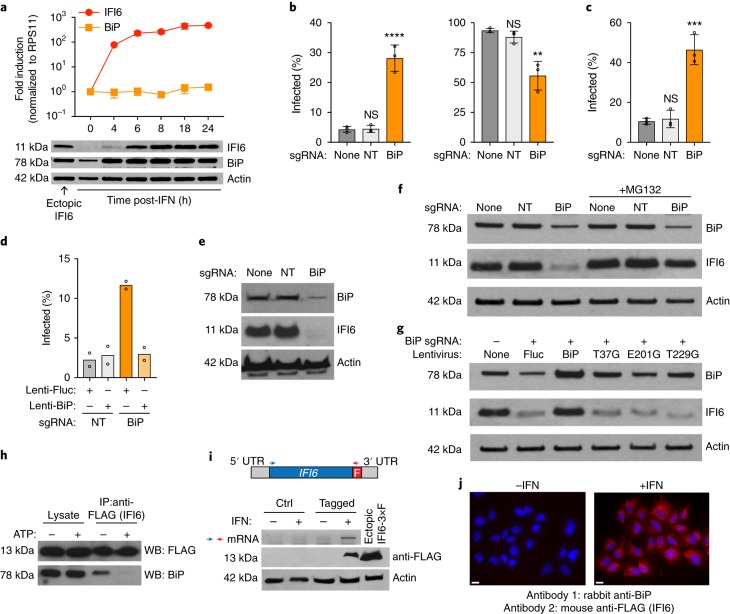
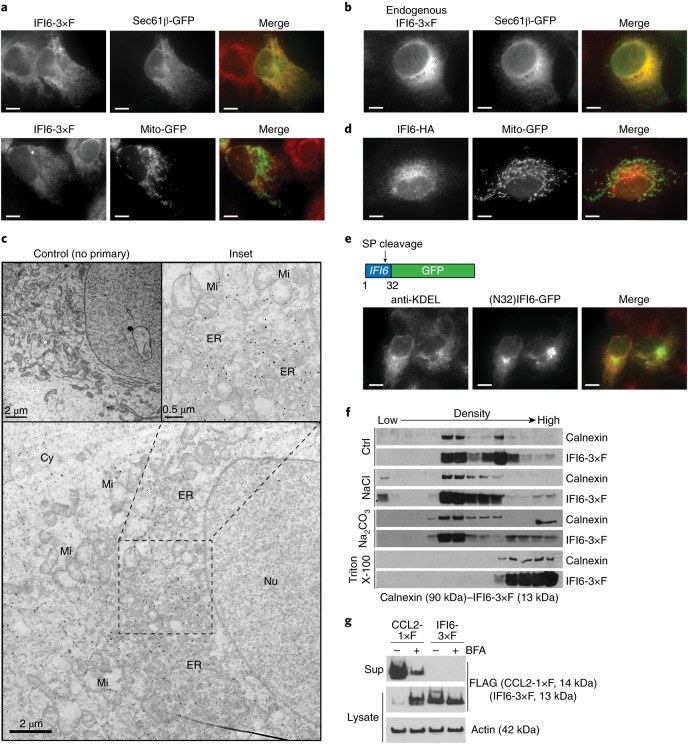
The endoplasmic reticulum (ER) is an architecturally diverse organelle that serves as a membrane source for the replication of multiple viruses. Flaviviruses, including yellow fever virus, West Nile virus, dengue virus and Zika virus, induce unique single-membrane ER invaginations that house the viral replication machinery. Whether this virus-induced ER remodelling is vulnerable to antiviral pathways is unknown. Here, we show that flavivirus replication at the ER is targeted by the interferon (IFN) response. Through genome-scale CRISPR screening, we uncovered an antiviral mechanism mediated by a functional gene pairing between IFI6 (encoding IFN-α-inducible protein 6), an IFN-stimulated gene cloned over 30 years ago, and HSPA5, which encodes the ER-resident heat shock protein 70 chaperone BiP. We reveal that IFI6 is an ER-localized integral membrane effector that is stabilized through interactions with BiP. Mechanistically, IFI6 prophylactically protects uninfected cells by preventing the formation of virus-induced ER membrane invaginations. Notably, IFI6 has little effect on other mammalian RNA viruses, including the related Flaviviridae family member hepatitis C virus, which replicates in double-membrane vesicles that protrude outwards from the ER. These findings support a model in which the IFN response is armed with a membrane-targeted effector that discriminately blocks the establishment of virus-specific ER microenvironments that are required for replication.
内质网(ER)是一种结构多样的细胞器,作为多种病毒复制的膜源。黄热病毒、西尼罗河病毒、登革热病毒和寨卡病毒等黄病毒诱导独特的单层内质网内陷,容纳病毒复制机制。这种病毒诱导的内质网重塑是否容易受到抗病毒途径的影响尚不清楚。在这里,我们表明 ER 中的黄病毒复制受到干扰素(IFN)反应的靶向。通过全基因组 CRISPR 筛选,我们发现了一种由干扰素刺激基因 IFI6(编码干扰素-α诱导蛋白 6)和编码内质网驻留热休克蛋白 70 伴侣 BiP 的 HSPA5 之间功能基因配对介导的抗病毒机制。我们揭示 IFI6 是一种定位于内质网的完整膜效应物,通过与 BiP 的相互作用而稳定。在机制上,IFI6 通过防止病毒诱导的内质网膜内陷的形成来预防性地保护未感染的细胞。值得注意的是,IFI6 对其他哺乳动物 RNA 病毒几乎没有影响,包括相关的黄病毒科家族成员丙型肝炎病毒,丙型肝炎病毒在从内质网向外突出的双层膜囊泡中复制。这些发现支持这样一种模型,即 IFN 反应配备了一种靶向膜的效应物,可特异性阻断复制所需的病毒特异性内质网微环境的建立。