Jiangsu Provincial Key Lab for Organic Solid Waste Utilization, National Engineering Research Center for Organic-based Fertilizers, Jiangsu Collaborative Innovation Center for Solid Organic Waste Resource Utilization, Nanjing Agricultural University, Nanjing, 210095, China.
Key Laboratory of Microbial Resources Collection and Preservation, Ministry of Agriculture, Institute of Agricultural Resources and Regional Planning, Chinese Academy of Agricultural Sciences, Beijing, 100081, China.
Microbiome. 2018 Sep 20;6(1):170. doi: 10.1186/s40168-018-0544-y.
Grazing is a major modulator of biodiversity and productivity in grasslands. However, our understanding of grazing-induced changes in below-ground communities, processes, and soil productivity is limited. Here, using a long-term enclosed grazing meadow steppe, we investigated the impacts of grazing on the soil organic carbon (SOC) turnover, the microbial community composition, resistance and activity under seasonal changes, and the microbial contributions to soil productivity.
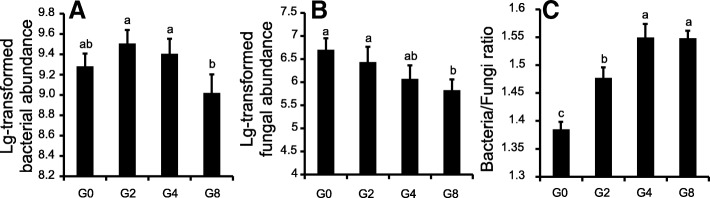
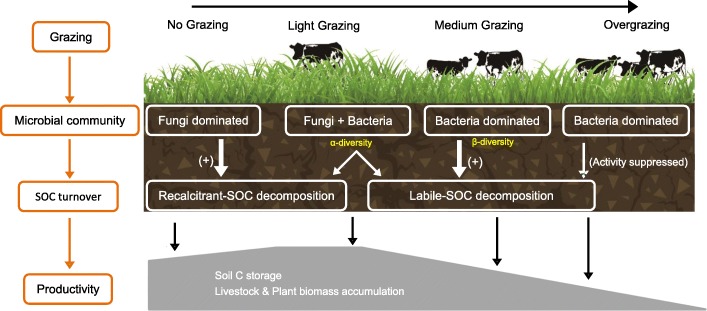
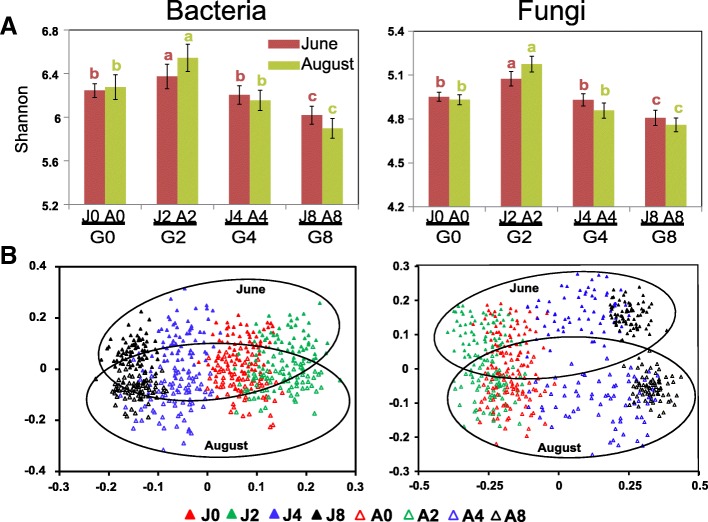
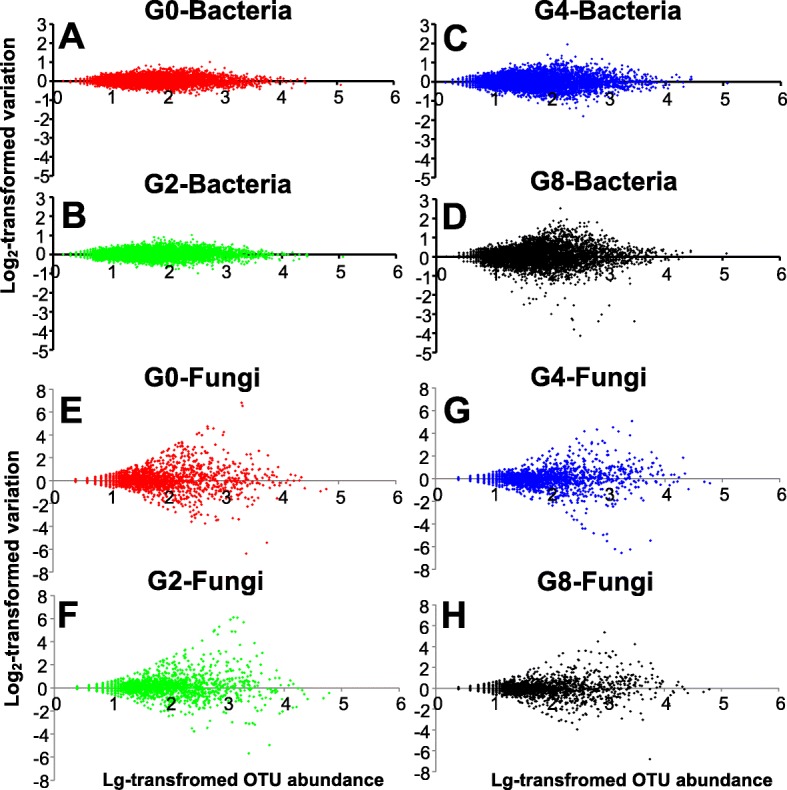
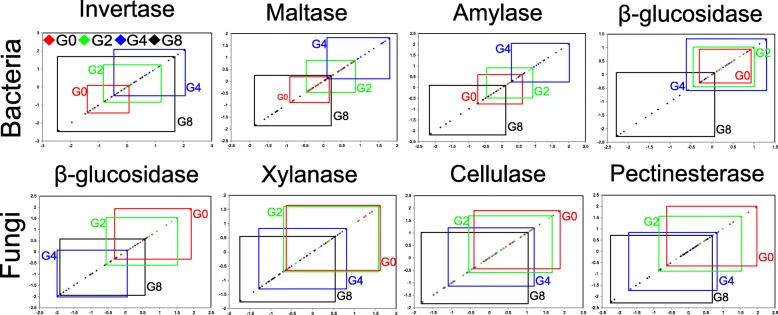
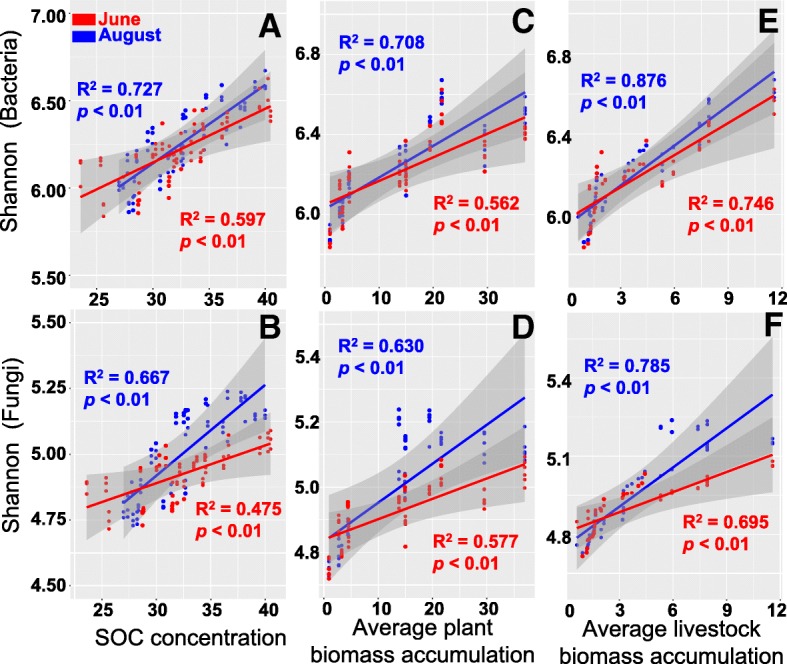
The results demonstrated that grazing had significant impacts on soil microbial communities and ecosystem functions in meadow steppe. The highest microbial α-diversity was observed under light grazing intensity, while the highest β-diversity was observed under moderate grazing intensity. Grazing shifted the microbial composition from fungi dominated to bacteria dominated and from slow growing to fast growing, thereby resulting in a shift from fungi-dominated food webs primarily utilizing recalcitrant SOC to bacteria-dominated food webs mainly utilizing labile SOC. Moreover, the higher fungal recalcitrant-SOC-decomposing activities and bacterial labile-SOC-decomposing activities were observed in fungi- and bacteria-dominated communities, respectively. Notably, the robustness of bacterial community and the stability of bacterial activity were associated with α-diversity, while this was not the case for the robustness of fungal community and its associated activities. Finally, we observed that microbial α-diversity rather than SOC turnover rate can predict soil productivity.
Our findings indicate the strong influence of grazing on soil microbial community, SOC turnover, and soil productivity and the important positive role of soil microbial α-diversity in steering the functions of meadow steppe ecosystems.
放牧是草原生物多样性和生产力的主要调节因素。然而,我们对放牧引起的地下群落、过程和土壤生产力变化的理解是有限的。在这里,我们利用长期封闭的放牧草甸草原,研究了放牧对土壤有机碳(SOC)周转、微生物群落组成、季节性变化下的抵抗力和活性、以及微生物对土壤生产力的贡献的影响。
结果表明,放牧对草甸草原的土壤微生物群落和生态系统功能有显著影响。在轻度放牧强度下,微生物 α 多样性最高,而在中度放牧强度下,微生物 β 多样性最高。放牧使微生物组成从真菌主导转变为细菌主导,从慢生长转变为快生长,从而导致从主要利用难分解 SOC 的真菌主导食物网转变为主要利用易分解 SOC 的细菌主导食物网。此外,在真菌主导和细菌主导的群落中,分别观察到更高的真菌难分解-SOC 分解活性和细菌易分解-SOC 分解活性。值得注意的是,细菌群落的稳健性和细菌活性的稳定性与 α 多样性相关,而真菌群落的稳健性及其相关活性则不然。最后,我们观察到微生物 α 多样性而不是 SOC 周转率可以预测土壤生产力。
我们的研究结果表明,放牧对土壤微生物群落、SOC 周转和土壤生产力有强烈的影响,土壤微生物 α 多样性在指导草甸草原生态系统功能方面发挥着重要的积极作用。