Irvine Mal, Stewart Ashleigh, Pedersen Bernadette, Boyd Suzanah, Kefford Richard, Rizos Helen
Faculty of Medicine and Health Sciences, Macquarie University, Sydney, NSW, Australia.
Melanoma Institute Australia, Sydney, NSW, Australia.
Oncogenesis. 2018 Sep 20;7(9):72. doi: 10.1038/s41389-018-0081-3.
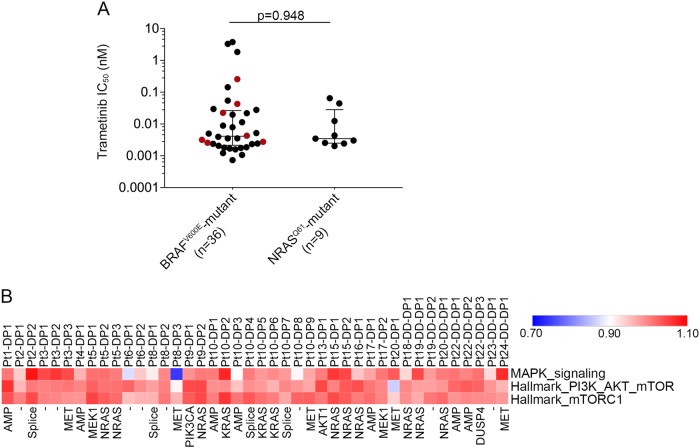
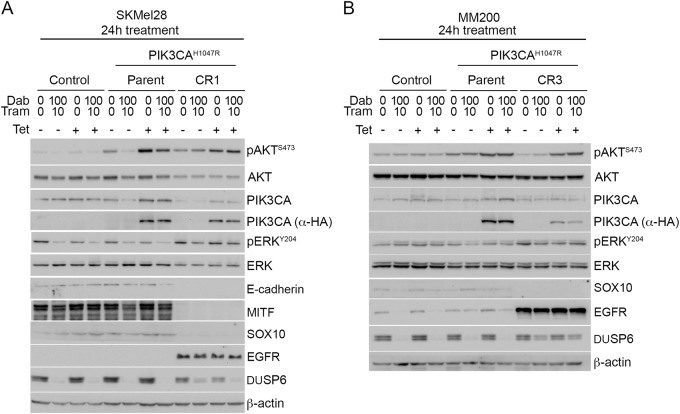
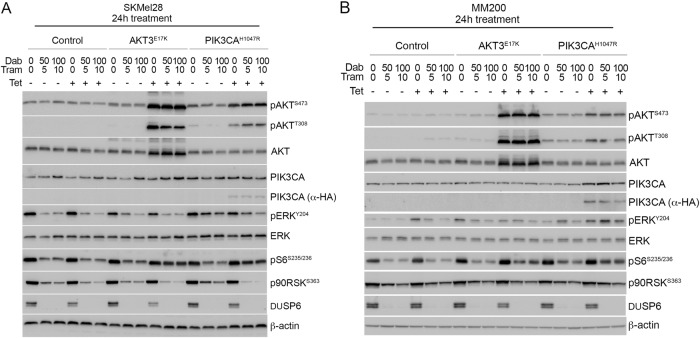
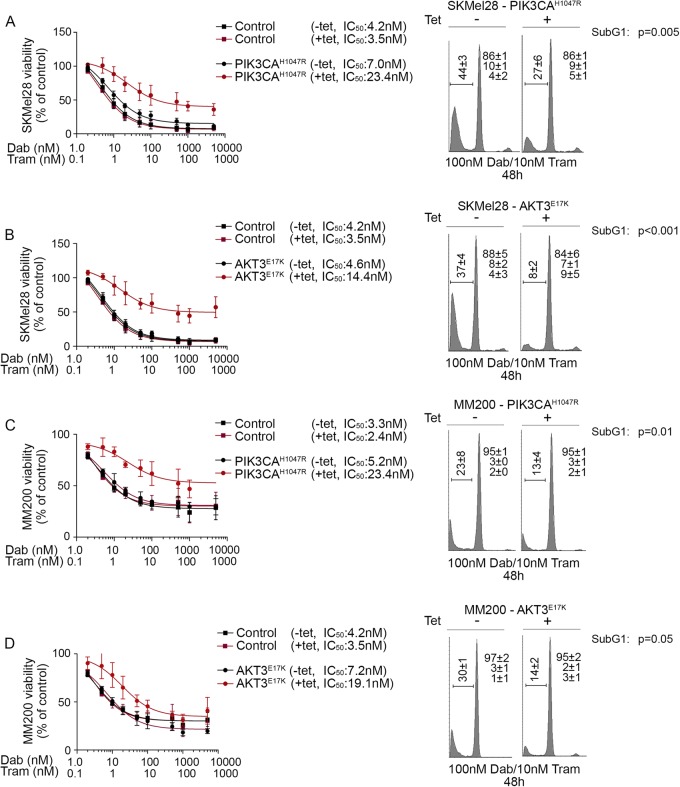
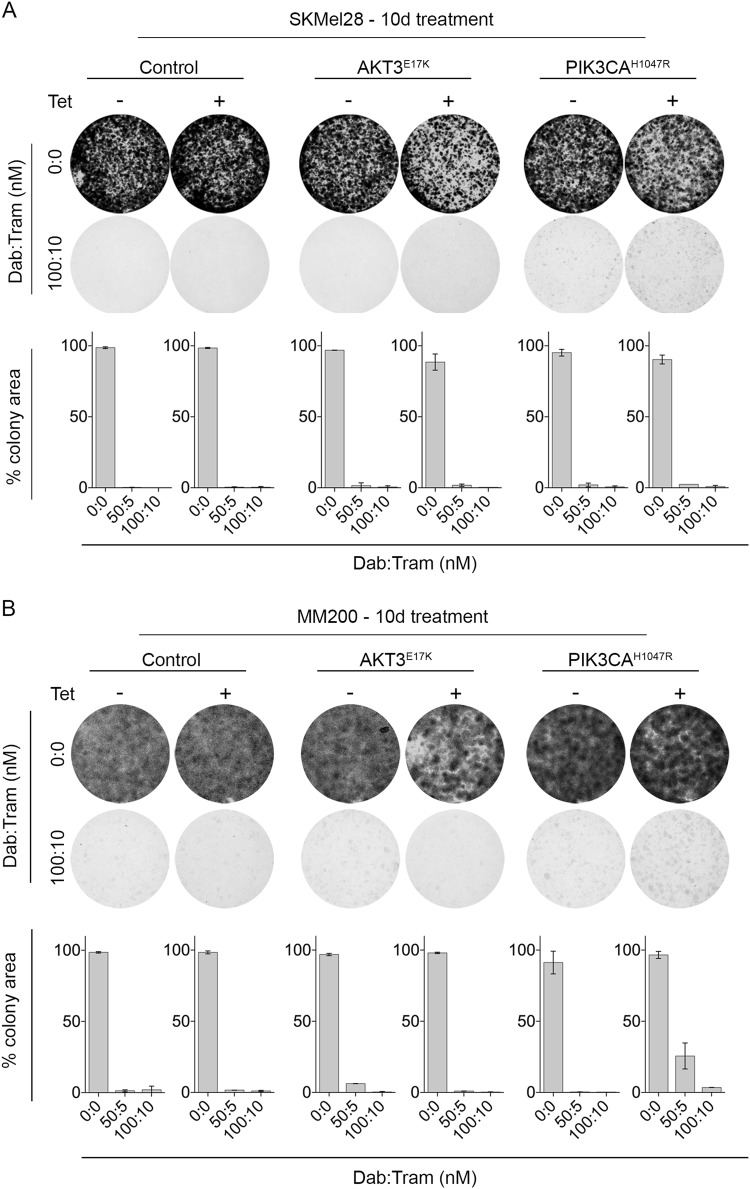
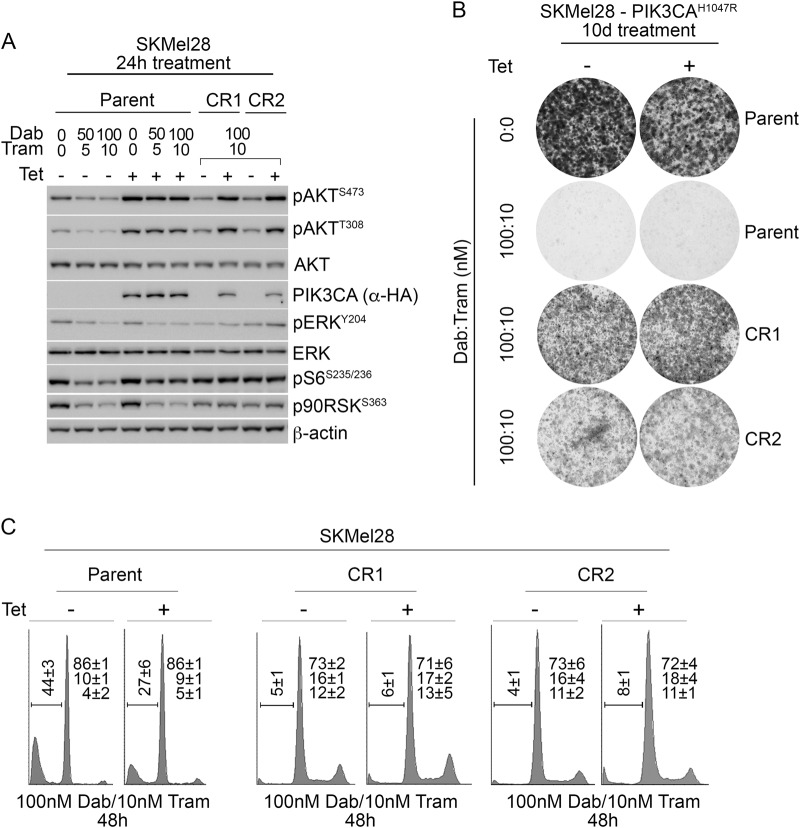
Nearly all patients with BRAF-mutant melanoma will progress on BRAF inhibitor monotherapy and combination BRAF/MEK inhibitor therapy within the first year of therapy. In the vast majority of progressing melanomas, resistance occurs via the re-activation of MAPK signalling, commonly via alterations in BRAF, NRAS and MEK1/2. A small proportion of resistant melanomas rely on the activation of the compensatory PI3K/AKT signalling cascade, although activation of this pathway does not preclude patient responses to BRAF/MEK inhibition. We now show, that PI3K/AKT signalling via potent oncogenic PIK3CA and AKT3 mutants, is not sufficient to overcome proliferative arrest induced by BRAF/MEK inhibition, but rather enables the survival of a dormant population of MAPK-inhibited melanoma cells. The evolution of resistance in these surviving tumour cells was associated with MAPK re-activation and no longer depended on the initial PI3K/AKT-activating oncogene. This dynamic form of resistance alters signalling dependence and may lead to the evolution of tumour subclones highly resistant to multiple targeted therapies.
几乎所有携带BRAF突变的黑色素瘤患者在接受BRAF抑制剂单药治疗以及BRAF/MEK抑制剂联合治疗的第一年都会出现病情进展。在绝大多数病情进展的黑色素瘤中,耐药性是通过MAPK信号通路的重新激活产生的,通常是由于BRAF、NRAS和MEK1/2发生改变。一小部分耐药黑色素瘤依赖于补偿性PI3K/AKT信号级联的激活,尽管该通路的激活并不排除患者对BRAF/MEK抑制产生反应。我们现在表明,通过强效致癌性PIK3CA和AKT3突变体产生的PI3K/AKT信号,不足以克服BRAF/MEK抑制诱导的增殖停滞,而是使一群处于休眠状态的MAPK抑制的黑色素瘤细胞得以存活。这些存活肿瘤细胞中的耐药性演变与MAPK重新激活有关,并且不再依赖于最初激活PI3K/AKT的致癌基因。这种动态的耐药形式改变了信号依赖性,并可能导致对多种靶向治疗具有高度耐药性的肿瘤亚克隆的演变。