Department of Neurology, Beijing Hospital, National Center of Gerontology, Beijing 100730, China.
National Center for Clinical Laboratories, Beijing Hospital, National Center of Gerontology, Beijing 100730, China.
Chin Med J (Engl). 2018 Oct 5;131(19):2338-2345. doi: 10.4103/0366-6999.241805.
Endothelial cells (ECs) are important metabolic and endocrinal organs which play a significant role in regulating vascular function. Vascular ECs, located between the blood and vascular tissues, can not only complete the metabolism of blood and interstitial fluid but also synthesize and secrete a variety of biologically active substances to maintain vascular tension and keep a normal flow of blood and long-term patency. Therefore, this article presents a systematic review of common injuries and healing mechanisms for the vascular endothelium.
An extensive search in the PubMed database was undertaken, focusing on research published after 2003 with keywords including endothelium, vascular, wounds and injuries, and wound healing.
Several types of articles, including original studies and literature reviews, were identified and reviewed to summarize common injury and repair processes of the endothelial lining.
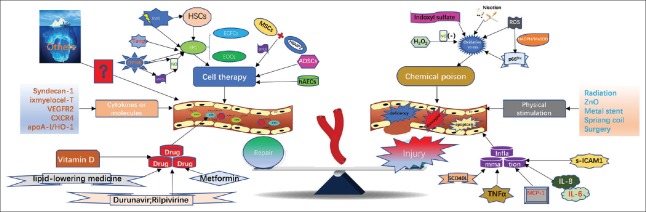
Endothelial injury is closely related to the development of multiple cardiovascular and cerebrovascular diseases. However, the mechanism of vascular endothelial injury is not fully understood. Numerous studies have shown that the mechanisms of EC injury mainly involve inflammatory reactions, physical stimulation, chemical poisons, concurrency of related diseases, and molecular changes. Endothelial progenitor cells play an important role during the process of endothelial repair after such injuries. What's more, a variety of restorative cells, changes in cytokines and molecules, chemical drugs, certain RNAs, regulation of blood pressure, and physical fitness training protect the endothelial lining by reducing the inducing factors, inhibiting inflammation and oxidative stress reactions, and delaying endothelial caducity.
ECs are always in the process of being damaged. Several therapeutic targets and drugs were seeked to protect the endothelium and promote repair.
内皮细胞(ECs)是重要的代谢和内分泌器官,在调节血管功能方面发挥着重要作用。血管内皮细胞位于血液和血管组织之间,不仅可以完成血液和间质液的代谢,还可以合成和分泌多种生物活性物质,维持血管张力,保持血液正常流动和血管长期通畅。因此,本文系统综述了血管内皮常见的损伤和愈合机制。
在 PubMed 数据库中进行了广泛搜索,主要关注 2003 年后发表的研究,关键词包括内皮、血管、创伤和损伤以及伤口愈合。
确定并回顾了多种类型的文章,包括原始研究和文献综述,以总结内皮衬里常见的损伤和修复过程。
内皮损伤与多种心血管和脑血管疾病的发生发展密切相关。然而,血管内皮损伤的机制尚不完全清楚。大量研究表明,EC 损伤的机制主要涉及炎症反应、物理刺激、化学毒物、相关疾病并存以及分子变化。内皮祖细胞在损伤后内皮修复过程中发挥重要作用。此外,多种修复细胞、细胞因子和分子变化、化学药物、某些 RNA、血压调节和体能训练通过减少诱导因素、抑制炎症和氧化应激反应以及延缓内皮衰老来保护内皮细胞。
EC 一直在受损的过程中。已经寻找了几种治疗靶点和药物来保护内皮细胞并促进修复。